Roman Guardian Spirit Hidden Beneath Vindolanda Barrack Floor Discovered After 1,600 Years!
Archaeologists excavating at Vindolanda, one of Britain's most significant Roman frontier sites, have uncovered a remarkably well-preserved stone carving of a Roman Genius, a protective guardian spirit, hidden beneath the floor of a late Roman barrack. Buried face down for more than 1,600 years, the sandstone relief remained shielded from centuries of wear, allowing much of its intricate carving to survive.
The unexpected find was made on 16 June 2026 during excavations led by Dr Andrew Birley, director of excavations at Vindolanda. While investigating a fourth-century barrack building, Birley noticed that one of the paving stones looked unusually rounded. Curious, he lifted it, only to discover that the underside bore the carved image of a Roman figure.
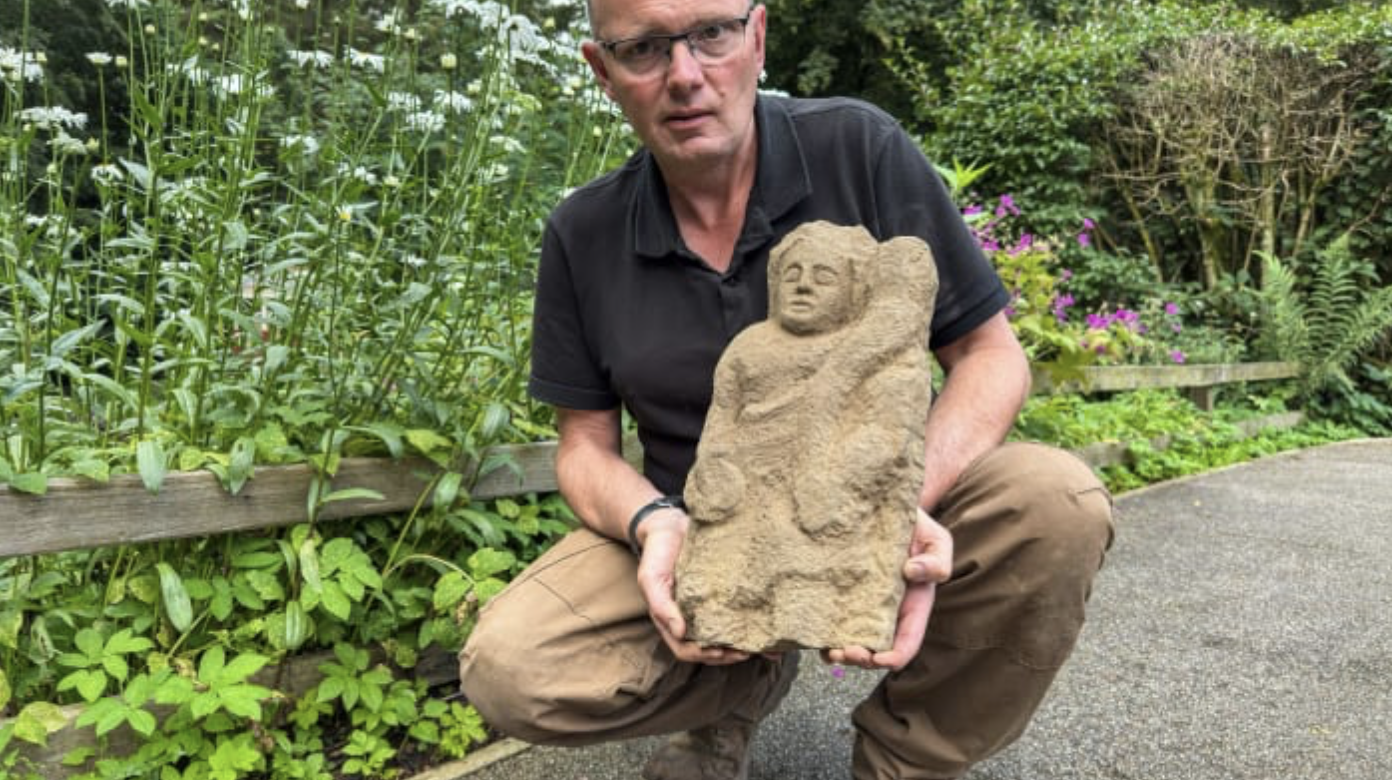
Photo Credit: The Vindolanda Trust
Recalling the moment, Birley said his immediate reaction was simply to wonder who the figure represented. Images of the carving were quickly sent to Roman specialists Lindsay Allason-Jones, Fraser Hunter and Alex Rome-Griffin, who identified it as a depiction of a Genius, a divine guardian believed by the Romans to watch over individuals, families, communities and even specific places. Researchers are continuing to examine the relief in greater detail.
The carved sandstone relief measures 44 centimetres high, 23 centimetres wide and eight centimetres deep. It depicts the Genius holding a cornucopia, the traditional symbol of abundance and prosperity, alongside a patera, a shallow bowl used for pouring ritual offerings during religious ceremonies.
These objects are characteristic of Roman representations of guardian spirits. Across the Roman Empire, similar figures appeared in sculpture, household shrines and even on imperial coinage, where the Genius is frequently shown making a sacrificial offering while carrying a cornucopia.
Archaeologists believe the carving originally formed part of a domestic shrine before being removed and reused as a building stone during a later phase of construction. Because it was placed face down beneath the barrack floor, the carved surface remained protected. Why it was deliberately laid in this way remains unknown, although researchers suggest it was probably reused simply as convenient building material rather than intentionally concealed for religious reasons.
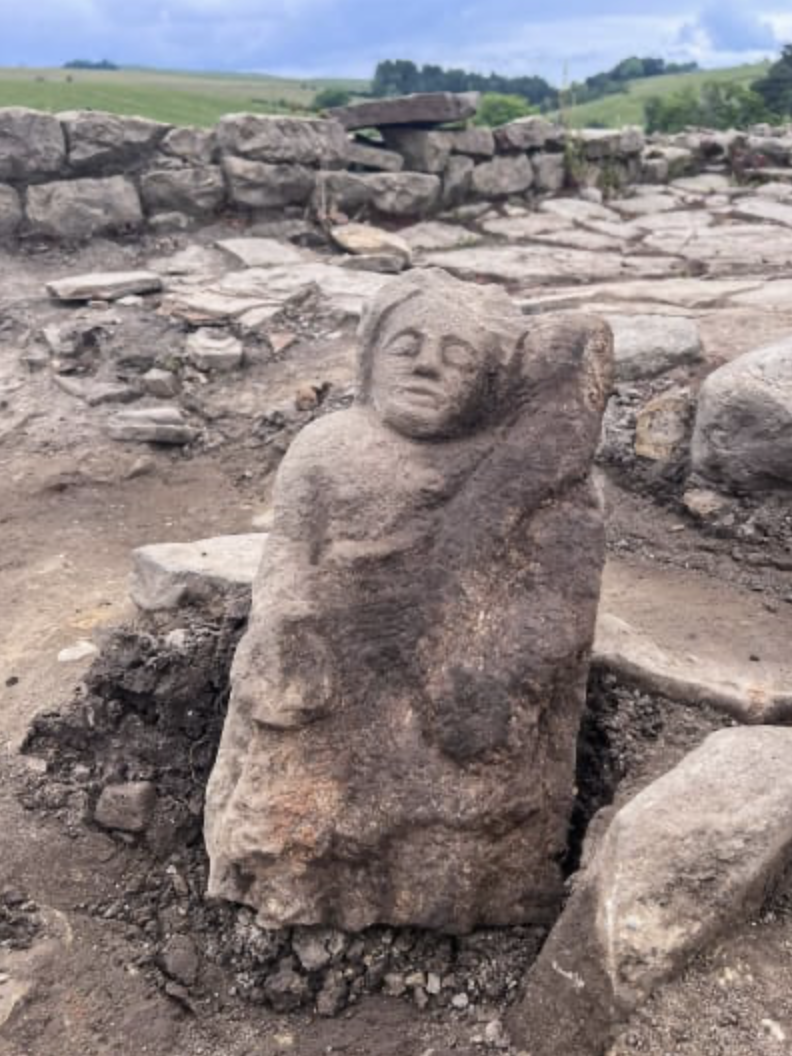
Photo Credit: The Vindolanda Trust
Whether the relief was carved at Vindolanda itself or brought in from another workshop has yet to be established. One possibility under consideration is that it originated from the nearby Roman fort at Lanchester in County Durham, although further conservation work and specialist analysis will be needed before its source can be identified with confidence.
While inscriptions dedicated to a Genius are relatively common across Roman Britain, surviving carved stone representations are much rarer. This discovery is especially valuable because it was recovered during a controlled archaeological excavation rather than being found reused in a later structure without context.
Its location beneath a fourth-century military barrack also provides important evidence for life during the final decades of Roman Britain. Although Vindolanda functioned as a military fort, it was also home to civilians, including women, children, merchants and craftspeople. The relief may therefore have once belonged to a household shrine somewhere within the wider settlement before eventually finding a second life as part of a barrack floor.
Situated in Northumberland just south of Hadrian's Wall, Vindolanda forms part of the UNESCO World Heritage Site known as the Frontiers of the Roman Empire. Despite its close association with Hadrian's Wall today, the fort actually predates the frontier by several decades.
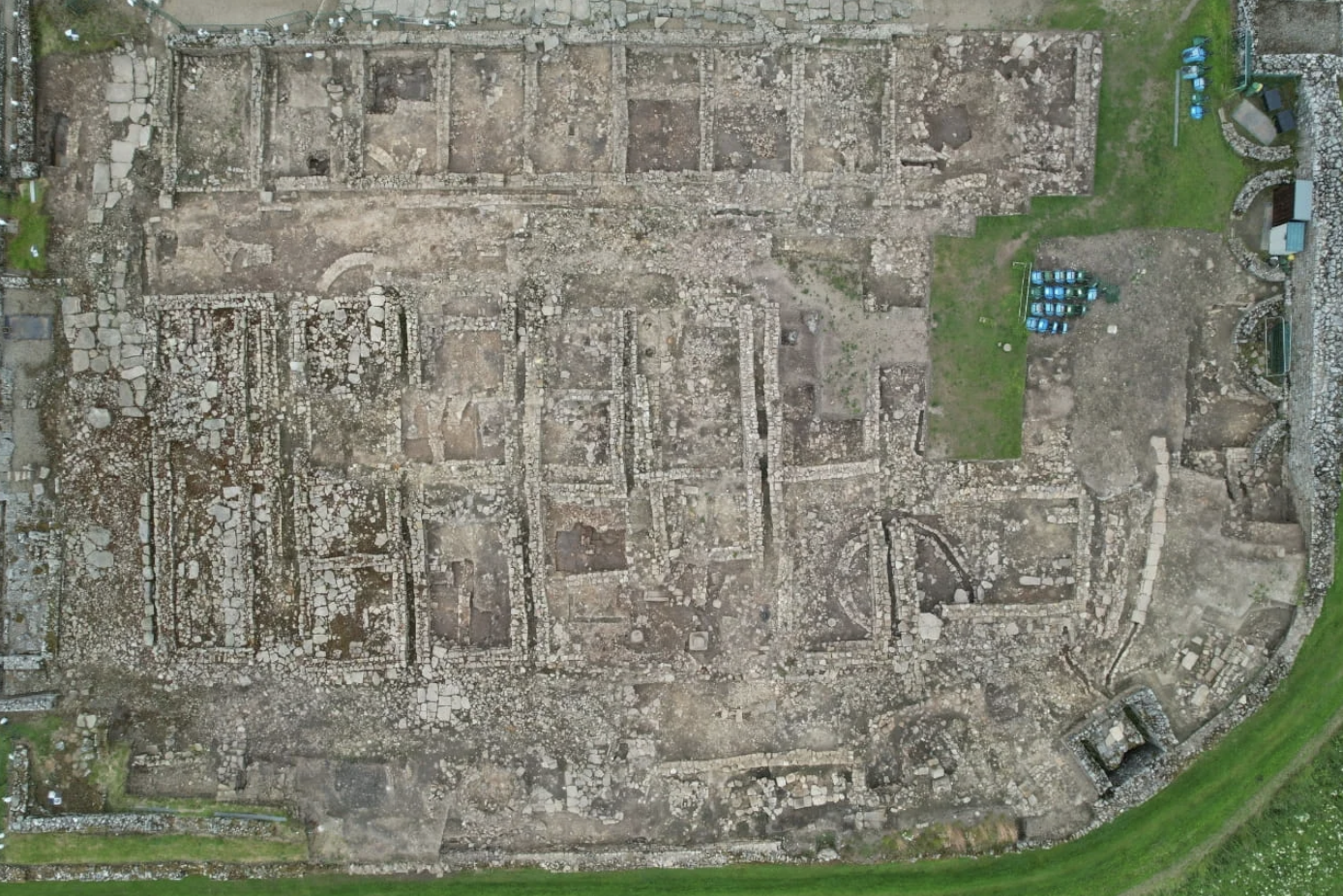
Photo Credit: The Vindolanda Trust
The earliest fort at Vindolanda was established around AD 85 to defend the Stanegate, a strategic Roman road running east to west across northern Britain. When Emperor Hadrian ordered the construction of his famous wall around AD 122, Vindolanda became incorporated into the wider frontier system. Over the centuries, the fort was rebuilt numerous times, with archaeologists identifying at least nine separate phases of occupation.
The site has become internationally renowned thanks to its extraordinary preservation. Waterlogged, oxygen-free deposits have protected thousands of organic artefacts rarely found elsewhere, including leather shoes, textiles, wooden objects and the famous Vindolanda writing tablets, which provide a unique insight into the daily lives of Roman soldiers and civilians on Britain's frontier.
The latest discovery also highlights the long-standing involvement of the Birley family at Vindolanda. Major excavations at the site began under Eric Birley in the 1930s before his son, Robin Birley, oversaw decades of research, including the excavations that uncovered the celebrated writing tablets. Today, Andrew Birley continues that work, leading excavations that still reveal remarkable discoveries from beneath the Roman frontier.
The newly discovered Genius relief is currently undergoing conservation before eventually going on public display at the Vindolanda Museum. Once exhibited, visitors will be able to see a rare image of a Roman guardian spirit that spent over sixteen centuries hidden beneath the floor of a frontier barrack, preserved until its chance rediscovery in 2026.