Roman Coin Celebrating Constantinople Discovered at Rare Devon Villa!
Archaeologists excavating a Roman villa in Devon have uncovered a remarkable coin struck to celebrate the founding of Constantinople, offering fresh evidence of how imperial propaganda reached even the furthest corners of Roman Britain.
The coin, minted between AD 330 and 340, was recovered during the 2026 community excavation at a Roman villa near Halberton. It was found alongside a range of other Roman artefacts, including a silver-plated spoon, a carved bone pin and fragments of a large transport amphora believed to have carried olive oil from southern Spain.
The newly discovered coin belongs to the Constantinopolis commemorative series, produced after Emperor Constantine officially dedicated Constantinople as the capital of the Roman Empire in AD 330.
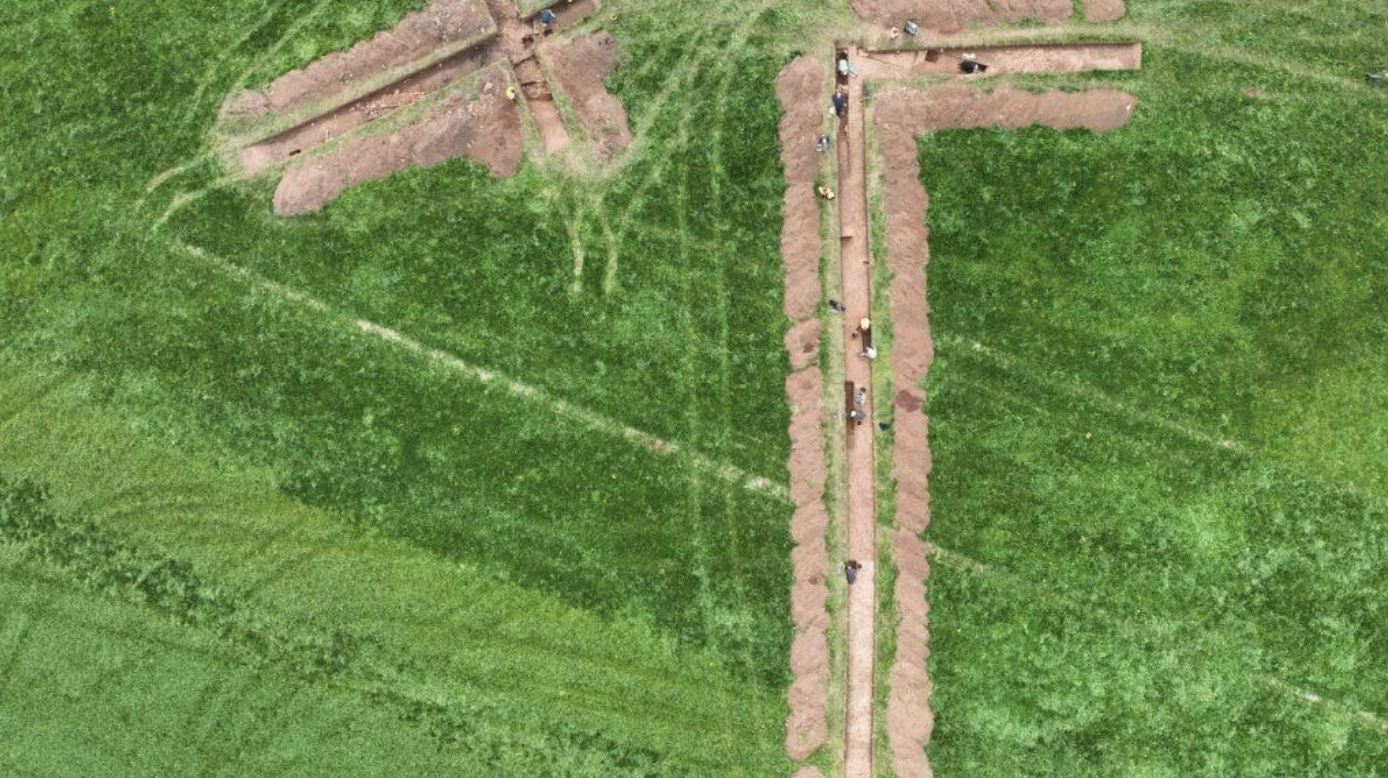
Photo Credit: Cotswold Archaeology
These coins commonly feature the helmeted personification of Constantinople on the front. The reverse typically depicts the winged goddess Victory standing on the prow of a ship while carrying a sceptre and shield. Archaeologists believe the naval imagery commemorates Constantine's victory over Licinius at the Battle of the Hellespont in AD 324, where Constantine's son, Crispus, commanded the fleet that helped secure his father's control of the empire.
Although commemorative in design, these coins were everyday currency rather than ceremonial pieces. Their circulation helped spread political messaging throughout the empire, making the Devon discovery an important reminder that news of Constantine's new eastern capital reached communities far from the empire's political centre.
The coin also aligns with the villa's occupation, which archaeological evidence suggests continued from the mid-second century until the fourth century AD.
Several other finds from the excavation reveal the villa's connections to long-distance trade.
Fragments of a large Dressel 20 amphora were identified among the pottery assemblage. These robust transport jars were manufactured in the Guadalquivir Valley of southern Spain and were widely used across the Roman Empire to carry olive oil. Their presence indicates that imported Mediterranean goods were making their way to this rural Devon estate.
Excavators also recovered a copper-alloy spoon with traces of silver plating. Its distinctive mandolin-shaped bowl is characteristic of fine tableware from the later Roman period, with similar examples known from Roman Colchester.
Another personal object uncovered was a carefully carved bone pin decorated at one end. Items like these were commonly used to fasten hairstyles, secure clothing or close small bags, providing a glimpse into the everyday lives of the villa's occupants.
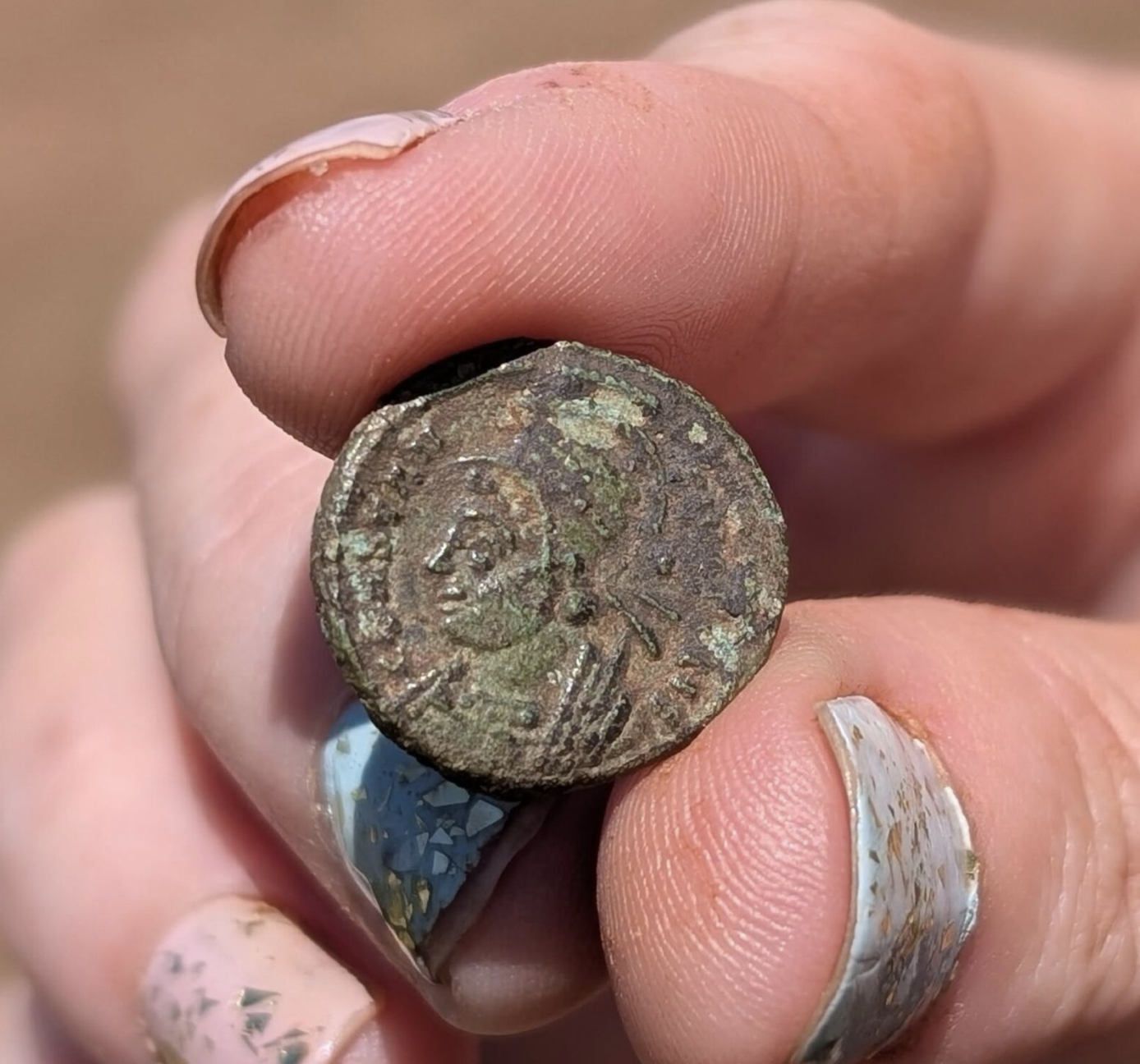
Photo Credit: Cotswold Archaeology
These discoveries add to an impressive collection of artefacts already recovered during the 2026 excavation season. Previous finds include painted pottery, an indented drinking beaker, a fragment of Samian ware featuring a lion-head spout, a copper-alloy bracelet and a blue glass intaglio engraved with the figure of Victory.
The villa itself is one of only a handful of confirmed Roman villas in Devon, making it an exceptionally important archaeological site. Buried beneath farmland between Halberton and Sampford Peverell, it first came to light in 2004 after local metal detectorist John Hill discovered Roman coins and other artefacts in the area.
Subsequent fieldwalking surveys and geophysical investigations revealed a substantial rural estate complete with buildings and enclosed areas. Excavations have shown that the main villa originally measured around 35 metres long and was built as a winged-corridor villa before being enlarged over several phases.
One of its most spectacular discoveries is a richly coloured mosaic floor featuring a central floral design. Archaeologists believe this is the westernmost known example in Britain of this style of polychrome Roman mosaic. Other evidence, including painted wall plaster, underfloor heating and luxury possessions, suggests the estate belonged to a wealthy household.
Investigations of nearby buildings have also revealed a waterproofed tank that may have functioned as a plunge bath, while another structure contained animal bones and worked antler, pointing towards agricultural activity, food processing or small-scale craft production.
The excavation forms part of the SHARE (Saving Halberton's Ancient Roman Environment) project, a five-year initiative running from 2025 to 2030. Led by the University of Exeter in partnership with Cotswold Archaeology and local heritage organisations, the project aims to record and preserve the villa before continued agricultural ploughing causes further damage to its buried remains.
Artefacts recovered during the excavation, together with sections of the villa's mosaics that have been carefully lifted, are expected to become part of the collection at the Tiverton Museum of Mid Devon Life, ensuring they can be studied and enjoyed by future generations.