Rare Greek Hippodrome Rediscovered at Ancient Libyan City of Apollonia!
Archaeologists excavating the ancient city of Apollonia on Libya’s eastern Mediterranean coast have made a series of remarkable discoveries, including the rediscovery of an exceptionally rare Greek hippodrome and the identification of a previously unknown theatre overlooking the sea. The finds, announced by the French Archaeological Mission in Libya, also include sacred complexes that promise to shed new light on religious life in one of the most significant cities of ancient Cyrenaica.
The discoveries were unveiled in the modern town of Susa, which sits beside the ancient ruins. They were presented in the presence of officials from Libya’s Department of Antiquities, the Ministry of Tourism and Antiquities, local heritage organisations and members of the French archaeological team.
Among the most significant finds is the rediscovered hippodrome, a large venue built for horse and chariot racing. According to Vincent Michel, who leads the French Archaeological Mission in Libya, the structure is of exceptional scientific importance because no similar Greek hippodrome is currently known elsewhere in Cyrenaica or, potentially, across the wider Mediterranean.
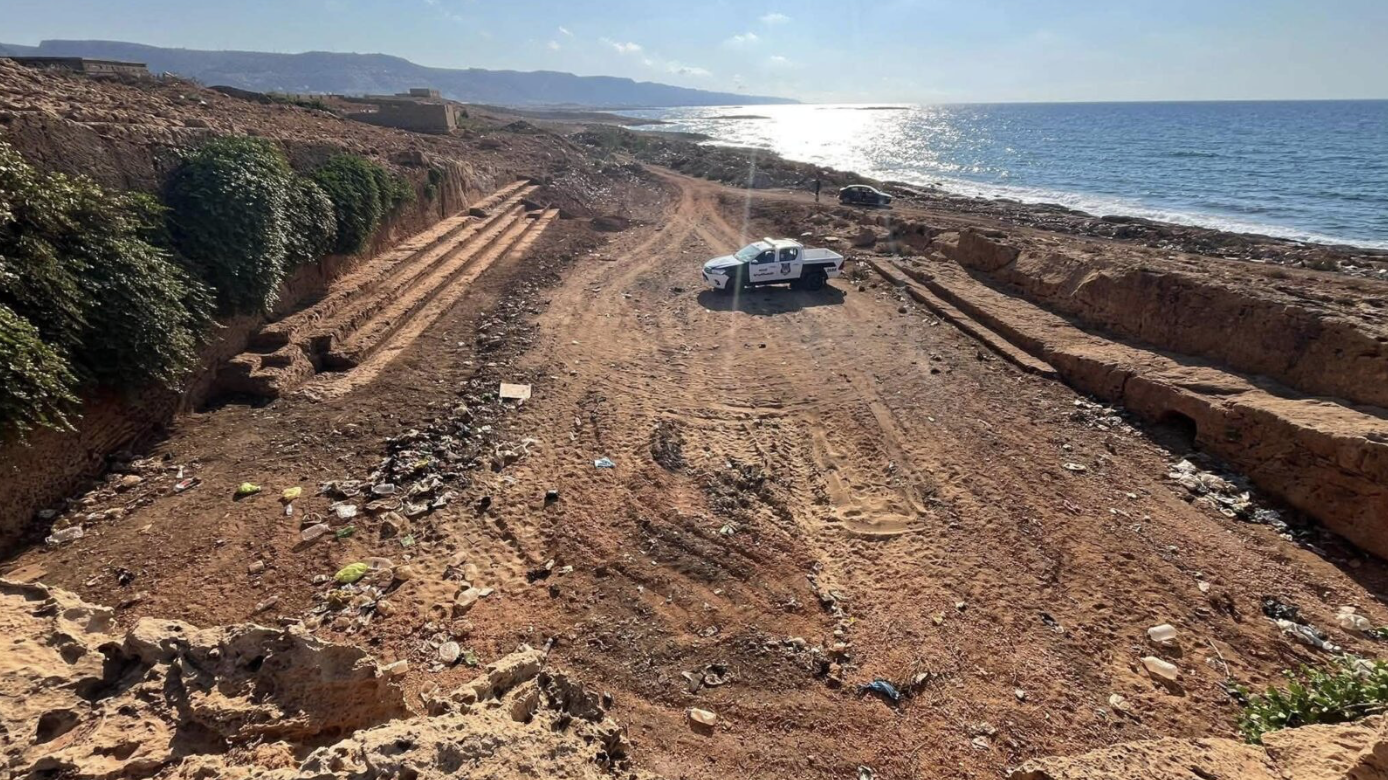
Photo Credit: Mission archéologique française de Libye via Facebook
Unlike theatres, which were typically constructed from durable stone, hippodromes often leave behind little visible evidence. Their long racing tracks were usually defined by earth embankments, walls and other architectural features that can easily disappear beneath centuries of sediment or later development. As a result, surviving examples are exceptionally uncommon.
The rediscovery suggests that Apollonia possessed a far more elaborate civic landscape than previously believed. Beyond hosting sporting events, hippodromes were important public spaces where festivals, ceremonies and political gatherings took place, making them central to life in many Greek cities.
Although the structure has now been identified, archaeologists have yet to publish a detailed study. Future excavations will be needed to establish its age, original layout, dimensions and how it evolved.
Alongside the racecourse, archaeologists have identified a second major public building: a theatre positioned directly above the Mediterranean coastline.
While Apollonia is already home to a well-known coastal theatre, researchers believe this newly recognised structure represents an entirely separate performance venue rather than a rediscovery of the existing monument.
At present, little is known about the building. Its exact date and size remain uncertain, and archaeologists have not yet determined whether it functioned as a full-scale theatre or a smaller performance space, such as an odeon. Even so, its location overlooking the harbour could provide valuable insights into how the city's public buildings were arranged and how Apollonia developed around its maritime setting.
The archaeological mission also reported the discovery of previously unknown sacred complexes, adding another layer to the city's religious landscape.
Apollonia has already produced important evidence of ancient worship. Earlier excavations in the Kallikrateia district uncovered 19 rock-cut altars, together with numerous religious artefacts dating to the fourth and third centuries BC. Archaeologists also identified a partially rock-cut structure believed to have been used for ritual offerings or sacrifices.
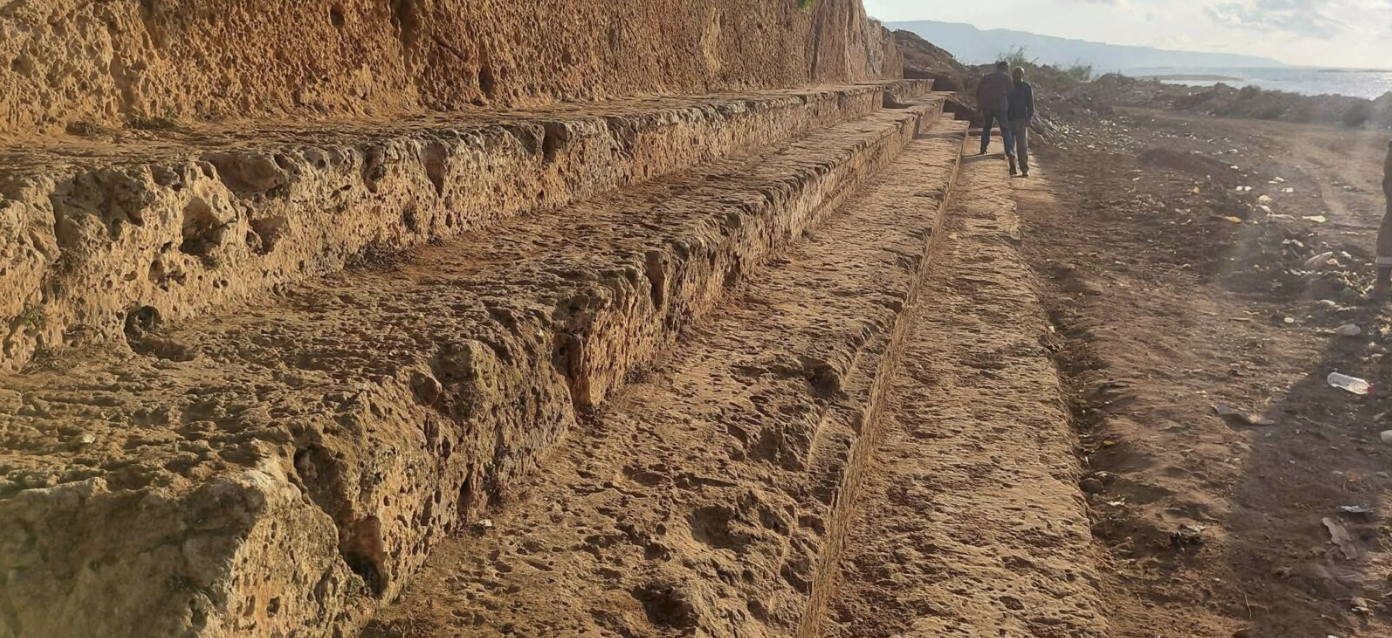
Photo Credit: Mission archéologique française de Libye via Facebook
These earlier discoveries demonstrated that religious activity played an important role in the city long before it flourished under Roman and Byzantine rule. The newly identified sacred areas may now help researchers build an even fuller picture of spiritual life in ancient Apollonia.
Apollonia was originally established as the port of Cyrene, one of the most important Greek settlements in North Africa. Founded by colonists from the Aegean island of Thera during the seventh century BC, Cyrene lay around 16 kilometres inland, while Apollonia served as its vital maritime gateway, connecting the fertile Green Mountain region with trade routes across the eastern Mediterranean.
Although initially dependent on Cyrene, the port gradually gained independence towards the end of the Hellenistic period. It later became one of the five principal cities of the Cyrenaican Pentapolis, alongside Cyrene, Ptolemais, Taucheira and Berenice.
The city continued to thrive during the Roman period and remained occupied well into Late Antiquity. Today, visitors can still see the remains of defensive walls, bathhouses, harbour facilities, churches, residential districts and numerous religious monuments.
Apollonia’s coastal location brought prosperity throughout antiquity, but it has also contributed to the site's gradual decline. Rising sea levels and coastal erosion have left a substantial portion of the ancient city submerged beneath the Mediterranean. According to the French Ministry of Culture, around one-third of Apollonia now lies underwater.
Archaeological investigations beneath the sea began in the 1980s, complementing decades of work on the city's fortifications, cemeteries, baths and sacred districts. The French Archaeological Mission has been studying Apollonia since 1976, with Vincent Michel directing the project since 2011.
Taken together, the rediscovered hippodrome, newly identified theatre and recently recognised sacred complexes suggest that Apollonia was a far more complex and monumental city than previously understood.
If future excavations confirm the rarity of the hippodrome, it could significantly reshape scholars' understanding of the city's role within the Greek world of North Africa and the wider Mediterranean. As archaeologists continue their investigations, these discoveries have the potential to transform what we know about one of Libya’s most important ancient ports.