Ancient Ethiopian Foot Fossil Finally Identified: A New Relative of Lucy!
For years, a 3.4-million-year-old foot fossil from Ethiopia puzzled scientists. Now, researchers have confirmed that it belonged to Australopithecus deyiremeda, a close but distinct relative of the famous Lucy, who belonged to Australopithecus afarensis. This discovery strengthens the idea that multiple hominin species once shared the same East African landscapes, experimenting with different ways of moving and feeding long before humans appeared.
The fossil, discovered in 2009 at the Woranso-Mille site in Ethiopia’s Afar Rift, consists of eight small bones. While its overall shape was unmistakably hominin, it lacked the characteristics of A. afarensis, which dominated the region between 3 and 4 million years ago. Most notably, the big toe was still opposable, an adaptation useful for grasping branches. Lucy’s species, in contrast, had a forward-pointing big toe, suited for walking fully on the ground.
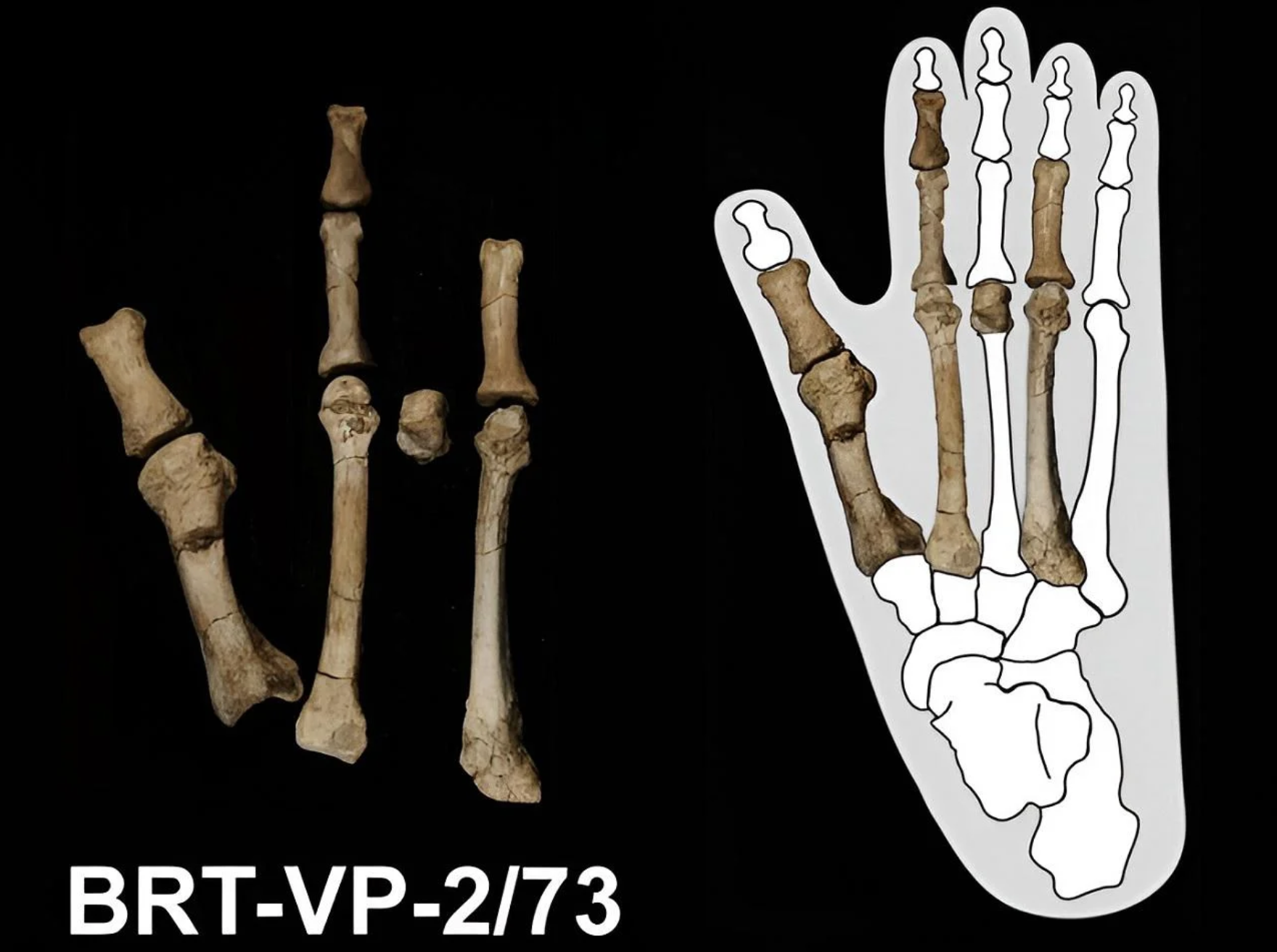
Photo Credit: Yohannes Haile-Selassie, Arizona State University
Initially, scientists were hesitant to assign the foot to a specific species, as species classification generally relies on skulls, jaws, and teeth rather than foot bones. Although teeth had been found nearby, their connection to the foot remained uncertain. In 2015, researchers proposed A. deyiremeda as a new species based on jaws and teeth from the same area, but without direct evidence linking the foot to these fossils, the identification was tentative.
Over more than a decade of excavations, this picture has become clearer. Researchers uncovered 13 new teeth and jaw fragments from the same sediment layers as the original foot. Geological analysis confirmed they came from the same deposits, and detailed anatomical comparisons showed they matched A. deyiremeda rather than A. afarensis or older species like A. anamensis.
These fossils reveal a species with a striking mix of primitive and advanced traits. While A. deyiremeda could walk on two legs, it retained a grasping big toe and probably pushed off the ground with its second toe, a feature seen in neither humans nor Lucy’s species. This evidence shows that early bipedalism was far more variable than previously believed, with multiple forms evolving in parallel.
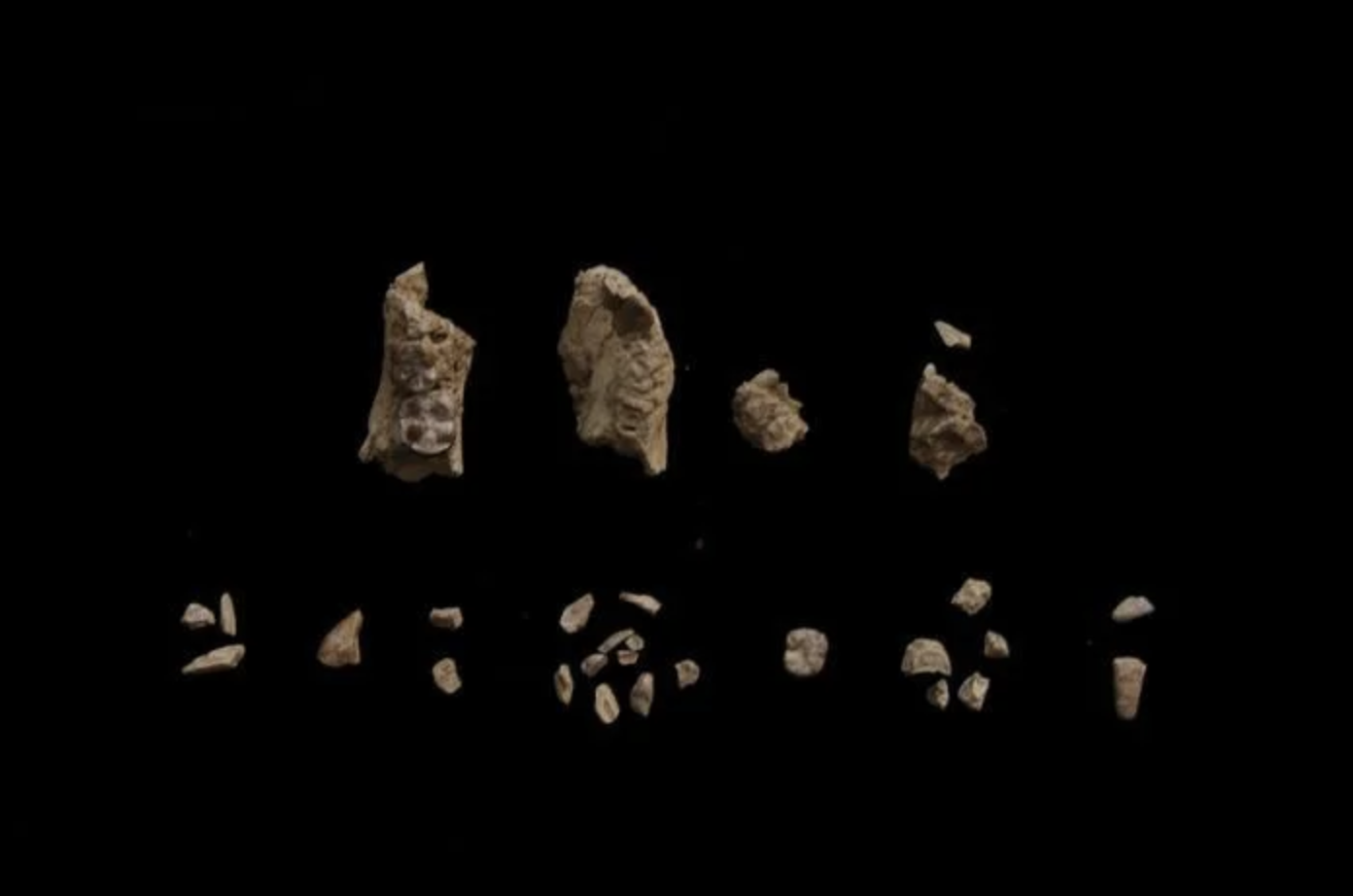
Photo Credit: Yohannes Haile-Selassie, Arizona State University
Chemical analysis of tooth enamel also provides insights into how these species coexisted. A. afarensis favoured open environments and a diverse diet that included grasses and sedges. A. deyiremeda, however, relied more on woodland resources, such as leaves and fruits. These differences in diet, along with their distinct ways of moving, likely reduced competition and allowed the two species to live in the same region at the same time.
Researchers also discovered a juvenile A. deyiremeda jaw, complete with baby teeth and developing adult teeth. CT scans revealed growth patterns similar to other early australopiths, suggesting that despite their anatomical differences, these ancient hominins shared comparable developmental rhythms.
The confirmation that two closely related species lived side by side over three million years ago adds new depth to our understanding of human evolution. Early members of our lineage were not following a single, linear path. Instead, they explored a variety of ecological niches and locomotor strategies in a changing landscape, clues that may help us understand both our origins and the evolutionary processes that shaped us.