Vast Neolithic Pit Circle Confirmed at Durrington Walls Near Stonehenge!
Archaeologists working just outside Durrington Walls in Wiltshire have confirmed the existence of a huge Neolithic pit circle encircling the henge, a discovery that adds a striking new chapter to our understanding of the prehistoric landscape north of Stonehenge.
The story begins in 2020, when researchers first spotted a series of large circular anomalies forming two sweeping arcs around the site. Early interpretations hinted that these might be the traces of one of Britain’s largest prehistoric constructions. That idea has now been strengthened considerably. Follow-up investigations have revealed that at least sixteen enormous pits once formed an almost perfect circle surrounding Durrington Walls.
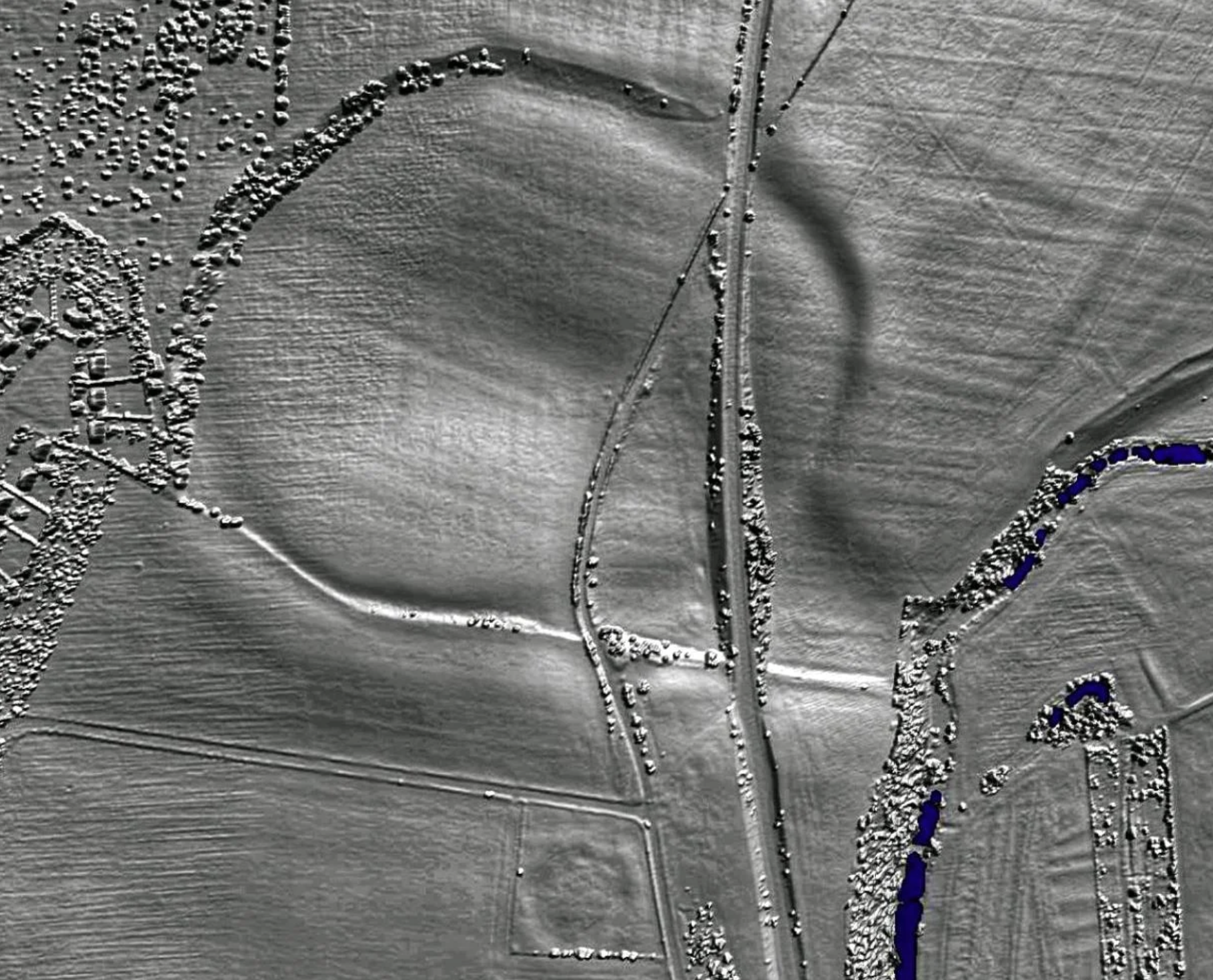
Photo Credit: Dr John Wells / CC BY 4.0
The project, led by the University of Bradford with major input from the University of St Andrews, combined large-scale geophysical surveys, borehole testing, and detailed laboratory analysis. Some features along the northern arc were previously dismissed as natural sinkholes. However, when these were re-examined in 2021, a different picture emerged. The new evidence shows they were not natural formations in the chalk at all, but purpose-dug pits dating to the late Neolithic.
Optically stimulated luminescence (OSL) dating places the construction of the pits at around 2480 BCE. The consistency of the dates suggests the pits were created in a short, coordinated burst of activity rather than gradually over generations. Each pit is astonishing in scale, roughly ten metres across and up to five metres deep, pointing to a highly organised workforce and a complex, shared plan.
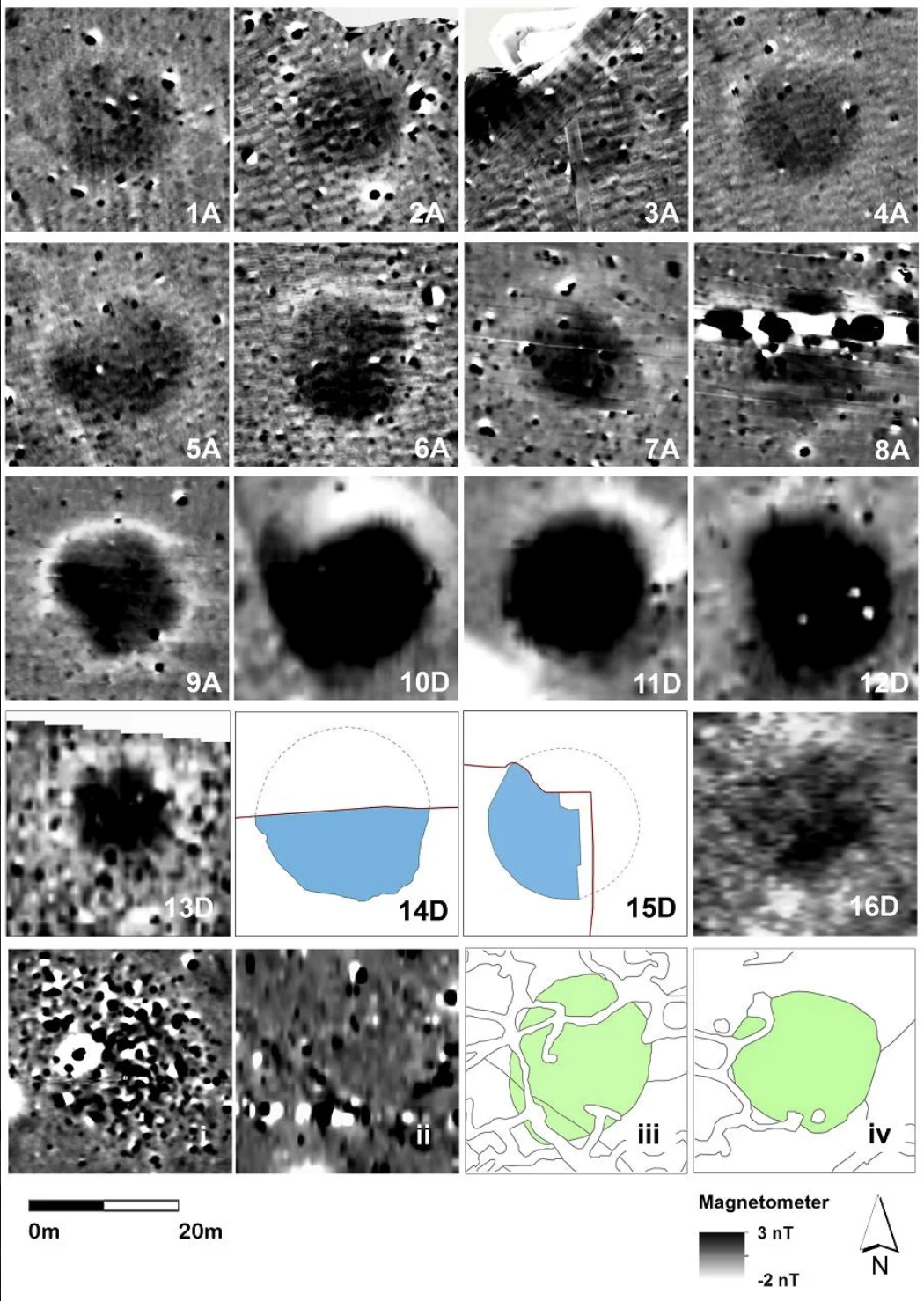
Photo Credit: V. Gaffney et al., Internet Archaeology (2025); CC BY 3.0
One of the most innovative aspects of the research is the breadth of scientific techniques used together. Sedimentary ancient DNA recovered from the pit fills revealed traces of long-gone plants and animals, helping researchers reconstruct the landscape as it would have appeared over 4,000 years ago. Geochemical testing showed that the sediments across the pits are remarkably alike, reinforcing the idea that they were all part of a single monumental scheme.
Fieldwork on both arcs has now confirmed several previously uncertain features, bringing the total number of confirmed or probable pits to sixteen. A location to the west of Durrington Walls was too disturbed by modern activity for firm conclusions, but this does not alter the overall pattern: the henge was once ringed by a deliberate, monumental circuit of massive, human-made pits.
The scale, precision and organisation behind this structure offer fresh insights into the communities of the late Neolithic. Even in an area renowned for spectacular prehistoric monuments, including Stonehenge itself, the Durrington pit circle stands out as an unexpected and elaborate addition, a sign that there is still much to uncover in this iconic ancient landscape.