Ancient Smyrna Reveals 1,500-Year-Old Rooms, Wall Paintings and Roman Water Channel!
Archaeological excavations in the ancient city of Smyrna, in present-day İzmir, western Türkiye, are revealing new evidence for how the city developed during Late Antiquity. Researchers have uncovered three previously undocumented rooms, fragments of wall paintings and decorated floors dating to around 1,500 years ago.
The discoveries are being made in the area surrounding Smyrna’s ancient Agora and theatre, where archaeological investigations have been continuing for decades. Alongside the newly identified structures, researchers are also studying an ancient Roman water channel that remarkably continues to carry water nearly two millennia after it was constructed.
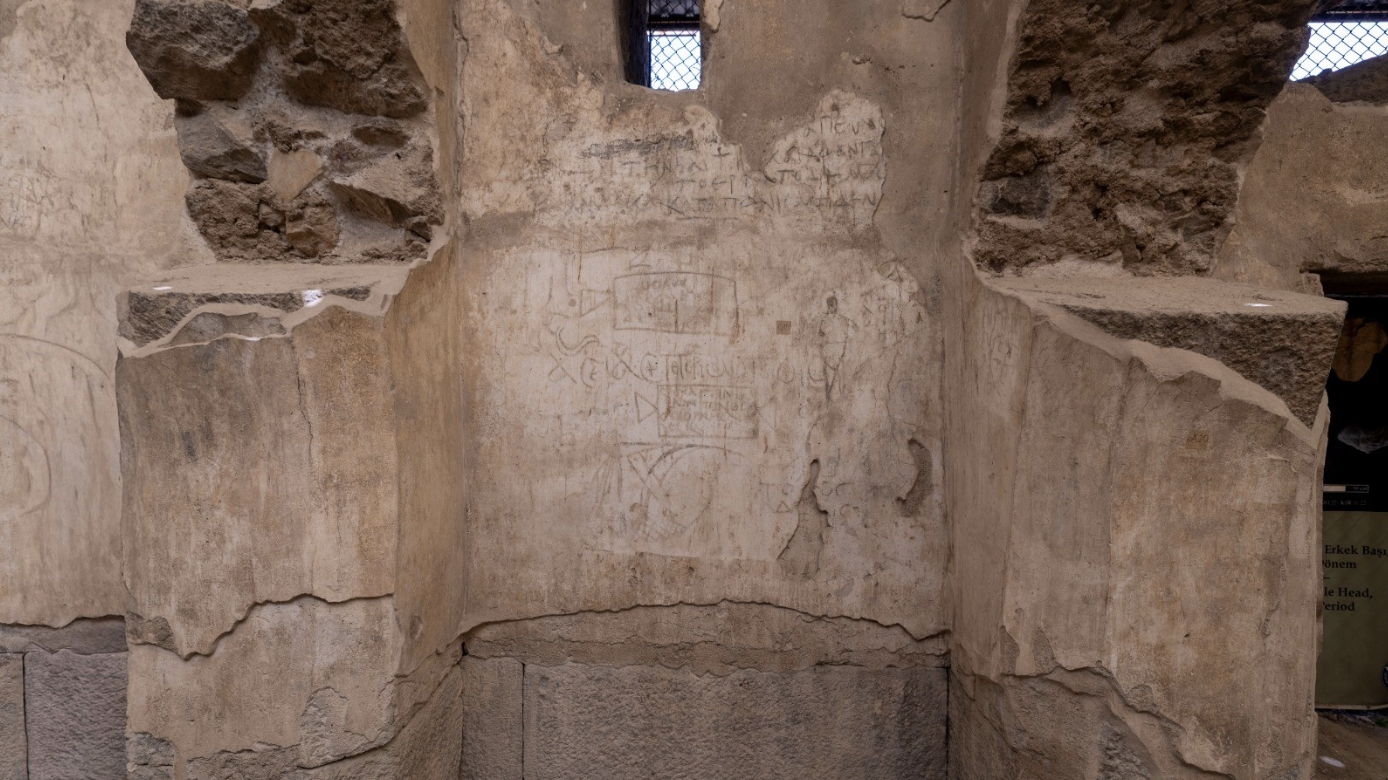
Photo Credit: AA
The discovery of painted walls is particularly significant because this type of decoration had not previously been documented in the newly excavated spaces.
Professor Akın Ersoy of İzmir Katip Çelebi University, who leads the archaeological excavations, said the team had encountered wall paintings for the first time in this part of the site. Although Smyrna has already produced numerous examples of ancient painted surfaces and graffiti, the newly uncovered material provides another opportunity to investigate the appearance and use of its buildings.
The Agora is already famous for graffiti preserved on plastered walls and architectural features within the basement of its basilica. These include drawings of gladiators and ships, depictions of birds, personal names and scenes connected with everyday life.
The newly discovered paintings appear to represent a different type of evidence. Their colours, subjects and decorative schemes have not yet been fully published, meaning archaeologists are still working to establish exactly how the rooms were decorated and what their function may have been.
Further excavation could help determine whether the paintings formed part of a larger decorative programme and whether the rooms belonged to a private building or a structure intended for public use.
The painted walls were found alongside three rooms that provide further clues about the architecture of this part of Smyrna.
Two of the rooms contain mosaic floors, while the third was paved with marble. The discoveries follow the identification of another mosaic during an earlier excavation season, suggesting that the decorated floor was not an isolated feature but formed part of a considerably larger complex.
One of the mosaics previously uncovered along the Agora's North Street measures approximately 3 by 4 metres. Its design consists of geometric patterns arranged around a central Solomon's Knot motif. Such motifs were widely used in ancient decorative art and could carry protective associations, including connections with the belief in warding off misfortune or the evil eye.
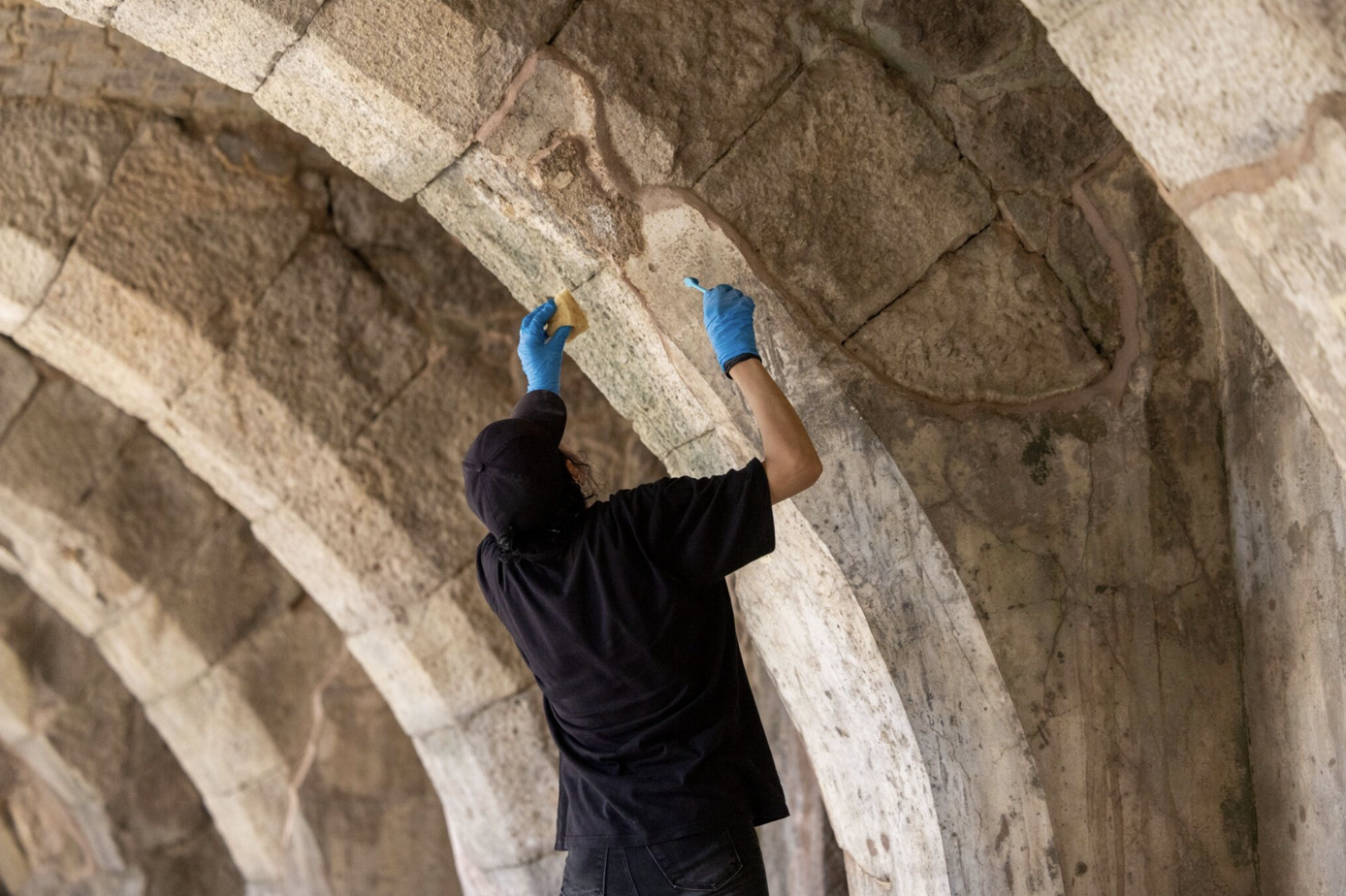
Photo Credit: AA
The newly discovered rooms provide archaeologists with a much broader architectural context in which to consider these mosaics. Instead of examining a single decorated floor in isolation, researchers can now investigate how the individual rooms were connected and whether differences between mosaic and marble flooring reflected different uses.
Ersoy has pointed out similarities between the newly excavated spaces and the well-known Terrace Houses at Ephesus. However, he believes the rooms at Smyrna may have had a public rather than domestic function. Their exact purpose has not yet been established.
The discoveries also shed light on a period when Smyrna was undergoing considerable change. The city had a long history before Roman rule, becoming an important Hellenistic settlement following the era of Alexander the Great. Under the Roman Empire, Smyrna developed into a major urban centre, with its Agora serving important commercial and civic roles.
The surviving Agora was substantially rebuilt after a devastating earthquake struck the region in AD 178. Emperor Marcus Aurelius supported the reconstruction, helping to restore the city's monumental centre.
The newly discovered rooms belong to a much later phase, dating to the fifth and sixth centuries AD. By this point, the political and religious landscape of the Roman world had changed considerably. The Roman Empire had developed into eastern and western spheres of administration, while Christianity had become increasingly prominent throughout urban society.
These later structures therefore provide an opportunity to examine how Smyrna's older Roman urban landscape continued to be used and adapted centuries after the city had been rebuilt.
Rather than remaining unchanged, ancient cities could be repeatedly modified as populations, religious practices and economic needs evolved. The rooms discovered beneath the modern city appear to form part of this continuing process of transformation.
Excavations at Smyrna's theatre are providing further evidence for this long history. Research published in the archaeological journal Höyük in 2026 has examined the monument's development using architectural remains, inscriptions and ancient literary sources, demonstrating how the theatre itself changed substantially over time.
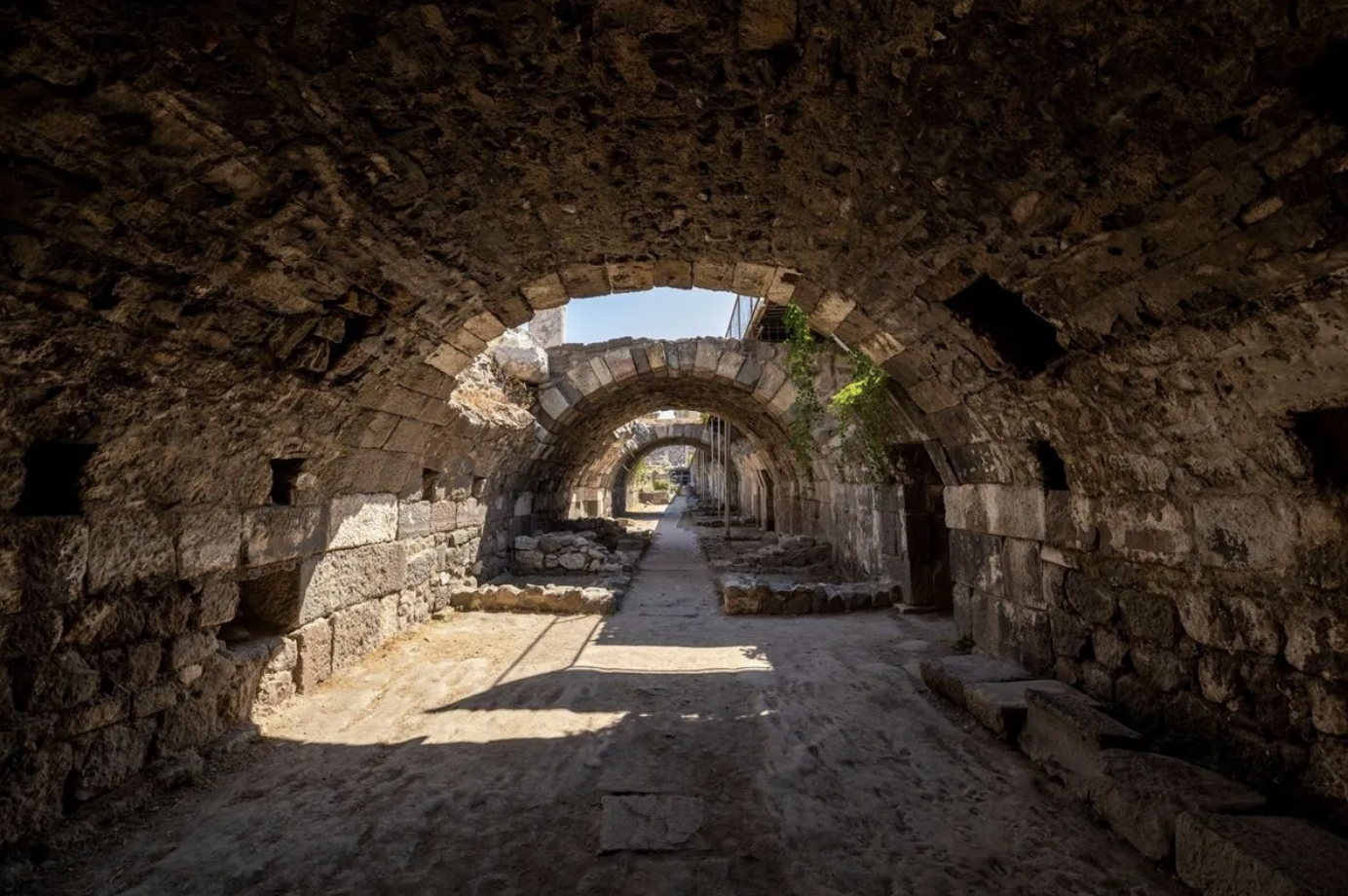
Photo Credit: AA
Perhaps one of the most remarkable features being investigated beneath Smyrna is considerably older than the newly uncovered rooms. Archaeologists have traced around 150 metres of an ancient Roman water channel beneath the historic city. Even more remarkably, water is still flowing through the channel today.
The structure formed part of Smyrna's ancient water-supply network, helping transport water towards the lower parts of the city. Researchers are now attempting to establish where the surviving flow originates.
One possibility is that the channel was connected to a natural spring located close to the Namazgah Bath and Kurşunlu Mosque, south of the archaeological area. During the Roman period, natural springs could be incorporated into urban water systems through channels and other infrastructure. The precise source of the water has yet to be confirmed, making the channel an ongoing focus of investigation.
The latest discoveries demonstrate just how much remains to be learned about Smyrna despite the site's long history of archaeological investigation.
The wall paintings provide new evidence for the decoration of buildings in Late Antique Smyrna, while the mosaic and marble floors reveal a more complex architectural arrangement than previously understood. At the same time, the functioning Roman water channel offers a striking reminder of the sophisticated infrastructure that supported the ancient city.
Excavations will continue around the newly identified rooms before archaeologists move on to investigate the previously identified bath-gymnasium complex.
Together, these discoveries illustrate how Smyrna was not simply a Roman city frozen in time. Its buildings, infrastructure and spaces continued to evolve for centuries, leaving behind layers of evidence that are only now being uncovered beneath modern İzmir.