Roman Temple Dedicated to Mars Discovered at Kapersburg in Germany!
Archaeologists investigating a Roman settlement hidden beneath woodland in Hesse, Germany, have uncovered a temple dedicated to Mars alongside a series of religious and everyday objects. The discoveries are providing a much clearer picture of life in the civilian settlement that grew beside the Roman fort of Kapersburg and may also indicate that people continued to use the site after the Roman military presence had disappeared.
The excavations have revealed a remarkably well-preserved archaeological landscape, including roads, terraces, buildings and occupation deposits lying only a few centimetres beneath the modern forest floor. Among the most significant finds are two newly discovered votive stones, a small bronze figure of Victoria and fragments of another statue that researchers believe could depict Mars.
The work is being carried out by hessenARCHÄOLOGIE and the Institute of Archaeological Sciences at Goethe University Frankfurt. Excavations in the civilian settlement, known as a vicus, began in 2024, with researchers turning their attention to an area that had previously received considerably less investigation than the neighbouring fort.
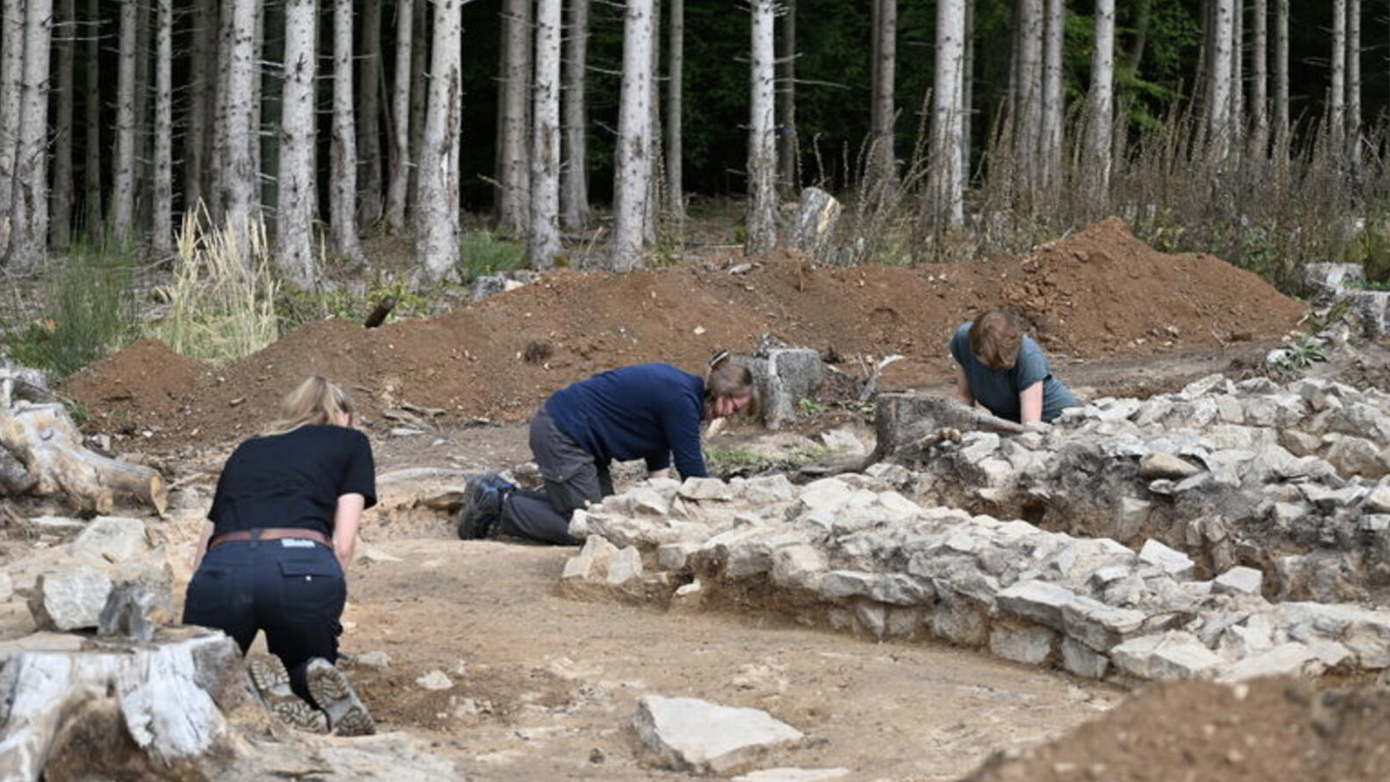
Photo Credit: Lars Görze MA, LfDH
Kapersburg was part of the Upper German-Raetian Limes, the vast frontier system that marked the northern boundary of Roman-controlled territory in this part of the empire. The fort was occupied for approximately 150 years and was home to an auxiliary unit known as the Numerus Nidensium. Its name appears to connect the unit with ancient Nida, located in the area of modern Frankfurt-Heddernheim.
Archaeological investigations at the fort itself began more than a century ago, including work carried out by Louis Jacobi and the Imperial Limes Commission. The settlement that developed outside the fort, however, has remained much less well understood.
The woodland setting has proved particularly valuable for modern archaeologists. Unlike sites that have spent centuries beneath agricultural fields, the Kapersburg settlement has largely escaped the repeated disturbance caused by ploughing. As a result, archaeological deposits have survived extraordinarily close to the current ground surface. Dr Kai Mückenberger, Hesse's Limes coordinator and district archaeologist, has highlighted the exceptional preservation encountered during the excavations.
The remains provide an opportunity to examine not only individual buildings and artefacts, but also the layout of the settlement and the ways in which it changed over time.
One of the excavation's most notable discoveries is a Roman temple dedicated to Mars, the god associated with warfare. The sanctuary has produced several objects connected with religious activity. Two previously unknown votive stones were found alongside a small bronze statuette depicting Victoria, the Roman personification of victory. Fragments belonging to another statue were also recovered.
Although its identification is not yet certain, archaeologists believe the larger statue could have represented Mars himself. If confirmed, it would provide another important indication of the religious practices taking place within the settlement.
The discoveries add to earlier evidence for the worship of Mars at Kapersburg. A separate votive stone dedicated to the god was previously recovered from the site and is now displayed at the Wehrturm Museum in Rosbach vor der Höhe.
The inscriptions from the new excavation are being examined by Prof. Dr Markus Scholz of Goethe University Frankfurt and the wider research team. Studying these objects could help archaeologists understand more about the religious lives of both the soldiers stationed at Kapersburg and the civilians who lived alongside them.
Perhaps even more intriguing than the temple discoveries is evidence suggesting that activity at Kapersburg may have continued after the Roman military abandoned the frontier. Among the finds are a Late Antique fibula, or brooch, as well as fragments of handmade pottery. According to hessenARCHÄOLOGIE, these objects could represent the first archaeological evidence for activity at Kapersburg after the Roman withdrawal from the Limes region during the third century CE.
The abandonment of the frontier formed part of the wider changes affecting the Roman Empire during the so-called 'Limesfall' in the mid-third century CE. Kapersburg subsequently ceased to operate as a Roman military installation.
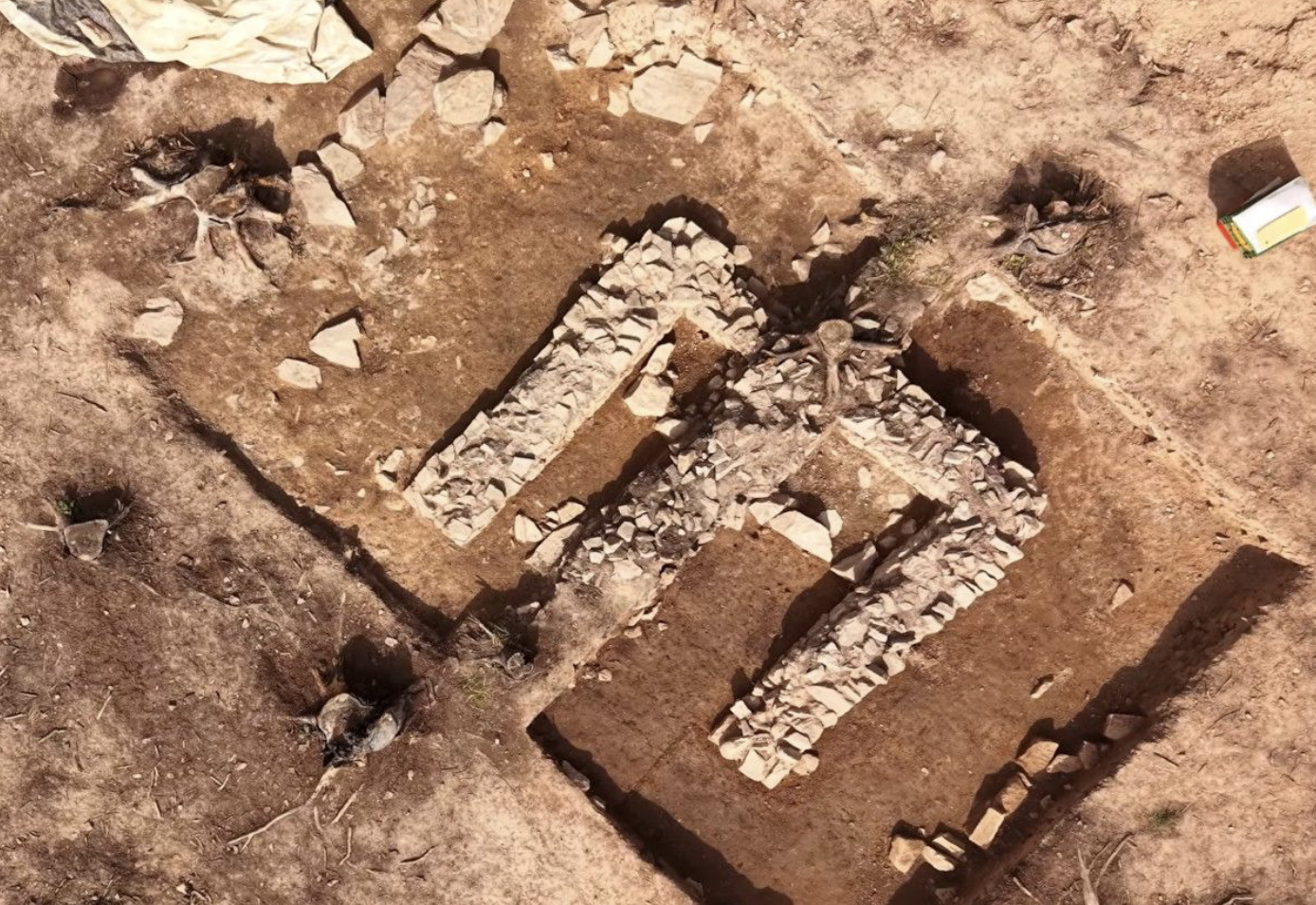
Photo Credit: Landesamt für Denkmalpflege Hessen (LfDH)
The newly recovered objects raise the possibility that the site was not immediately deserted. Researchers have cautiously linked this later material with Alemannic groups known to have lived in the Wetterau region. At this stage, however, it is impossible to say whether people used the abandoned settlement only temporarily or whether there was a more established phase of occupation. Further excavation will be important in determining the extent and character of this activity.
The archaeological evidence is also revealing how the settlement functioned while Kapersburg was still part of the Roman frontier system. Excavators have identified areas associated with craft production, including what appears to have been a smithy. At a later stage, parts of the settlement were reorganised, with deposits used to level the area before the workshop was replaced by residential buildings.
The remains of roads and artificial terraces are providing further clues about the organisation of the vicus. These features suggest that the settlement was considerably more complex than a simple collection of buildings supporting the nearby military fort.
Instead, Kapersburg appears to have been a dynamic community with its own workshops, homes, roads and religious spaces. Its layout changed as the needs of the people living there changed. The exceptional survival of these remains makes the site particularly valuable for understanding civilian life on the Roman frontier.
Kapersburg has already attracted archaeological attention for more than 125 years, while the Upper German-Raetian Limes was added to the UNESCO World Heritage List two decades ago. Yet the latest excavations demonstrate just how much remains hidden beneath the surrounding woodland.
The discovery of the Mars temple provides new evidence for religious activity within the settlement, while the possible Late Antique material raises questions about what happened at Kapersburg after Roman control of the frontier came to an end.
With archaeological deposits surviving only centimetres beneath the forest floor, the site offers researchers a rare opportunity to investigate these changes in unusually well-preserved surroundings.
Further excavations involving students from Goethe University Frankfurt are planned if research can continue next year. For now, Kapersburg remains a reminder that even archaeological sites investigated for generations can still hold substantial discoveries beneath the surface.