Archaeologists Discover Unusual Open-Air Mithras Sanctuary in Croatia!
A newly examined sanctuary in Croatia is raising fresh questions about one of the Roman Empire’s most mysterious religious cults. Archaeologists studying a Mithras site near the village of Močići believe worshippers may not have gathered inside a traditional enclosed temple at all. Instead, rituals could have taken place in the open air, surrounded by rocky terrain, a natural spring, and a cave embedded into the Dalmatian hillside.
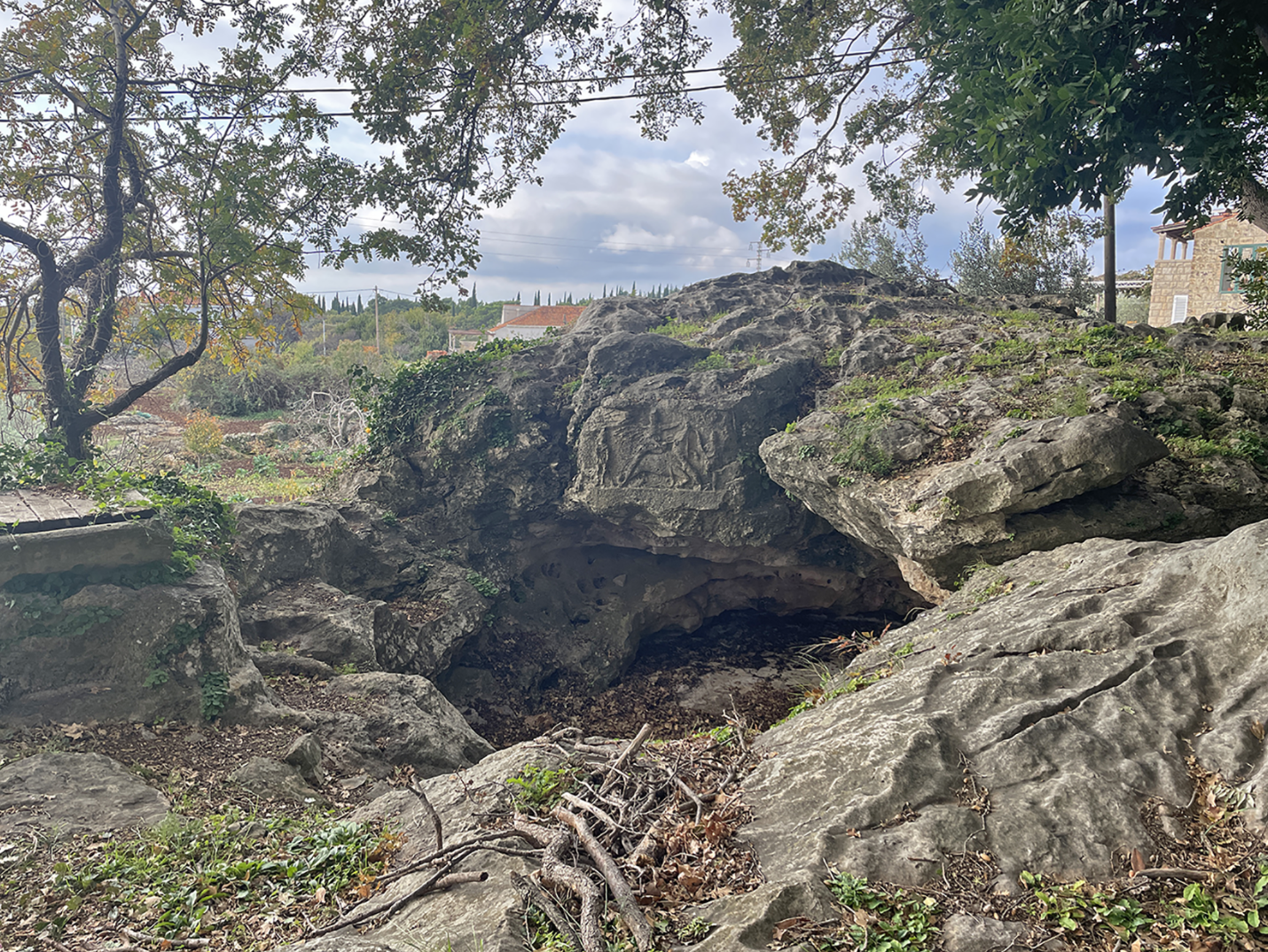
Photo Credit: Ian Wilson and Matthew McCarty, 2026
The findings, published in the Journal of Roman Archaeology, come from researchers Ian S. Wilson of Harvard University and Matthew McCarty of the University of British Columbia. Their work revisits a little-known sanctuary overlooking the ancient settlement of Epidaurum, near today’s Cavtat on Croatia’s Adriatic coast. What they uncovered challenges long-standing assumptions about how followers of Mithras practised their faith.
For decades, scholars have viewed Mithraic worship as something that happened inside specially designed temples known as mithraea. These spaces tended to follow a familiar layout: long enclosed chambers with benches lining the walls, a central aisle, and an image of Mithras slaying a bull positioned at the far end. Such interiors are thought to have created controlled, symbolic settings where worshippers gathered for ritual meals and secret ceremonies.
Močići, however, appears to tell a different story.
The site first attracted attention in the nineteenth century when archaeologist Arthur Evans recorded a carved image of Mithras above the entrance to a limestone cave containing a natural water source. Yet despite being recognised so long ago, the sanctuary had never been thoroughly studied using modern archaeological methods.
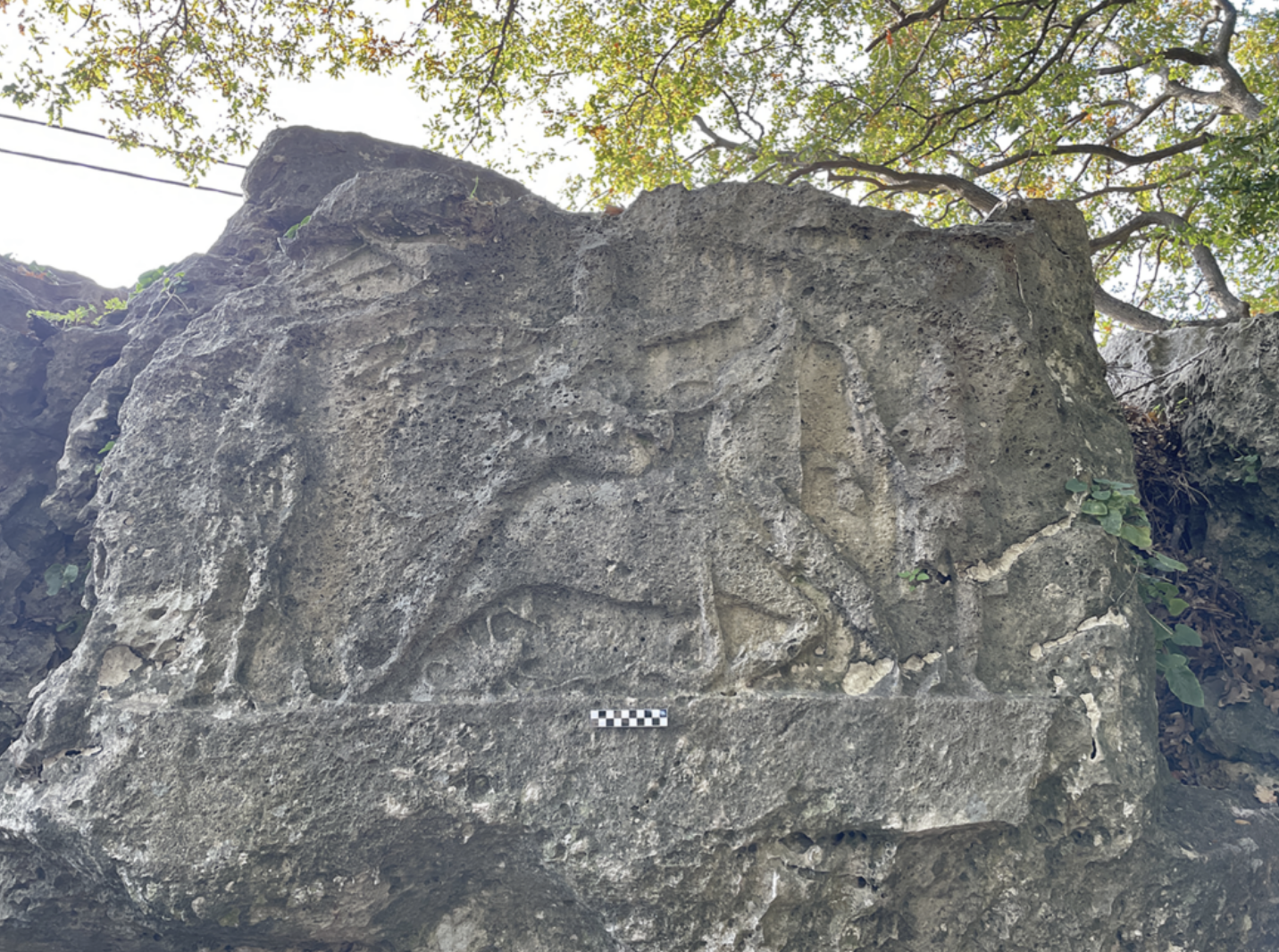
Photo Credit: Ian Wilson and Matthew McCarty, 2026
Wilson and McCarty revisited the location using advanced recording techniques, including photogrammetry, which allowed them to build a detailed three-dimensional model of the sanctuary. This digital reconstruction helped them better understand how the cave, spring, carved relief, and surrounding landscape may have functioned together as a single sacred environment.
One of the most surprising discoveries was what was missing. Archaeologists found no signs of a built temple structure. There were no walls, roof supports, tiles, benches, or architectural remains usually associated with Mithraic sanctuaries. Even the cave itself appears too confined to have hosted gatherings in the same way as typical mithraea elsewhere in the Roman world.
Instead, evidence points towards the open clearing outside the cave as the likely focus of activity. Measuring around 14 metres across, the natural depression could have comfortably accommodated groups of worshippers. From this vantage point, the carved image of Mithras becomes far easier to see, suggesting it may have served as the centrepiece of rituals conducted outdoors rather than underground.
The relief itself follows familiar Mithraic imagery. Mithras is shown killing the bull, surrounded by recognisable symbolic figures including the dog, snake, scorpion, raven, the torchbearers Cautes and Cautopates, as well as Sol and Luna. While the imagery aligns with Mithraic traditions across the empire, the sanctuary’s physical setting stands apart from the norm.
This distinction may prove significant. Roman scholars have often described Mithraism as a portable religion, capable of reproducing its sacred spaces almost anywhere through a standard architectural template. Yet Močići suggests a different possibility: that worshippers sometimes adapted their beliefs to the natural environment rather than reshaping the landscape around them.
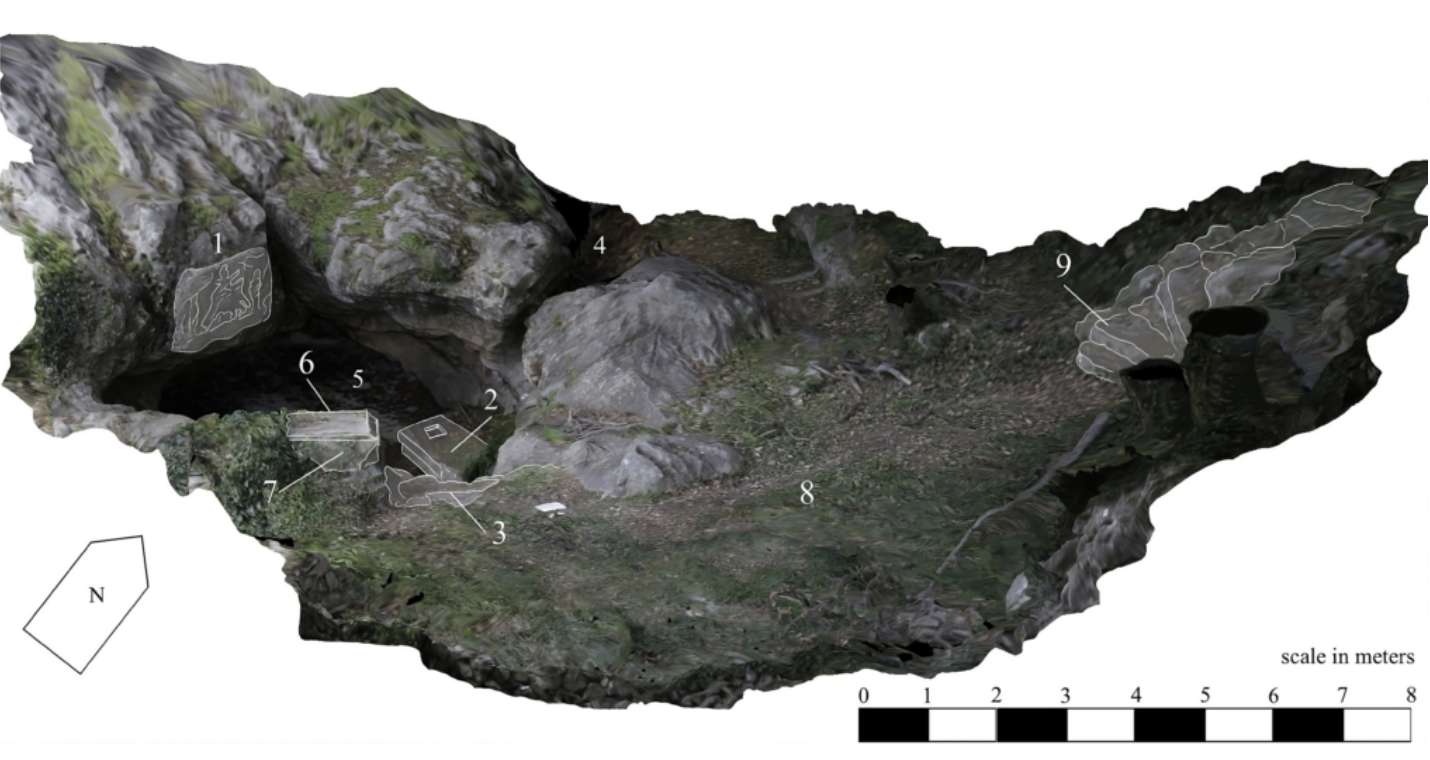
Photo Credit: Ian Wilson and Matthew McCarty, 2026
The setting itself may explain why this location was chosen. Mithras had long-standing symbolic links to caves, rocks, and flowing water. In many Roman sanctuaries, artificial interiors were designed to mimic grottoes and underground spaces. At Močići, however, there was no need for imitation. The cave already existed, the limestone formations were part of the local terrain, and fresh water flowed naturally from a spring.
Water may have held special religious importance here. Mithraic traditions often reference miraculous springs and sacred water imagery, with depictions of Mithras striking rock to release water appearing in various forms of cult art. Across the Roman world, some sanctuaries incorporated channels, fountains, or water features to evoke this symbolism. At Močići, nature itself provided the effect.
The site also contains traces of another deity. Within the cave lies a damaged carving believed to represent Silvanus, a Roman god linked to forests, livestock, and rural landscapes. The surviving features resemble regional depictions common in Dalmatia, where Silvanus was often shown with goat-like characteristics inspired by Pan.
This detail hints that the sanctuary may not have been devoted solely to Mithras. Instead, it could represent a blending of religious traditions, reflecting how Roman worship often absorbed local beliefs and deities into shared sacred spaces.
Its location adds another layer to the story. Rather than standing in an urban centre, the sanctuary sat in the hills above Epidaurum and required a deliberate journey to reach. Visitors likely travelled with supplies for ceremonies and meals, making each gathering something that required effort and preparation. Rituals performed here would probably have felt very different from those inside the enclosed, bench-lined mithraea of cities such as Rome or Ostia.
Although researchers have yet to determine an exact date for the sanctuary, it likely belonged to the broader period of Mithras worship, which flourished between the second and fourth centuries CE.
Močići may not rewrite everything historians know about Mithraism, but it does complicate the picture. Rather than revealing a religion practised in identical spaces throughout the empire, the sanctuary suggests a more adaptable form of worship, one shaped by local geography, natural resources, and regional traditions.
In this Croatian hillside, Mithras was not confined to a standard Roman temple. Instead, devotion appears to have emerged from the surrounding landscape itself, where rock, water, and sacred meaning came together. That possibility offers a reminder that ancient religions were often as much about place as belief.