Pompeii Bakery Discovery: Two Ancient Working Animals Reveal Life Before Vesuvius Eruption!
Nearly 2,000 years after the destruction of Pompeii, archaeologists continue to uncover details that bring the ancient city back to life. A recent discovery inside the House of the Chaste Lovers has shed new light on the often-overlooked role of working animals and the dramatic moments leading up to the eruption of Mount Vesuvius in AD 79.
During fresh excavations at a bakery complex, researchers uncovered the skeletal remains of two equids, animals believed to be horses, donkeys or mules, trapped beneath the rubble of a collapsed structure. Found close to a bakery oven, the remains offer a striking glimpse into the chaos that unfolded as the volcanic disaster approached.
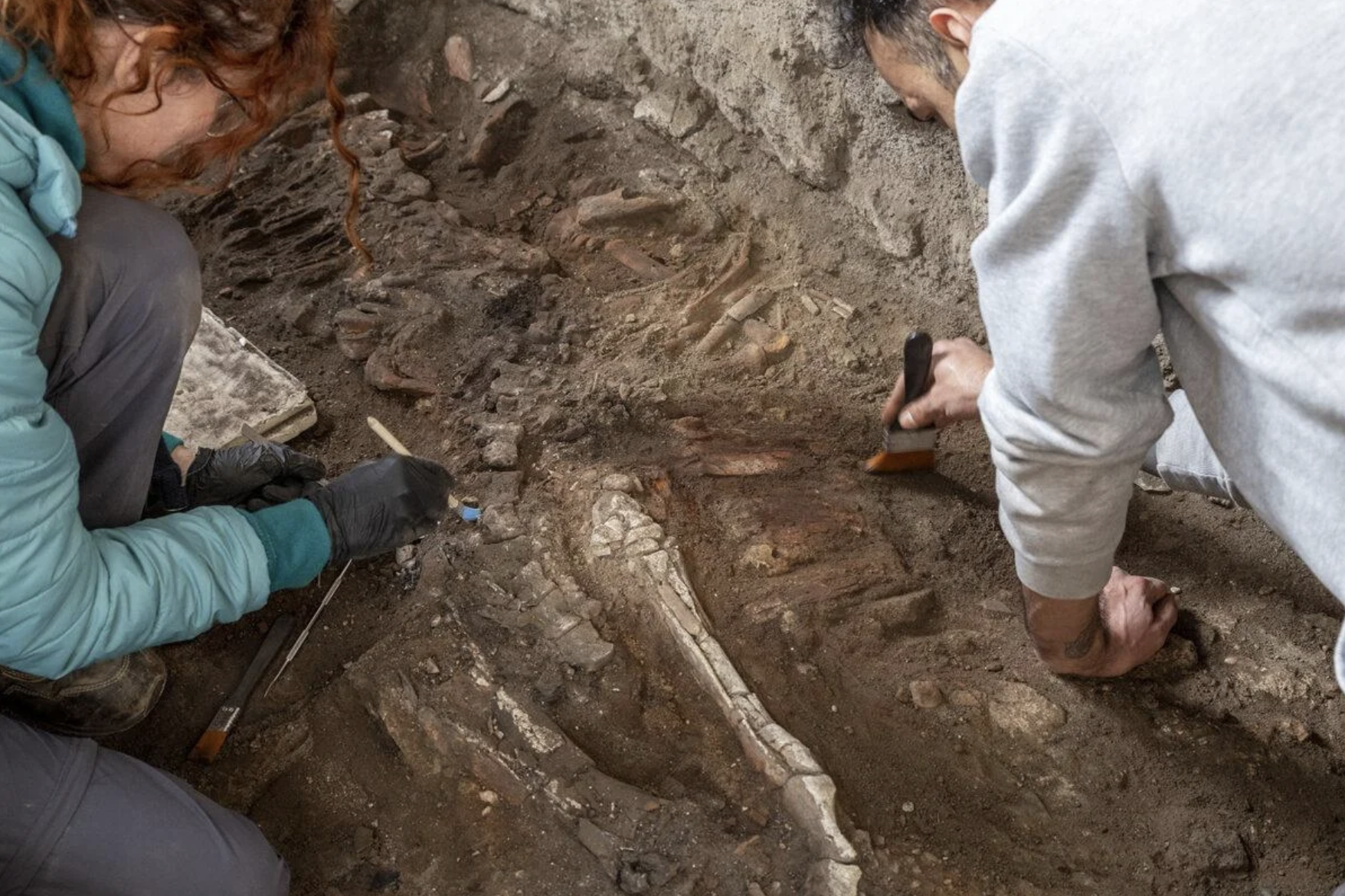
Photo Credit: Archaeological Park of Pompeii
The discovery emerged as part of an effort to revisit areas explored decades ago. Archaeologists removed soil left untouched during earlier excavations and uncovered the animals lying near a wall inside a room that had once formed part of the bakery’s working space. The House of the Chaste Lovers is one of Pompeii’s most significant archaeological sites, preserving much of a functioning bakery, including ovens, storage areas, workrooms and accommodation.
Evidence from previous studies suggests animals played a vital role in the operation of the bakery, helping grind grain and move supplies required for bread-making. However, the latest findings indicate the newly discovered animals may have been placed in a temporary shelter while repairs were carried out elsewhere in the building.
Signs of renovation had already been identified throughout the complex. Earlier earthquakes are believed to have damaged stable areas, and workers appeared to be restoring parts of the property shortly before the eruption interrupted daily life forever.
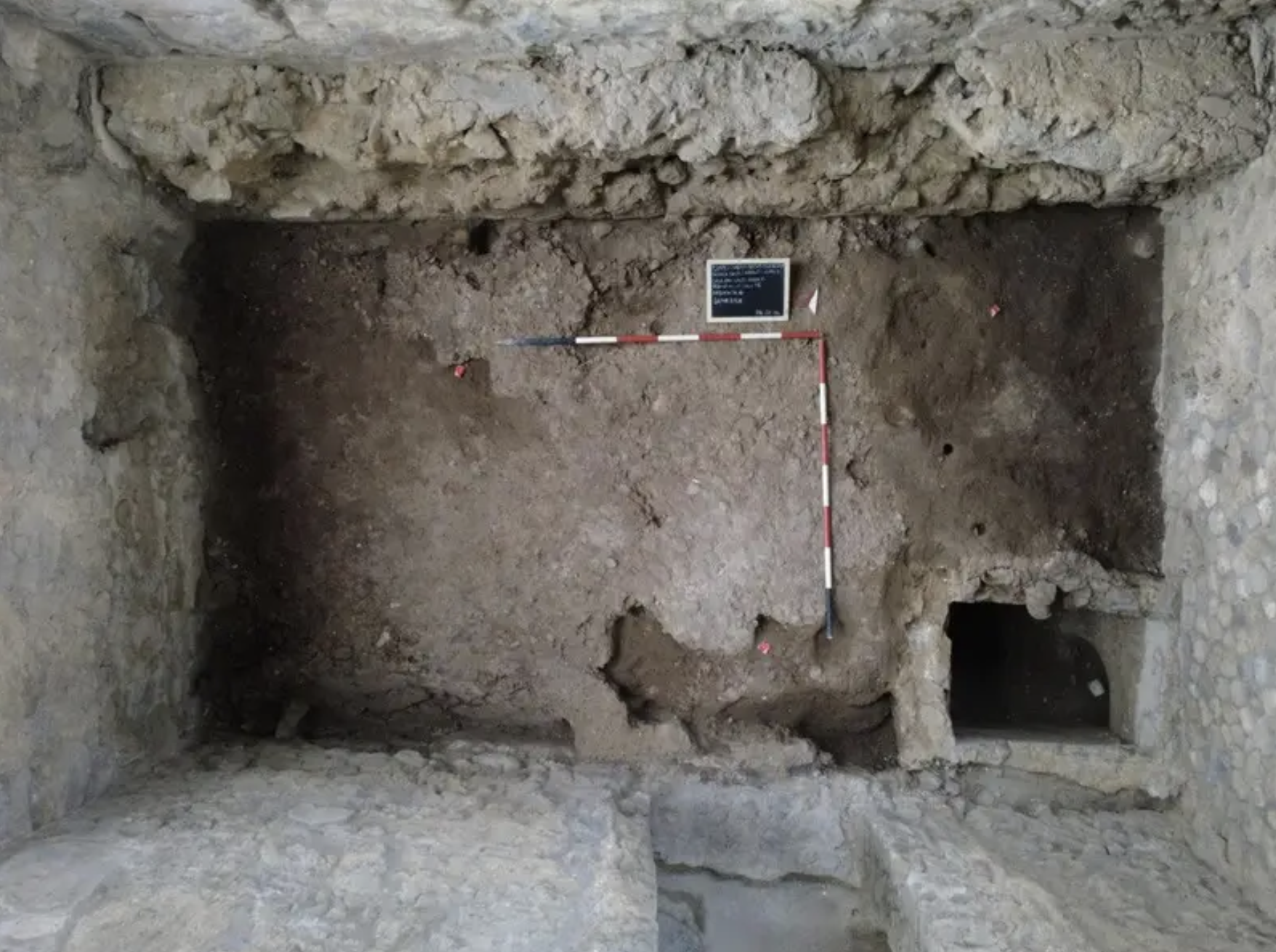
Photo Credit: Archaeological Park of Pompeii
Interestingly, the room where the animals were discovered no longer served its original purpose. Measuring just over six metres long, it once housed a substantial worktable supported by limestone blocks. By the time disaster struck, the table had been removed, leaving enough space for the animals to be kept there temporarily.
Examinations revealed notable differences between the two creatures. One, estimated to be between 10 and 12 years old, was found in the northern part of the room, while the younger animal was believed to be between around three and six years old. Researchers are still determining whether they were horses, donkeys or crossbreeds, with further scientific testing expected to provide clearer answers.
Among the most intriguing discoveries was a set of harness fittings uncovered near the older animal’s neck. Archaeologists found iron rings alongside small decorative beads made from coloured glass paste, one blue and two white, likely once attached to a collar or harness strap. No similar adornments appeared beside the second animal, raising questions about whether the older equid held particular value or received extra care.
These small decorative details hint at a more personal connection between humans and working animals in ancient Pompeii. Rather than being treated solely as labourers, some animals may have held a more significant place within daily life.
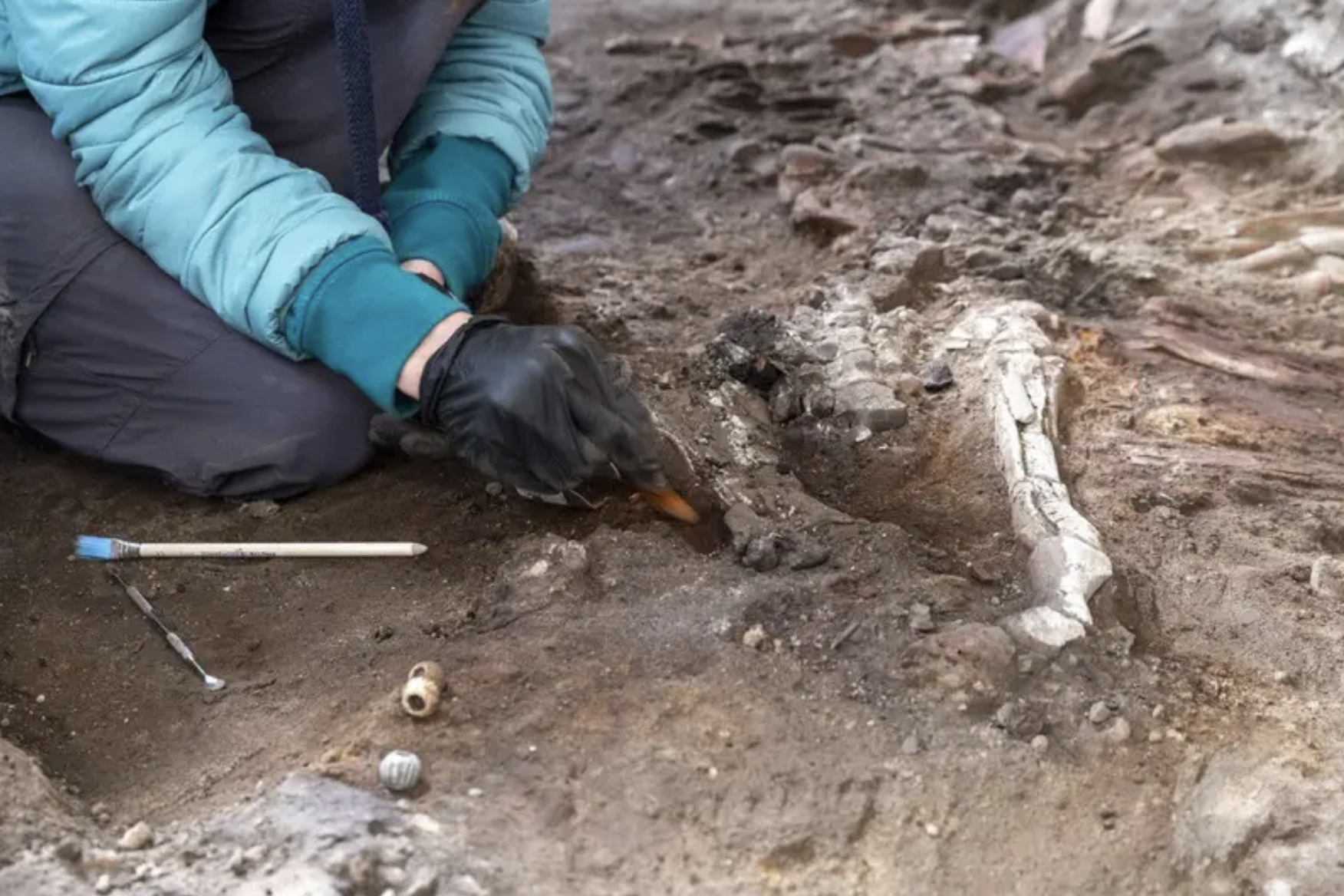
Photo Credit: Archaeological Park of Pompeii
Scientific evidence from the site has also helped researchers piece together the animals’ final moments. Notably, there was no trace of pumice stones, material produced during the opening stages of the eruption, around the skeletons. This suggests the animals likely died before volcanic debris entered the room.
Instead, archaeologists believe a collapsing upper floor caused their deaths. A large burned wooden beam, later identified as maple, was discovered above the remains, pointing to structural failure during the early phase of the catastrophe. Tremors before the main eruption may have weakened the building, causing it to collapse and trap the animals beneath it.
Surrounding evidence paints an even more vivid picture. Fragments of wickerwork and thick ash deposits indicate fire may have spread through the building before volcanic gases and ash eventually smothered the flames.
The excavation has brought together specialists from multiple disciplines, including archaeology, zoology, botany and forensic science. By combining their expertise, researchers hope to reconstruct not only the timeline of Pompeii’s destruction but also the rhythms of ordinary life within the city.
As laboratory work continues, scientists expect to uncover more details about the animals’ health, species and purpose within the bakery. Each new discovery adds another layer to Pompeii’s story, reminding us that the city’s history belongs not only to its people, but also to the animals that lived and worked alongside them.