Archaeologists Reveal Daily Life of Roman Soldiers in León!
A recent archaeological study has shed fascinating new light on what life was really like for Roman soldiers stationed in León 2,000 years ago. Rather than focusing on grand battles or military strategy, this research explores the everyday details: how soldiers lived, what they used, and how they adapted to their environment.
The study, carried out by Eduardo Ramil Rego and published in Salduie, examines a range of objects, including ceramics, glass, and metal items discovered at a site on La Torre Street. Interestingly, this location sits just outside the ancient Roman camp of Castra Legio, an area that has historically received far less attention than the camp itself.
What makes this site particularly valuable is the presence of two distinct layers of material, dating from the late 1st century BCE through to the latter half of the 1st century CE. This period spans the arrival of Legio VI Victrix and the later establishment of Legio VII Gemina, one of the most important Roman legions in Hispania.
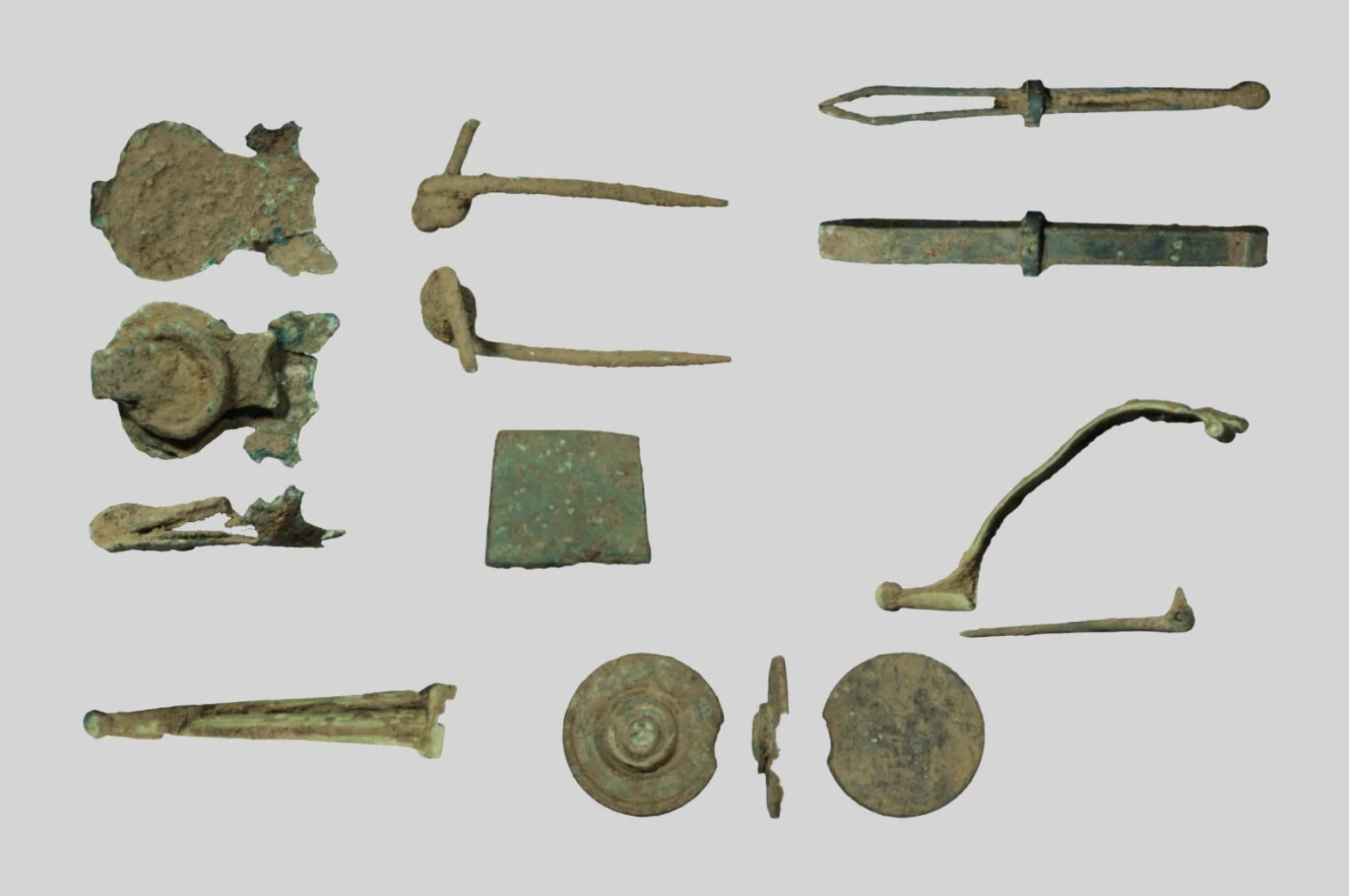
Photo Credit: Eduardo Ramil Rego
One of the key findings of the study is that the land itself had been deliberately modified. Both layers appear to be made up of artificial deposits used to stabilise what would have been damp or unstable ground near the western edge of the camp. It seems the soldiers raised the terrain by dumping debris and refuse from inside the settlement, a practical solution that aligns with what we already know about Roman engineering and land management techniques.
The ceramic discoveries reveal a mix of imported and locally produced goods. Fine tableware, known as terra sigillata, appears alongside more ordinary pottery used in daily life. Some items originated from Italy and southern Gaul, while others were produced locally and became more common from the mid-1st century AD onwards. This shift hints at changing trade patterns across the Roman world.
Among the standout finds are potters’ stamps linked to Ateius and Caius Vibienus, as well as decorated fragments from workshops at La Graufesenque. These details help archaeologists trace where goods were made and how they travelled across regions.
Glass objects also offer a glimpse into daily routines. Small containers likely used for oils or perfumes, along with fragments of vessels and even gaming pieces, suggest that soldiers engaged in personal care and leisure activities during their downtime.
Although fewer in number, the metal objects are equally telling. One notable discovery is an Aucissa-type fibula, a brooch commonly worn by Roman soldiers, alongside four bronze coins. These coins were minted in cities such as Caesaraugusta, Osca, Bilbilis, and Emerita Augusta.
Interestingly, the absence of later coins suggests that the upper layer dates back to the late Augustan or early Tiberian period, helping to narrow down the timeline of activity at the site.
Taken together, these findings paint a clearer picture of how the area outside the camp was used and developed over time. They also highlight León’s early connections to wider trade networks and show that Roman soldiers had access to a surprising variety of goods for everyday life.
Ultimately, this kind of research helps us move beyond the image of Roman soldiers as purely military figures. Instead, it reveals them as individuals living complex lives, adapting to their surroundings, participating in trade, and making use of the resources available to them.