Roman Tomb with Gladiator Carvings Discovered near the Appian Way!
Archaeologists working in southern Italy have uncovered the remains of a fascinating Roman funerary monument, dating back to the early 1st century AD. What makes this discovery particularly striking is its unusual decoration: carved reliefs showing scenes of gladiatorial combat.
The monument was found in the municipality of Apollosa, close to a historic stretch of the Appian Way, one of the most important roads of the Roman Republic and later the Empire.
The find came to light after a local volunteer spotted several large limestone blocks along the banks of the Serrentella stream. Seasonal flooding had exposed these stones, some of which were visible above ground. This prompted authorities to step in and begin a full archaeological investigation.
The discovery was later confirmed by the Ministry of Culture following initial studies carried out by regional archaeologists. Early analysis suggests that the stone blocks once formed part of a circular funerary structure made from locally sourced limestone. Based on the surviving remains, archaeologists estimate the monument originally measured around 12 metres in diameter.
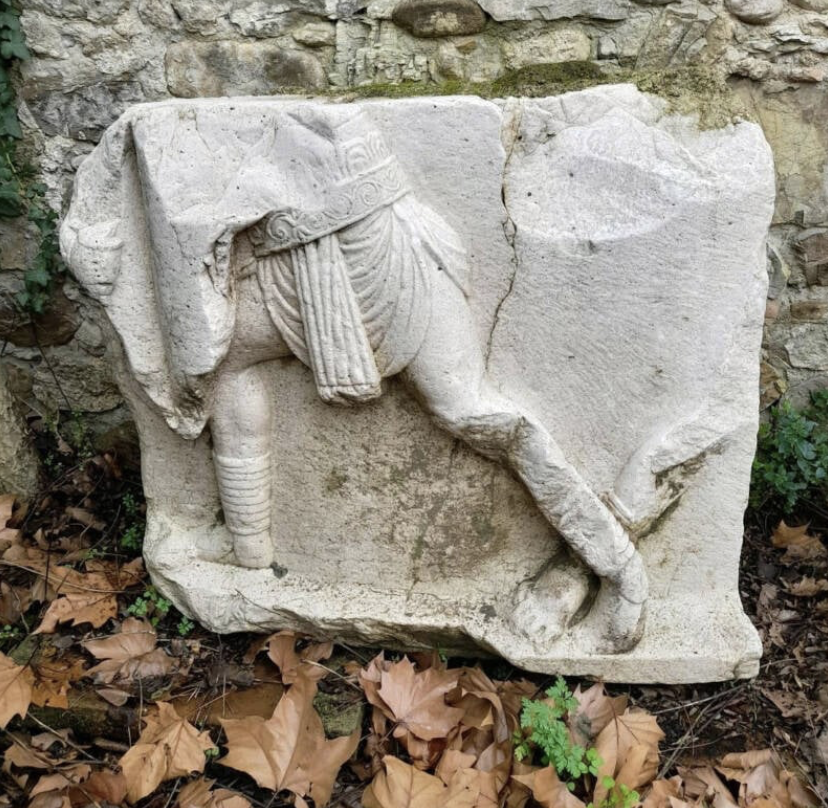
Photo Credit: Superintendency for Archaeology, Fine Arts, and Landscape for the Provinces of Caserta and Benevento
So far, around twenty engraved stone blocks have been recovered. These feature detailed carvings of gladiators in combat, an unusual choice for a tomb of this kind. Typically, funerary monuments didn’t include such imagery.
Experts believe these scenes may reveal something about the individual commemorated there. Gladiatorial imagery could hint at a personal or professional connection to the games, perhaps suggesting involvement in organising or sponsoring these spectacles. Gladiatorial games played a major role in Roman culture, especially during the reign of Augustus. They were not just entertainment but also a way for elites to display wealth and influence.
The presence of these carvings may therefore indicate that the person buried in the monument held a certain level of status or had ties to the world of public spectacle.
Archaeologists also uncovered the entrance to an underground burial chamber linked to the monument. Inside, they found traces of wall paintings, suggesting the tomb was once richly decorated with both sculpture and colourful murals. Although much of the structure has been damaged over time, the recovered pieces are helping researchers piece together what it originally looked like.
The monument’s position along the Appian Way is no coincidence. Known in ancient times as the “Queen of Roads,” this route connected Rome to southern Italy and was heavily travelled. Roman elites often built tombs along such roads to ensure their memory lived on. Being seen by passing travellers was a way to maintain status, even after death.
The site itself lies between the ancient settlements of Caudium and Montesarchio, both areas with a strong Roman presence. Its location further supports the idea that the individual buried here was someone of importance.
The recovered stone fragments and carvings have been moved to a conservation centre in Benevento. There, they are being carefully preserved, catalogued, and studied in more detail.
As research continues, this discovery could offer valuable new insights into Roman funerary practices and the unexpected ways people chose to be remembered.