Berlanga Cup Discovery: Rare Roman Vessel Links Spain to Hadrian’s Wall!
A rare Roman bronze vessel, now known as the Berlanga Cup, has been uncovered in central Spain, shedding new light on how far personal objects could travel across the Roman Empire. It’s one of only a very small number of similar artefacts ever found, and its discovery offers an unexpected connection between Spain and Hadrian’s Wall in northern Britain.
The cup dates to the 2nd century AD and was found near Berlanga de Duero in the province of Soria. Researchers suggest it may once have belonged to a soldier originally from the Celtiberian region who served in Roman Britain before eventually returning home, bringing the object back with him as a personal keepsake.
The Berlanga Cup belongs to a rare class of enamelled bronze vessels often associated with Hadrian’s Wall. Fewer than ten examples of these “Wall pans” are known, making them highly significant to archaeologists.
The earliest discovery of this type was the Rudge Cup in England over 200 years ago. These vessels are typically decorated with coloured enamel and carry inscriptions listing Roman forts along Hadrian’s Wall.
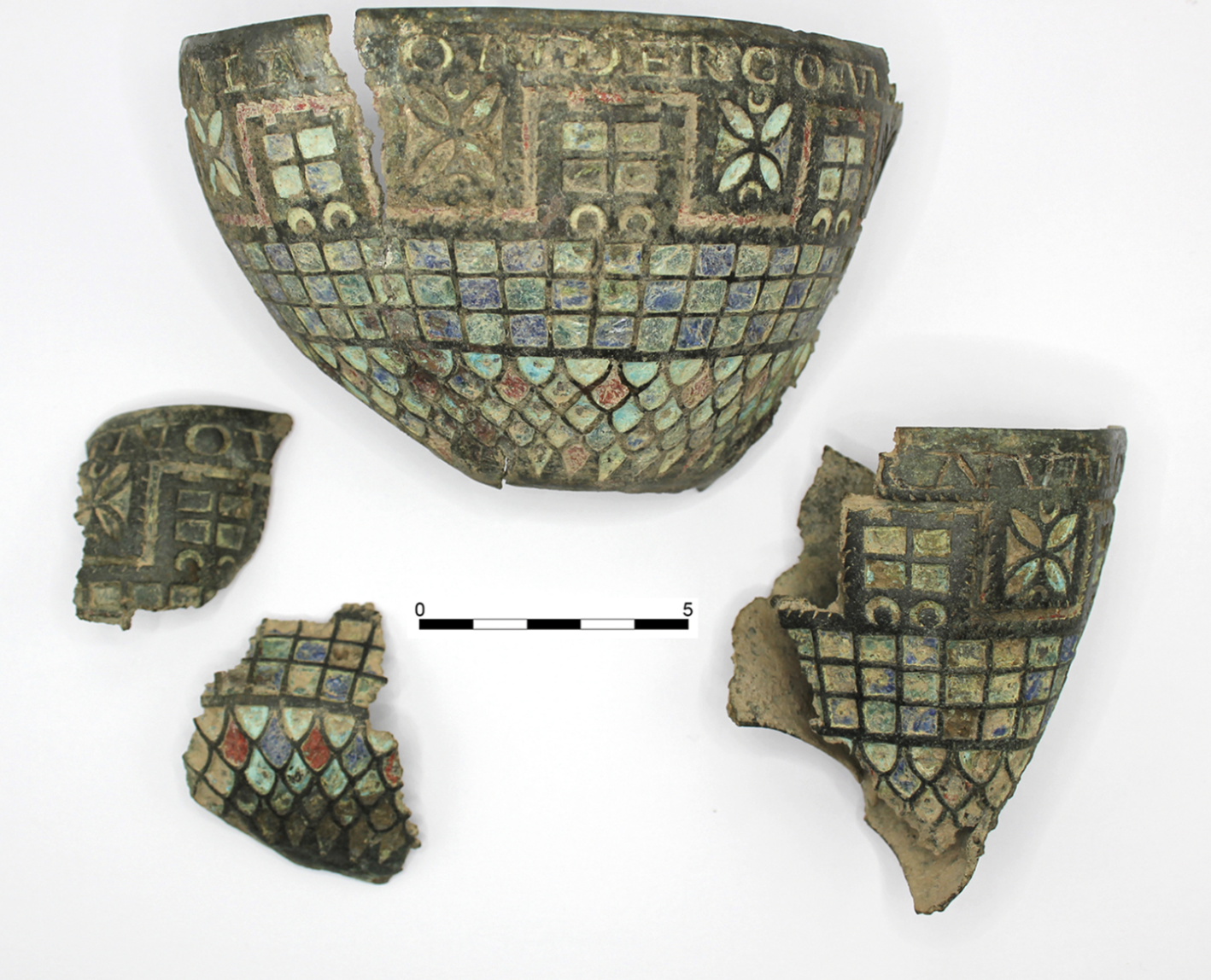
Photo Credit: De Pablo Martínez et al. 2026, Britannia
What makes the Berlanga example especially important is the section of the Wall it records. Unlike earlier finds, which tend to focus on central or western forts, this cup names sites from the eastern stretch, including Cilurnum, Vindobala, Condercum, and Onno. This expands what scholars know about how these objects were designed and what information they were intended to preserve.
Hadrian’s Wall was built under Emperor Hadrian between AD 122 and 128, stretching across northern Britain for around 117 kilometres. It formed the empire’s outer boundary in the region and was heavily fortified with walls, watchtowers, and military forts.
While it served a defensive role, it also functioned as a busy military zone staffed by soldiers drawn from many parts of the Roman world, including Hispania.
The order of fort names on the Berlanga Cup follows the actual layout of the Wall, suggesting either first-hand experience or detailed knowledge of the frontier by the person who owned or commissioned it.
Rather than being ordinary tableware, these vessels are increasingly thought to be tied to military identity. Some researchers believe they may have been commemorative items, possibly given to soldiers after completing service on the Wall. The Berlanga Cup strengthens this idea. Its presence in Spain, far from northern Britain, suggests it travelled with its owner, most likely a veteran returning home after his service ended.
Historical records support this possibility. Units such as the Cohors I Celtiberorum recruited soldiers from central Spain and are known to have been stationed in Britain during the same period. The cup may therefore represent a personal memento brought back by one of these soldiers.
Material analysis has helped piece together the cup’s journey. Using modern techniques such as X-ray fluorescence and isotope testing, researchers found that the metal likely came from ore sources in Roman Britain, particularly areas such as Wales or northern England. This suggests the vessel itself was probably made close to Hadrian’s Wall before being transported across the empire.
The colourful enamel decoration, featuring reds, blues, greens, and turquoise, matches known Roman metalworking techniques. The imagery is thought to symbolise fort structures along the Wall.
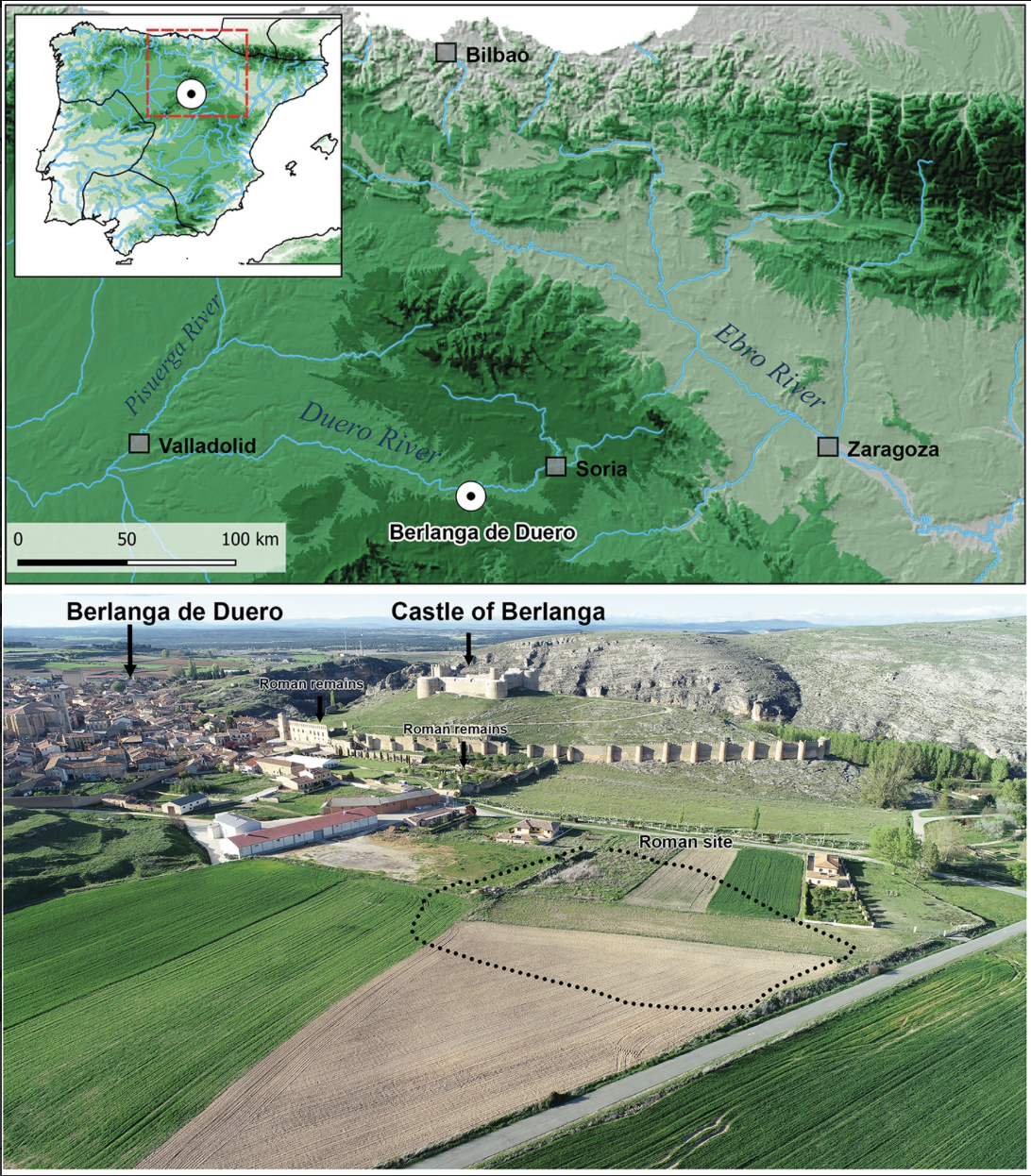
Photo Credit: De Pablo Martínez et al. 2026, Britannia
When first recovered, the Berlanga Cup was incomplete and damaged. To understand its original appearance, researchers created a detailed 3D reconstruction. This digital model allowed them to restore its shape with remarkable precision, revealing it stood around 8 cm tall with a diameter of just over 11 cm.
By virtually flattening its surface, the team was also able to clearly read the inscription and study its decorative layout in full.
The cup was discovered in the area of La Cerrada de Arroyo, near Berlanga de Duero, though not during a formal excavation. Its importance only became clear later through scientific analysis. Follow-up archaeological surveys of the surrounding land revealed evidence of Roman occupation, including building remains identified through ground-penetrating radar.
Pottery, glass fragments, and other artefacts dating from the 2nd to 4th centuries AD suggest the presence of a rural settlement or villa complex. This indicates the cup was likely part of a lived-in landscape rather than an isolated loss.
More than just a rare object, the Berlanga Cup highlights how connected the Roman Empire really was. It shows how soldiers could move between distant provinces, carry personal possessions across thousands of kilometres, and retain memories of their service long after returning home. It is, in many ways, a physical record of identity and movement within the empire.
The discovery also challenges earlier assumptions about Hadrian’s Wall pans. Rather than being mass-produced items, evidence now suggests they were likely made individually, possibly customised for specific soldiers. The Berlanga Cup is also the first known example to include forts from the eastern section of the Wall, filling an important gap in the archaeological record.
As research continues, this single object may reshape how historians view Roman military life, personal commemoration, and the spread of material culture across the empire.