Ancient coins, funerary monuments and decorative objects from northern Turkey reveal how the image of Medusa evolved from a symbol of royal power into a protective figure associated with tombs, buildings and everyday objects. A study by archaeologist Şengül Dilek Ful of Tokat Gaziosmanpaşa University explores how the mythical Gorgon featured in the political imagery of Mithradates VI, the king of Pontus who fought against Roman expansion, and how her image remained popular for centuries after his kingdom disappeared.
Among the most striking objects examined in the research are bronze coins minted approximately 2,100 years ago. One depicts the Greek hero Perseus holding the severed head of Medusa in one hand and a curved sword in the other, with the monster's lifeless body at his feet. The reverse features Athena, the goddess who assisted Perseus in his legendary battle.
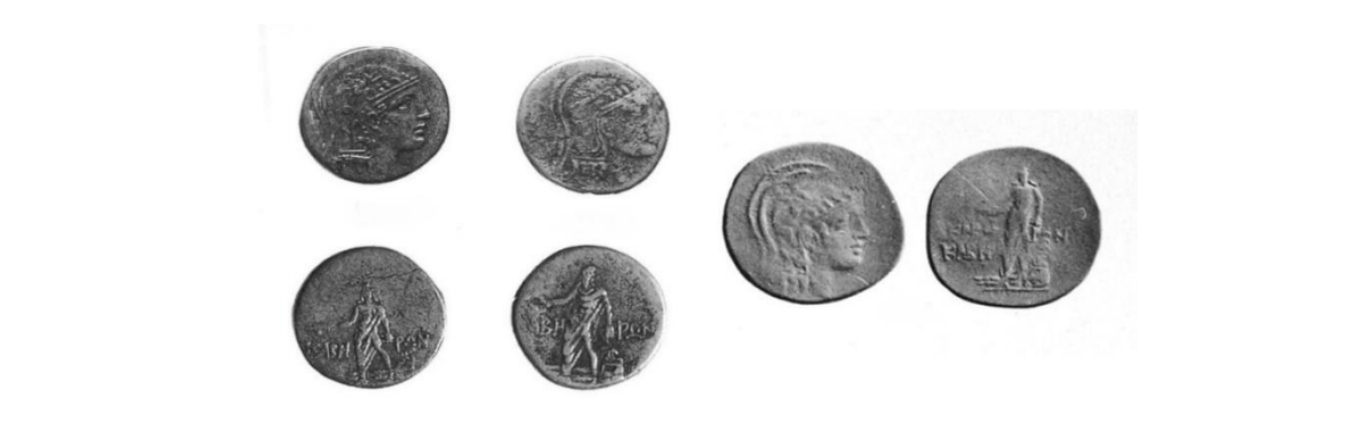
Photo Credit: Tokat Museum / Şengül Dilek Ful (2026)
Although the scene comes from a familiar Greek myth, its appearance on Pontic coinage may have carried a much wider political message. During Mithradates VI's reign, imagery of heroic victories and defeated enemies offered a way to communicate the strength and ambitions of a kingdom determined to resist Rome.
By examining coins from the ancient cities of Kabeira, Komana and Taulara, all situated in modern-day Tokat Province, Ful investigates how Medusa was represented across the region. Comparisons with sculptures, funerary monuments and smaller artefacts held in the Tokat Museum also reveal how artists adapted her image to suit different purposes over several centuries.
Mithradates VI ruled the Kingdom of Pontus from approximately 120 to 63 BCE. During this period, he built his Black Sea kingdom into a major military power and became one of Rome's most persistent opponents in the eastern Mediterranean. His forces fought three major wars against the Romans as both sides competed for control of Anatolia.
His opposition to Rome was expressed through more than military campaigns. Coinage provided an effective way to communicate political messages across the territories under his control, placing recognisable images into circulation among local populations.
Ful's research identifies two important designs associated with Mithradates VI's kingdom. The first features Athena on one side and Perseus holding Medusa's severed head on the other. A second design shows Medusa's head on a shield or aegis, accompanied by Nike, the winged goddess of victory, carrying a palm branch.
Both designs drew on powerful themes from Greek mythology. Medusa was one of three Gorgon sisters, but unlike her immortal siblings, she was mortal. According to the myth, her gaze could turn anyone who looked directly at her into stone. Perseus ultimately defeated her with divine assistance, using a reflective shield to avoid her gaze before cutting off her head. Even after her death, Medusa's head retained its deadly power. Perseus could use it as a weapon against his enemies, transforming something terrifying into a means of achieving victory.
These associations made the story particularly suitable for a ruler seeking to project strength against a formidable opponent. Perseus could represent the hero who overcame an apparently invincible enemy, while Medusa's severed head symbolised a dangerous power that could be harnessed against those who threatened the kingdom.
Ful interprets the coins as part of the political messaging surrounding Mithradates VI's reign. By drawing on familiar mythological imagery, the king could associate his authority with heroic achievement, divine protection and the prospect of victory over Rome.
The distribution of these coins suggests that Medusa's image was not restricted to a single mint or community. Both Kabeira and Komana produced coins featuring Perseus and Medusa, as well as examples pairing Medusa's head with Nike. Taulara, a fortress associated with the royal treasury of Mithradates VI, also issued coins depicting Perseus displaying the Gorgon's severed head.
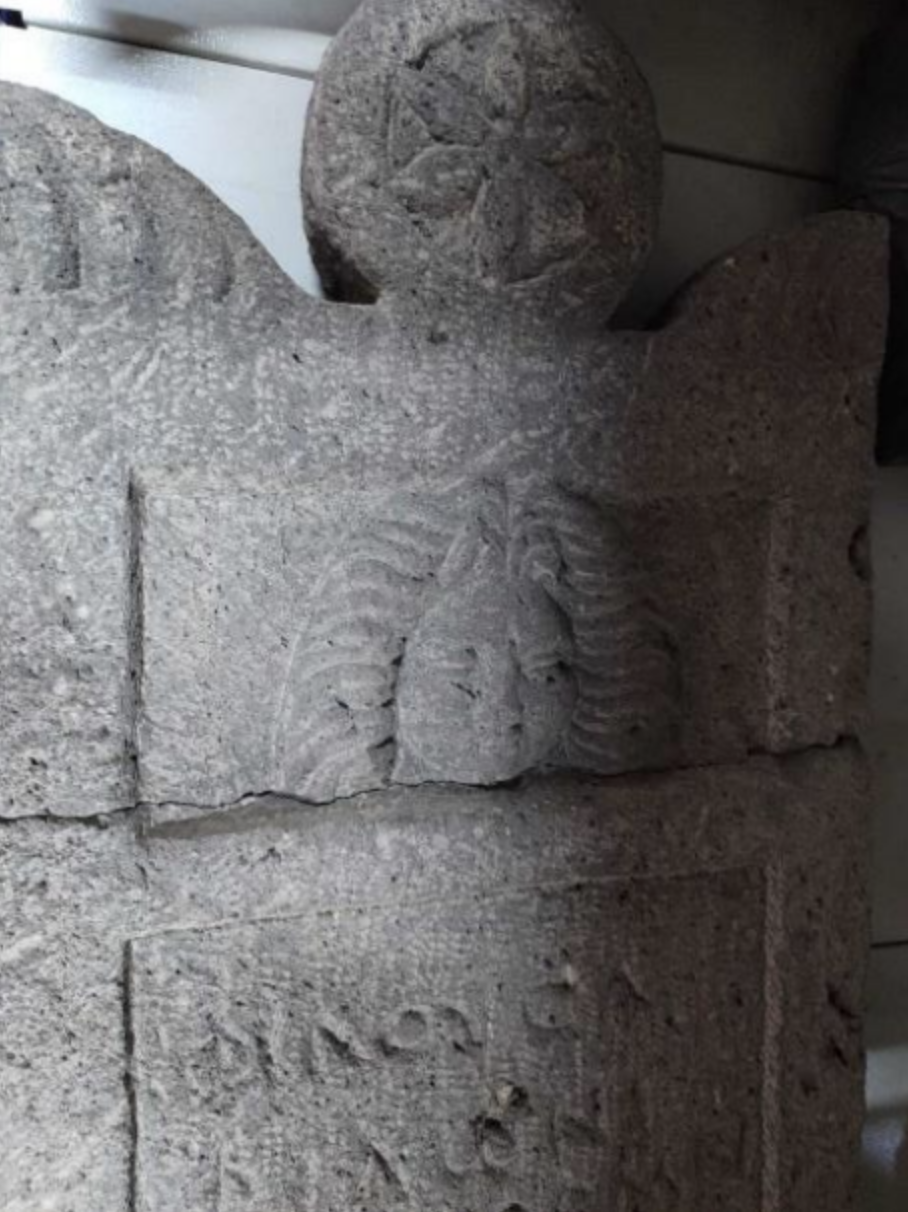
Photo Credit: Tokat Museum / Şengül Dilek Ful (2026)
The presence of related designs across these locations points towards a shared visual language within the Pontic kingdom. Although the cities had different local identities and functions, their coinage connected Greek mythology with the authority of the ruling dynasty.
Komana was an important religious centre, while Kabeira held a prominent position within the kingdom. Taulara's association with the royal treasury adds another dimension to the evidence, linking the imagery to a site connected with the monarchy's wealth.
Using recognisable mythological scenes also meant that the political message did not necessarily require a written explanation. People familiar with the story of Perseus and Medusa could understand the associations with danger, heroic achievement and triumph.
The coins therefore offer an insight into how rulers could use established cultural traditions to reinforce their authority. Rather than inventing a new symbol, Mithradates VI drew on a story that already carried powerful associations for Greek-speaking communities across the region.
Medusa's significance extended beyond royal propaganda. Archaeological finds from the Tokat region demonstrate that her image continued to appear on funerary monuments and other objects during the Roman period, when it could serve a very different purpose.
One example is a marble sarcophagus fragment preserved in the Tokat Museum. Decorated with garlands, two Medusa heads and a nude figure of Eros, the fragment was originally classified as Hellenistic in the museum's inventory. However, Ful argues that its artistic style indicates a date in the second century CE.
Another important discovery comes from the Leylekli Bridge necropolis at Niksar. Rescue excavations conducted in 1982 recovered a basalt funerary stele decorated with a carved Medusa head above a six-line Greek inscription. The monument dates to the third or fourth century CE.
In a funerary context, Medusa's frightening appearance could have been understood as a form of protection rather than a threat. Her face was believed to possess supernatural power, making it suitable for guarding tombs against harmful forces or unwanted intruders. This protective function is known as apotropaic imagery. The term describes images, objects or symbols believed to ward off evil and danger.
The same qualities that made Medusa an effective symbol of intimidation on coins could therefore have made her an appropriate guardian for the dead. Her image could communicate a warning to those who might threaten a burial while offering symbolic protection to the person laid to rest.
The funerary monuments demonstrate how mythological figures could acquire different meanings depending on their setting. Medusa could represent the defeat of an enemy in royal imagery while offering reassurance and protection when carved onto a tomb.
The objects preserved in the Tokat Museum also illustrate changes in the artistic representation of Medusa. Modern depictions often emphasise her monstrous features, particularly her snakes for hair and frightening expression. However, Roman artists frequently portrayed her with the face of a beautiful young woman.
Rather than appearing grotesque, Medusa was increasingly represented with rounded features, flowing hair and a calmer expression. Small wings on her forehead sometimes remained, helping to identify her as the mythological Gorgon. This transformation did not necessarily mean that her protective associations disappeared. Instead, artists could incorporate her image into decorative designs while retaining the symbolism attached to her supernatural power.
A terracotta relief plaque discovered in 2017 during excavations at the Roman bath complex of ancient Sebastopolis provides an example. Medusa is depicted with abundant wavy hair and small wings, while a channel on the reverse suggests that the plaque was designed to be attached to another surface.
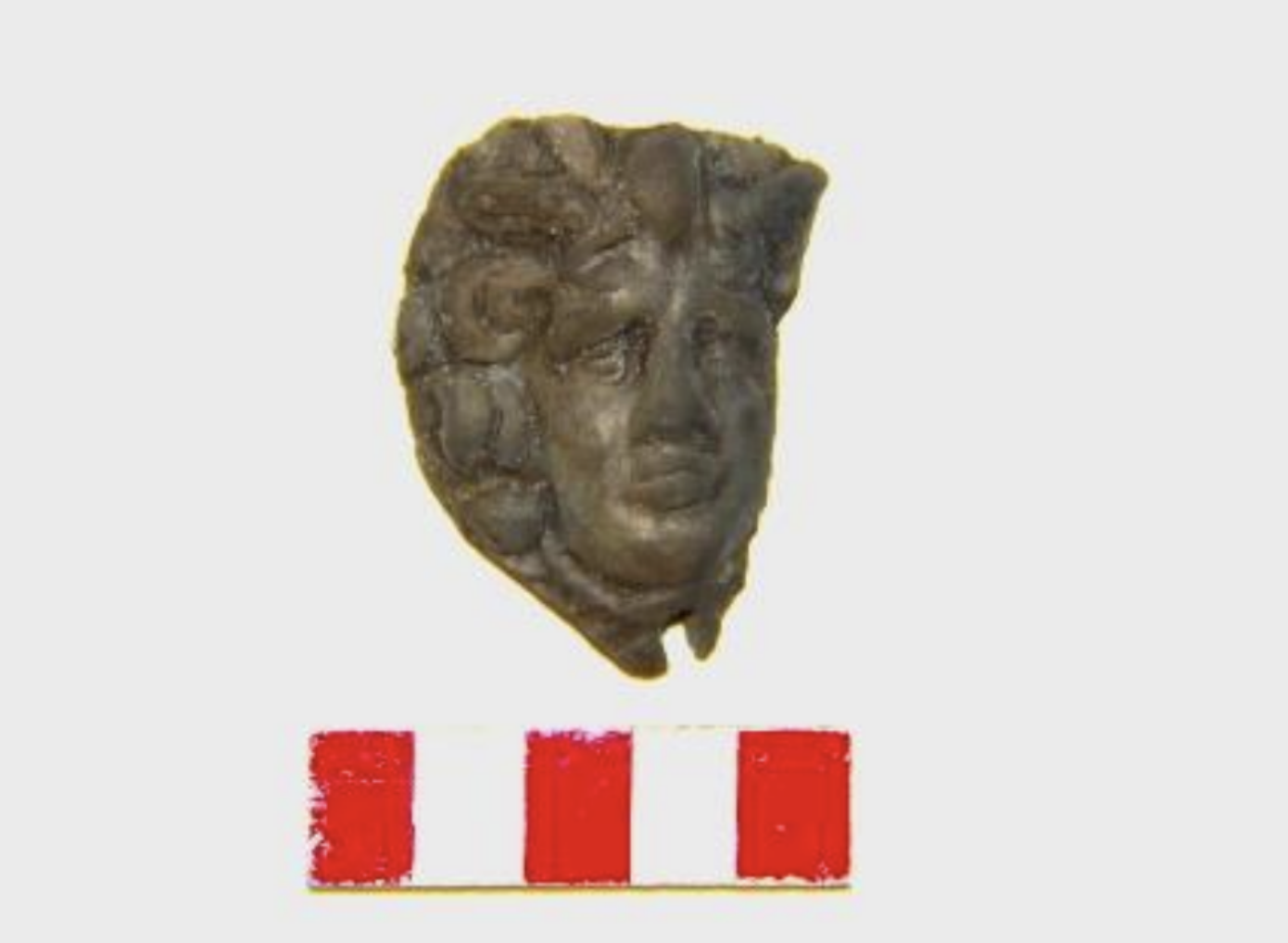
Photo Credit: Tokat Museum / Şengül Dilek Ful (2026)
Other objects in the Tokat Museum include circular terracotta plaques and bronze appliqués featuring similar representations of the Gorgon. Objects of these types could be used to decorate a range of items, including military equipment, horse harnesses, furniture and architectural fittings. However, the original functions of the individual pieces from Tokat cannot always be established with certainty.
Their variety nevertheless demonstrates how widely Medusa's image could be used. She was no longer represented exclusively on coins or monumental stonework commissioned by powerful rulers. Her face also appeared on smaller decorative objects that could have been incorporated into different aspects of Roman life.
The contrast between her terrifying mythology and increasingly elegant artistic appearance is particularly striking. Medusa remained recognisable, but her image could be adapted to suit different materials, settings and audiences.
Medusa's continued popularity is also evident in architectural remains from Niksar and Sebastopolis. Ful examines reliefs carved onto architectural blocks, including an architrave-frieze from Sebastopolis attributed on stylistic grounds to the Antonine period in the second century CE. Another decorated orthostat block held in the Tokat Museum is dated to the middle of the fourth or beginning of the fifth century CE.
These finds show that representations of Medusa remained part of the region's artistic traditions long after the political circumstances that had helped popularise her image had changed.
The Kingdom of Pontus had disappeared centuries earlier, yet the Gorgon's face continued to appear on buildings, funerary monuments and decorative objects. Her enduring appeal suggests that the symbolism associated with her image could be adapted to new circumstances rather than remaining tied to a single ruler or political cause.
Importantly, the evidence does not necessarily point to one continuous tradition in which Medusa always held the same meaning. Instead, the different objects reveal how successive generations reinterpreted a familiar mythological figure.
Under Mithradates VI, Medusa and Perseus could help communicate a message of resistance and potential victory against Rome. In later funerary settings, Medusa's face offered a means of symbolically protecting the dead. On architectural features and smaller objects, her image combined decorative appeal with longstanding associations with supernatural protection.
Together, these discoveries illustrate the remarkable longevity of Greek mythology in the ancient world. Medusa's image could be adapted to serve political, funerary and artistic purposes, allowing a figure once known primarily for her terrifying gaze to become a symbol of protection that endured for centuries.