Huge Roman Pottery Complex Discovered in Austria!
Archaeologists working near the village of Burg in Burgenland, eastern Austria, have uncovered evidence of a vast Roman pottery-making complex that could be far larger than the excavated remains currently suggest.
Only two pottery kilns have been exposed so far, but geomagnetic surveys have revealed an extensive network of buried archaeological features. Researchers believe that more than 100 additional kilns could still be hidden beneath the surrounding fields.
The discovery has been described by excavation director Basema Hamarneh of the University of Vienna as the largest Roman pottery production site so far identified in Austria.
The complex was active sometime between the middle of the 1st and middle of the 2nd century CE, during a period when Roman settlements and infrastructure were becoming firmly established across the region.
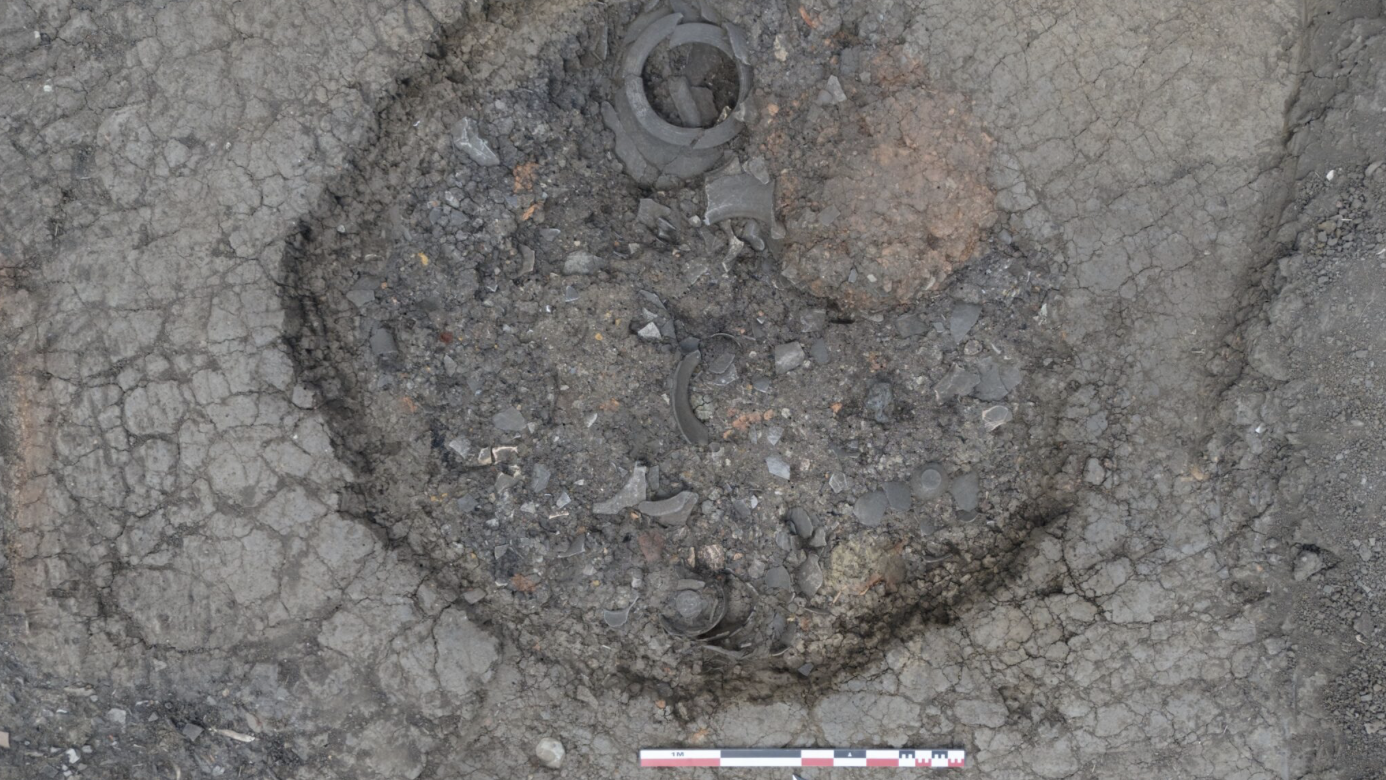
Photo Credit: © IKA_Burg_2026, photo L. Schlamp
The archaeological site is situated north of Burger Badesee, close to Burg in the municipality of Hannersdorf. Roman artefacts had been discovered in the area previously, but the scale of the settlement remained unclear until relatively recently.
A major breakthrough came in 2021, when construction along the B56 Geschriebenstein Straße brought large quantities of Roman pottery fragments to light, alongside the remains of ceramic kilns.
Researchers subsequently carried out geomagnetic surveys across the area. These investigations revealed a remarkable concentration of underground structures, including numerous possible kilns, building remains, pits and even flattened burial mounds.
The first excavation season conducted by the University of Vienna has already confirmed the presence of substantial Roman pottery-production facilities. During the opening two weeks of excavation, archaeologists uncovered two kilns, each associated with a working pit. Remarkably, the structures were found only around 40 centimetres beneath the modern ground surface.
The surrounding pits appear to have had several practical functions. Some may have been used to obtain the clay required for pottery production, while others seem to have served as places where manufacturing waste was discarded.
Large quantities of pottery were recovered from both the kilns and pits, including bowls, plates, drinking vessels and larger storage containers. The quantity and variety of remains suggest that Hannersdorf was much more than a small workshop producing pottery for nearby households.
Roman pottery kilns are often discovered individually or in relatively small groups, making the apparent concentration at Burg particularly significant. The evidence instead points towards a sizeable manufacturing district in which pottery was produced on a considerable scale.
The discoveries also provide an unusually detailed insight into the manufacturing process. Alongside broken pottery fragments, archaeologists have recovered vessels that survived almost completely intact. These are particularly valuable because archaeological pottery from production sites is more commonly encountered as fragments.
At the same time, the excavations have uncovered numerous objects that clearly failed during manufacture. Some vessels became distorted in the heat, while others cracked or were improperly fired. These discarded pieces, known archaeologically as kiln wasters, provide direct evidence of the production process and the types of problems Roman potters encountered.
Taken together, the complete vessels, failed products, kilns and associated waste suggest that the workshops were producing considerably more pottery than would have been necessary for local domestic consumption.
The different kiln designs may also reveal some degree of specialisation. Certain structures appear capable of accommodating larger storage vessels, whereas others may have been intended for smaller tableware, including bowls, cups and plates.
Despite the scale of the complex, archaeologists have not yet discovered any maker's stamps that could identify individual potters or businesses. This leaves open an interesting question about how the production centre was organised.
Rather than being a single large factory controlled by one authority, the site may have consisted of numerous smaller workshops operating alongside one another. Some could potentially have been family-run enterprises.
There are also clues that people may have lived and worked in the vicinity. Small fibulae associated with children's clothing have been recovered from the archaeological area. Although such objects do not necessarily prove permanent occupation, they raise the possibility that families were involved in or living close to the pottery industry.
The lack of substantial stone buildings is also noteworthy. At least some of the production activities may have taken place beneath relatively simple temporary structures, perhaps allowing pottery production to operate seasonally.
One of the biggest questions now facing researchers is where all this pottery went. There is no major Roman town immediately next to the production centre, meaning that the enormous quantity of ceramics cannot easily be explained by local demand alone. The nearest significant urban settlement was Savaria, situated roughly 16 kilometres away in what is now Szombathely, Hungary.
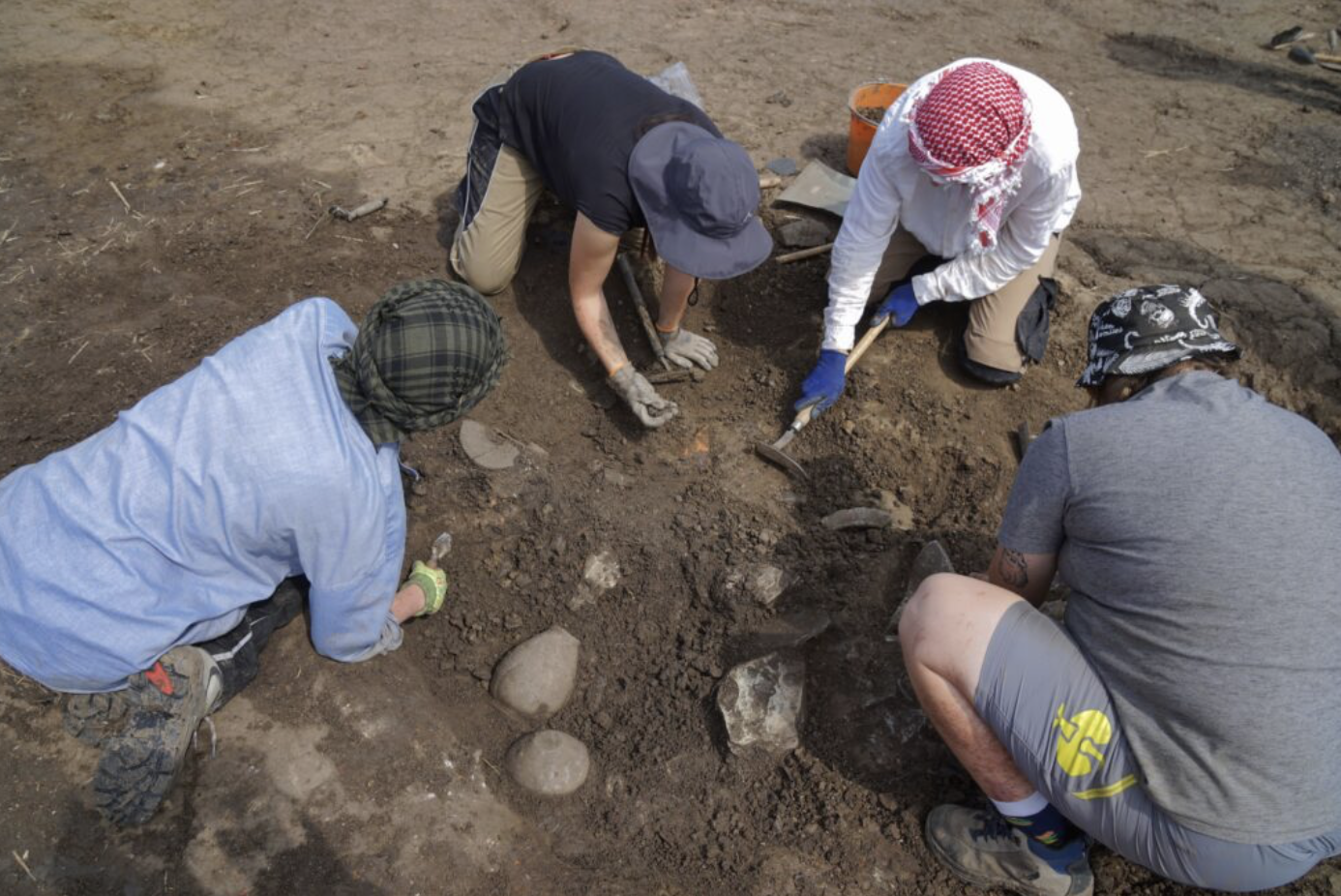
Photo Credit: © IKA_Burg_2026, photo L. Schlamp
Savaria became an important administrative and commercial centre during the Roman period, and researchers have identified pottery in its museum collections that could potentially have been produced at Hannersdorf.
If that connection can be confirmed, the workshops may have supplied Savaria and other settlements through regional trade networks. From there, the pottery could have travelled onwards along routes connecting communities across the Roman province and towards the frontier.
There is also evidence that the people working at the site were not isolated from wider Roman trade. Among the finds is imported terra sigillata, the distinctive glossy red tableware that was widely traded throughout the Roman world. Unlike the more utilitarian pottery being manufactured locally, terra sigillata was a higher-status product frequently associated with formal dining.
Its presence at the workshop demonstrates that the people involved in local pottery production had access to imported goods and were participating in broader commercial networks.
The imported pottery may also prove useful for establishing a more precise chronology for different phases of activity at the site.
The Roman pottery workshops represent only one chapter in the long history of the Hannersdorf landscape. Archaeological discoveries from the surrounding area indicate that people were using the region thousands of years before the Roman period.
Surface finds include Neolithic pottery, while traces of timber longhouses have been dated to the sixth millennium BCE. The landscape was therefore already being settled and used by farming communities several thousand years before Roman pottery production began.
Geomagnetic investigations have also identified burial mounds associated with both the Hallstatt and Roman periods approximately 1.5 kilometres from the pottery complex.
These remains belong to different phases of human activity, but together they demonstrate that the area repeatedly attracted communities for settlement, manufacturing and burial over an exceptionally long period.
The investigation at Burg is still in its early stages. With only two kilns excavated, much of the apparent production centre remains underground.
The geomagnetic evidence suggests that more than 100 further kiln structures could potentially survive beneath the fields, although excavation will be needed to determine exactly what these anomalies represent.
Further work is expected to focus on the construction and use of the kilns, the composition of the pottery, manufacturing waste and the wider organisation of the site.
Researchers will also be looking for evidence that could establish whether the workshops operated continuously or seasonally, how different production areas were organised and where the finished ceramics were distributed.
The excavations are scheduled to continue until 7 August, with analysis of the finds expected to provide a much clearer picture of the site's economic role. For now, the discovery is already challenging the idea that Roman-era Burgenland was simply a peripheral landscape. Instead, the evidence from Hannersdorf points to a thriving manufacturing industry connected to wider commercial networks.
What lies beneath the fields may ultimately reveal an entire Roman industrial district, one that played a significant role in producing and distributing everyday ceramics across this part of the Empire.