Roman Military Camp Linked to Ceretani Revolt Discovered in Spain!
Archaeologists working in the Cerdanya region of the eastern Pyrenees have identified what may be the remains of a Roman military camp connected with one of the final episodes of indigenous resistance to Roman rule in what is now Catalonia.
The discovery was made at Collet de Jovell, close to the modern municipality of Urús, during an archaeological survey in April 2024. Among the artefacts recovered from the wooded site are Roman military equipment, coins and, most significantly, two lead sling bullets carrying an abbreviated inscription that appears to identify the Roman commander Gnaeus Domitius Calvinus.
If the interpretation is correct, the finds could place Roman troops directly within the territory of the Ceretani during their revolt against Rome in 39 BCE.
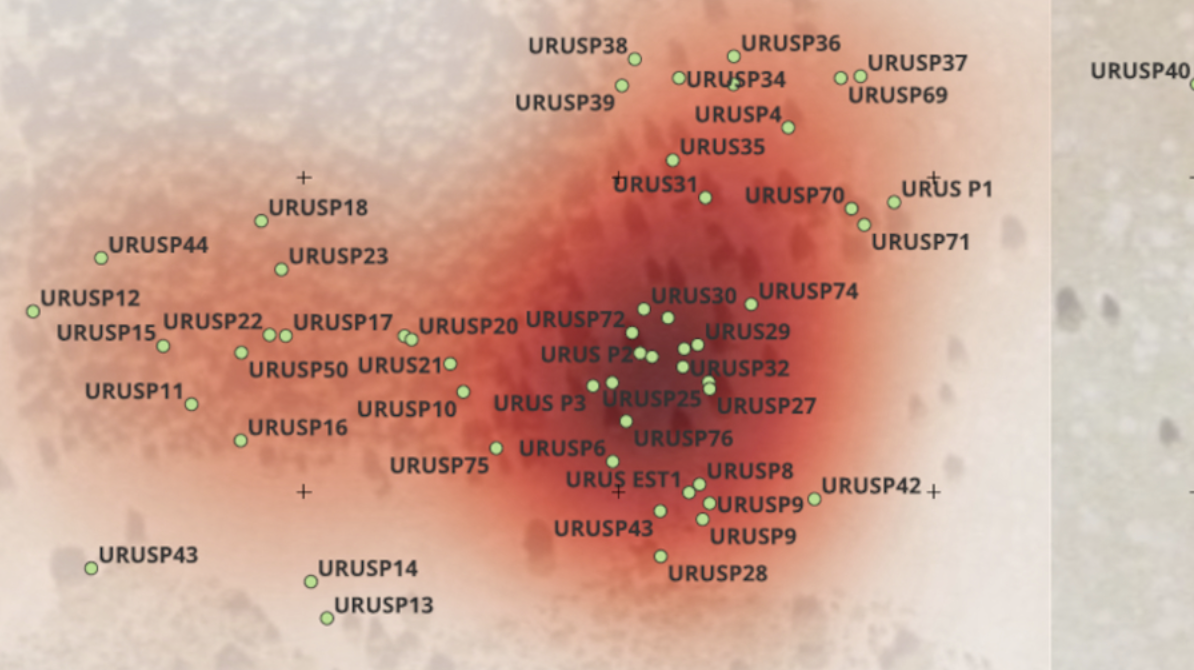
Photo Credit: Autonomous University of Barcelona
Collet de Jovell occupies a strategically important position overlooking one of the routes into the Cerdanya basin. From this elevated landscape, Roman soldiers would have been able to observe movement through the surrounding valleys and monitor access to the territory controlled by the Ceretani.
The archaeological evidence points towards a temporary military occupation rather than a permanent settlement. Researchers recovered numerous iron studs from Roman military footwear, known as clavi caligae, alongside sling bullets, coins, brooches and other objects associated with Roman soldiers.
Each artefact was recorded using GPS and incorporated into a geographic information system. Mapping the distribution of the finds has allowed researchers to begin reconstructing how Roman troops may have occupied and moved through the site.
Most of the material belongs broadly to the second half of the first century BCE. Two objects, however, offer a much more specific connection to the events of 39 BCE.
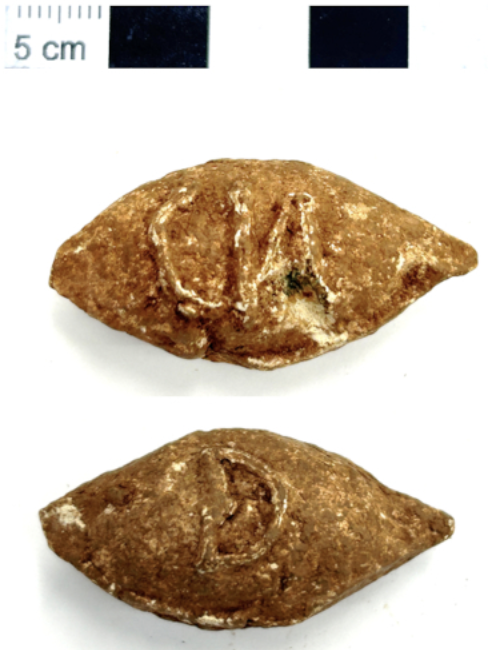
Photo Credit: Autonomous University of Barcelona
The pair of lead sling bullets are marked with the letters “CN D”. Archaeologists interpret this as an abbreviation of Gnaeus Domitius, the name of Gnaeus Domitius Calvinus, the Roman governor of Hispania Citerior at the time.
Calvinus was an important Roman politician and military commander who was closely associated with Octavian, the future emperor Augustus. He was responsible for suppressing the Ceretani uprising, making the inscribed ammunition particularly significant.
The researchers from the Autonomous University of Barcelona therefore consider a Roman military camp established during Calvinus's campaign in 39 BCE to be the most likely explanation for the evidence at Collet de Jovell.
The Ceretani were an Iron Age community whose territory was centred on the Cerdanya basin. Their settlements occupied a mountainous environment where agriculture and livestock farming were combined with activities such as mining and regional trade.
Archaeological excavations at sites including Tossal de Baltarga and El Castellot de Bolvir have provided evidence for communities that were well adapted to life in the Pyrenees. Far from being isolated mountain populations, however, the Ceretani maintained connections with neighbouring communities on both sides of the mountains.
Their territory was also strategically valuable. Routes crossing the Pyrenees, extensive grazing areas and access to mineral resources all made Cerdanya an important region for expanding powers seeking to establish control over northeastern Iberia.
Roman armies had first become involved in the wider region in 218 BCE, when Rome established a presence at Emporion during the Second Punic War. By the first century BCE, Roman influence had extended much further, although some communities continued to resist incorporation into the Roman political system.
The precise reason for the Ceretani uprising remains uncertain. The main surviving ancient account comes from the historian Cassius Dio, who describes the military confrontation but does not explain exactly what prompted the revolt.
The rebellion can nevertheless be understood within the wider context of Roman expansion. The increasing presence of Roman troops, demands for resources and supplies, interference in indigenous political structures and attempts to control strategically important mountain routes may all have contributed to growing resistance.
According to Cassius Dio, Ceretani warriors launched an ambush against a Roman force commanded by one of Calvinus's officers. The attack appears to have gone badly for the Romans, with the soldiers abandoning their commander and fleeing.
Calvinus responded harshly. Before continuing the campaign, he punished the troops for their failure, reportedly ordering the execution of one soldier in every ten from two military units.
Once discipline had been restored, Calvinus resumed the offensive against the Ceretani. Cassius Dio states that the Roman forces subsequently defeated them without significant difficulty. The victory brought Calvinus considerable prestige in Rome, and he was eventually granted a triumph in recognition of his campaigns in Hispania.
The discovery at Collet de Jovell could significantly alter the geographical understanding of the revolt.
Earlier interpretations had generally placed the campaign somewhere further west in the Pyrenees. The concentration of Roman military artefacts at Collet de Jovell, particularly the two sling bullets associated with Calvinus, instead suggests that Roman troops operated directly within the central territory of the Ceretani.
This makes the site particularly important because it may preserve physical evidence of the military campaign described by Cassius Dio.
The aftermath of the revolt was also significant. Roman victory appears to have been followed by a period of intensified control over the region, while some indigenous settlements were abandoned. Existing political and social structures were gradually weakened or dismantled as the area became more firmly integrated into the Roman provincial system.
Collet de Jovell may therefore represent far more than a short-lived Roman military position. If the identification is confirmed, the site could provide a rare archaeological snapshot of the campaign that brought one of the final episodes of organised indigenous resistance in present-day Catalonia to an end.
More broadly, the discovery demonstrates how small artefacts can transform our understanding of ancient conflicts. Two inscribed pieces of lead, seemingly insignificant on their own, may have provided archaeologists with the evidence needed to connect a previously unknown Roman military site with a specific commander, campaign and moment in the history of Roman expansion.