New Linear A Study Suggests Dionysos and Demeter Could Have Minoan Origins!
A miniature stone offering table discovered at a Minoan sanctuary on Crete could provide an intriguing glimpse into the origins of two gods who later became central to Greek religion: Dionysos and Demeter.
The object, designated IO Za 2, bears one of the longest surviving inscriptions written in Linear A, the still-undeciphered script of Bronze Age Crete. In a new study, researcher Michael Schümann proposes that the damaged text may preserve a ritual prayer containing names that could represent early forms of Dionysos and Demeter.
If this interpretation is correct, it would raise the possibility that aspects of these two later Greek deities have roots in the religious traditions of Minoan Crete, predating the emergence of the better-known Greek pantheon by centuries.
There is, however, considerable uncertainty. Linear A has never been conclusively deciphered, meaning that Schümann's reading relies on proposed phonetic values and comparisons with other ancient Aegean languages and inscriptions. The interpretation therefore remains a hypothesis rather than an established translation.
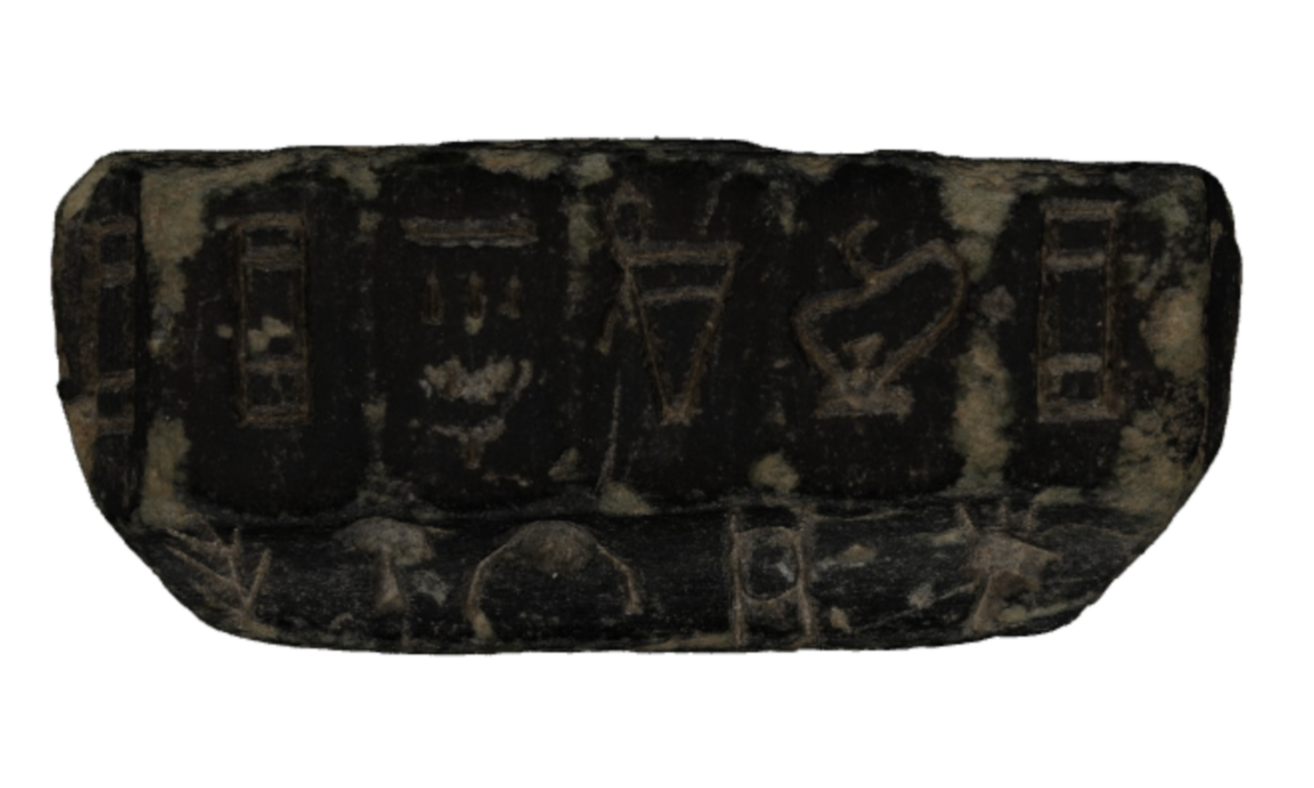
Photo Credit: Heraklion Archaeological Museum
Nevertheless, the combination of the inscription, its unusual format and the highly significant religious setting makes IO Za 2 an especially interesting piece of evidence.
The object itself is remarkably small. IO Za 2 is a miniature libation table made from dark green to almost black serpentinite, measuring approximately 4.3 centimetres across and 1.9 centimetres high.
A shallow circular basin occupies the upper surface, presumably intended to hold liquids used during religious ceremonies. Such offerings could have included substances such as wine, oil or honey.
With little room available on the top, the inscription was carved around the object's four vertical sides. The text consists of two continuous horizontal lines that run around the table, an arrangement described as unique among currently known inscribed Minoan libation vessels of this kind.
The object dates archaeologically to the Neopalatial period, broadly corresponding to Middle Minoan III and the beginning of Late Minoan I. Schümann argues, however, that the forms of the Linear A signs appear to belong to an earlier writing style, which he places in Middle Minoan II.
If that dating is correct, the table may have remained in use for some time before being deposited at the sanctuary.
The circumstances of the discovery are particularly important because IO Za 2 was found at the summit sanctuary of Mount Juktas, one of the most significant religious sites in Bronze Age Crete.
The sanctuary developed around a substantial open-air altar where worshippers performed ceremonies involving offerings, sacrifices and libations. Archaeological excavations have uncovered thick deposits containing ash, charcoal, animal remains and large quantities of broken pottery associated with ritual activity.
IO Za 2 appears to have been deposited within this accumulated material after its period of use.
The surrounding landscape adds another dimension to the discovery. Close to the altar is a natural fissure leading down into the limestone. Archaeologists found numerous vessels, figurines of humans and animals, and other votive objects in and around this feature.
Together, the evidence suggests that religious activity at Mount Juktas was not confined to ceremonies performed around the visible altar. Some rituals also appear to have been connected with the earth and the subterranean world.
It is within this setting that Schümann interprets the inscription as a ritual text rather than a straightforward dedication.
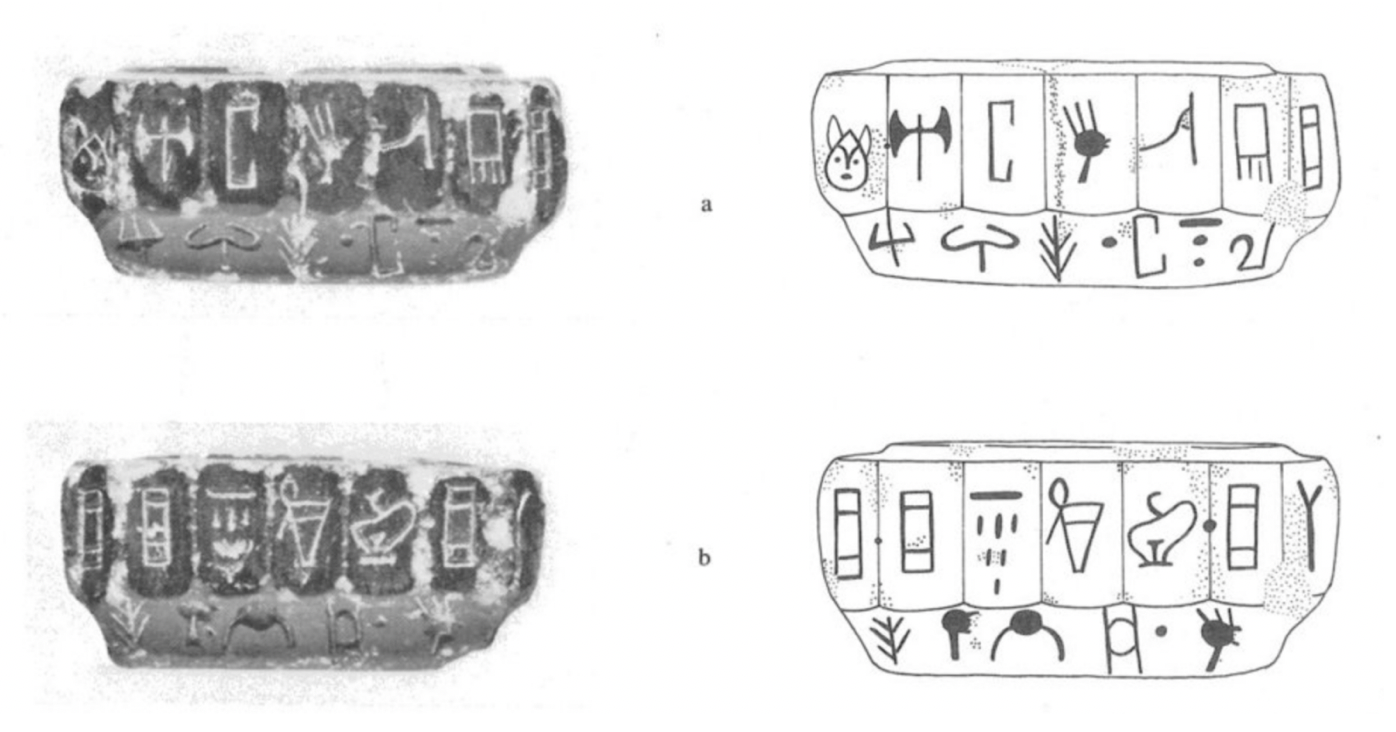
Photo Credit: L. Godart – J.-P. Olivier, Recueil des inscriptions en linéaire A. Volume 5: Addenda, corrigenda, concordances, index et planches des signes, Paris, 1985 (GORILA V)
One of the most striking aspects of the proposed translation is its apparent connection between mourning and offering. Schümann interprets the opening sequence, A-TA-I-JO-WA-JA, as a divine title meaning something along the lines of "Father of the Bull-Contest". The reference would be particularly appropriate in a Minoan religious environment, where bulls feature prominently in surviving imagery and evidence for ceremonial activity.
The following sequence, JA-DI-KI-TU, is interpreted as referring to Dikte, another important sacred location on Crete.
The inscription then appears to move towards an act of lamentation. Schümann reads JA-SA-SA-RA-ŽA as referring to tears, followed by U-NA-KA-NA-SI, which he interprets as an instruction to weep.
The resulting sense is essentially: "Weep the tears."
The next expressions are connected with the act of pouring an offering. I-PI-NA-MA is interpreted as referring to a libation, while SI-RU-TE is understood as meaning that it should flow or pour in streams.
This creates a striking ritual image in which tears and liquid offerings are brought together. The act of mourning could therefore have formed part of a ceremony involving the pouring of a libation.
Schümann points to similar formulaic expressions found elsewhere in the Linear A corpus as possible support for this interpretation, suggesting that the wording may have formed part of an established ritual tradition.
The final section of the inscription is where the proposed connection with later Greek mythology becomes particularly interesting.
Only part of the closing sequence survives, but Schümann reconstructs it approximately as: TA-NA-RA-TE-U-TI-NU I-DA[-MA-TE-QE]
According to his interpretation, TA-NA-RA may refer to a sanctuary, while TE-U could mean "of the god". The passage would consequently identify a sanctuary associated with two divine figures, reconstructed as Tinu and Ida-Mate.
The first name is potentially significant because Schümann compares Tinu with the Mycenaean Greek form di-wo-nu-so, which is regarded as the earliest written form connected with the name Dionysos.
The proposal is that TI-NU could represent an earlier Aegean form of the same divine name, existing before the longer form preserved in Linear B and later Greek.
The second name may offer an equally intriguing possibility. The surviving I-DA is reconstructed as I-DA-MA-TE, based partly on comparable forms such as I-DA-MA-TE and DA-MA-TE appearing elsewhere in the Linear A material. Schümann suggests that this name could represent an early form of the goddess who would later be known in Greek as Demeter.
On this reading, the complete text can be reconstructed approximately as a prayer along the following lines:
"Father of the Bull-Contest of Dikte, weep the tears; may the libation offering flow in streams in the sanctuary of the god Tinu and Ida-Mate."
The translation remains tentative, but the possibility it raises is significant.
Dionysos and Demeter occupy important places in later Greek religion, although their spheres of influence were different. Dionysos became closely associated with wine, ecstatic religious experience and transformation, while Demeter was strongly connected with agriculture, grain and fertility, as well as themes of death and renewal.
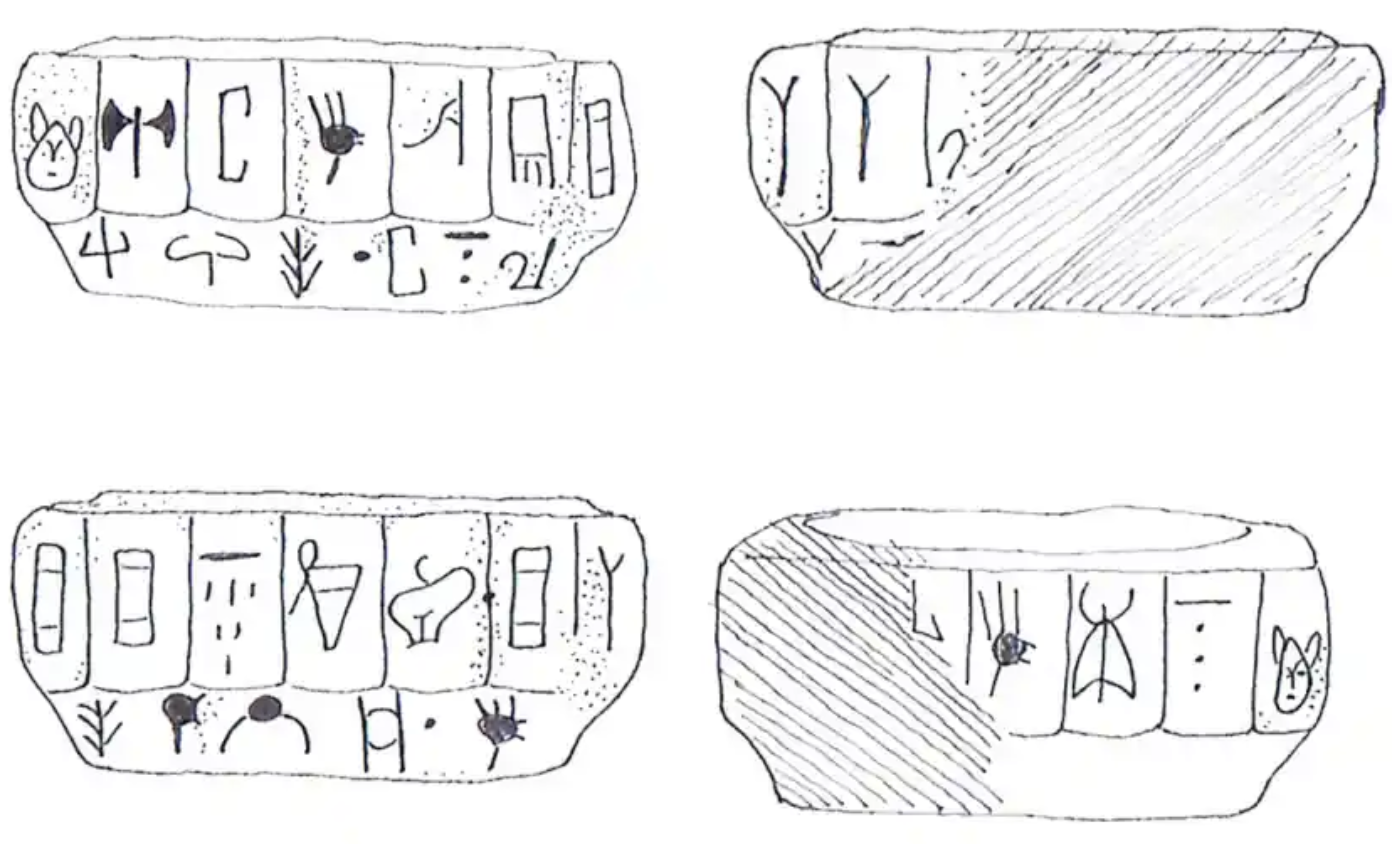
Photo Credit: M. Schümann, 2026.
If Tinu and Ida-Mate really do represent earlier forms of these deities, their histories could extend considerably further back than the Greek religious traditions in which they are best known.
Rather than being entirely new creations of the later Greek world, their identities may have developed through centuries of religious change. Earlier Aegean traditions could have been inherited, adapted and transformed as different cultures and languages became dominant across the region.
Such cultural continuity would not necessarily mean that Minoan worshippers understood these gods in exactly the same way as later Greek communities did. Gods could change considerably over time, with their names, attributes and rituals evolving alongside the societies that worshipped them.
The possibility of continuity is nevertheless important because evidence connecting Minoan religion directly with later Greek deities remains difficult to establish.
The biggest obstacle is Linear A itself. Unlike Linear B, which was deciphered in the twentieth century and records an early form of Greek, Linear A remains largely unreadable. Researchers can identify recurring signs and patterns, and some aspects of the script can be compared with other Aegean writing systems, but there is no universally accepted decipherment.
That means every proposed reading must be treated carefully. Schümann's interpretation depends on assigning particular sounds and meanings to sequences of Linear A signs and then comparing those forms with later languages and inscriptions. The proposed identification of Tinu with Dionysos and Ida-Mate with Demeter is consequently far from proven.
The suggested meanings of terms relating to tears, weeping and libation are similarly dependent on this wider reconstruction.
For now, the inscription should therefore be viewed as potential evidence rather than proof that Dionysos and Demeter originated in Minoan religion.
Yet IO Za 2 is unusual enough to warrant attention. Its archaeological context is securely associated with ritual activity, its inscription appears to contain repeated ceremonial language, and its closing sequence may preserve names with possible connections to later Greek divine figures.
That makes the tiny stone table an intriguing piece of evidence in the much larger question of how the religious traditions of Bronze Age Crete influenced the world that followed.
If Schümann's interpretation ultimately proves correct, IO Za 2 could represent more than an attempt to read one obscure Bronze Age inscription. It could offer a rare glimpse into a period when religious traditions that would eventually become recognisable as part of Greek mythology were still taking shape.
A stone object only a few centimetres wide may, therefore, preserve evidence for a much bigger story: the long transformation of Minoan religious traditions into the gods and myths of the later Greek world.