Rare Elephant Bone Discovered in Spain Confirms War Elephants in the Punic Wars!
Archaeologists working in southern Spain have uncovered something quite extraordinary: a single elephant bone that may provide rare, physical proof of war elephants being used during the Punic Wars.
The bone was discovered at the Colina de los Quemados site in Córdoba and offers direct archaeological evidence to support ancient written accounts describing elephants fighting alongside Carthaginian armies.
The Punic Wars, fought between 264 and 146 BCE, were a series of bitter conflicts between the Roman Republic and the Carthaginian Empire. Historical sources frequently mention elephants as part of Carthage’s military strategy, particularly during the campaigns of the famous general Hannibal in the Second Punic War.
While texts, coins and sculptures have long depicted these formidable animals, confirmed skeletal remains from this period in Iberia have been notably absent, until now.
The bone was unearthed in 2020 during a preventative excavation ahead of expansion work at Córdoba Provincial Hospital. The site itself is significant: Colina de los Quemados sits on the northern bank of the Guadalquivir River and is one of the largest protohistoric settlements in southern Iberia. Spanning around 50 hectares, it shows evidence of continuous occupation from the Late Bronze Age through to medieval times.
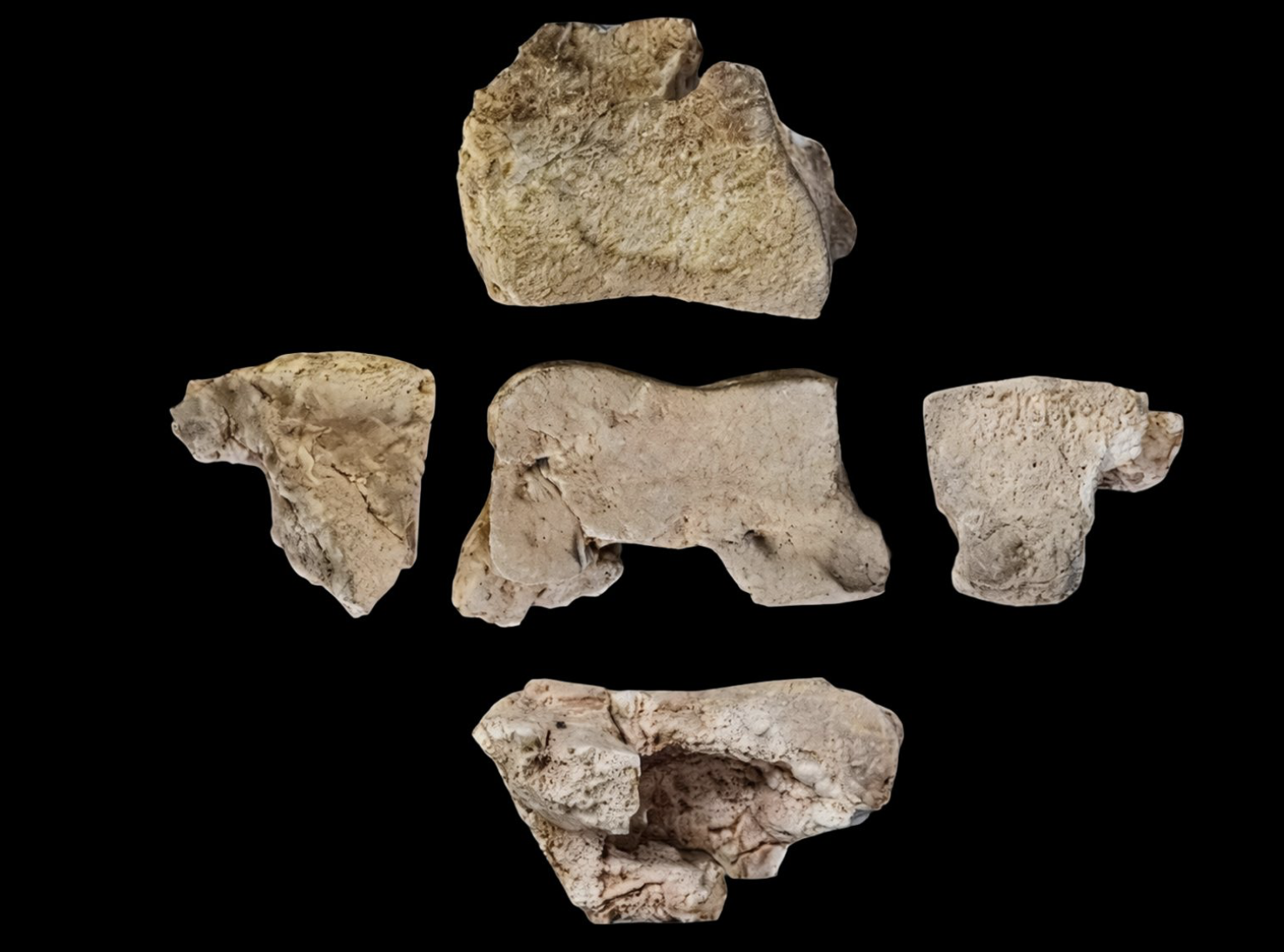
Photo Credit: Agustín López and Rafael Martínez
What caught researchers’ attention was a destruction layer dating to the Late Iron Age, which showed clear signs of violent conflict.
Within this layer, archaeologists identified a cube-shaped carpal bone from the right forefoot of an elephant. Measuring close to 10 centimetres, it was found beneath a collapsed adobe wall associated with a single occupation phase.
Experts confirmed the identification through anatomical comparison with modern elephant and mammoth specimens. Unfortunately, the bone’s poor preservation meant that DNA and protein testing were not possible. However, radiocarbon dating of the mineral fraction placed it between the late fourth and early third centuries BCE , precisely the timeframe of the Second Punic War.
The context of the find further strengthens the military interpretation. In the same layer, archaeologists uncovered up to twelve spherical stone projectiles used in ancient artillery, along with coins and ceramics linked to armed activity.
These stone projectiles would have been fired from torsion-powered engines during sieges or open battles. The broader destruction patterns across the settlement align with what we know of Second Punic War activity in Iberia. Some events recorded in historical sources, others known only through archaeology.
Elephants did not live in Europe during antiquity. Transporting them would have required ships, planning and organised supply systems. Importantly, short carpal bones have no decorative appeal and little practical use, making trade or collection highly unlikely.
For these reasons, researchers believe the bone most plausibly represents direct evidence of military activity involving elephants.
Carthaginian forces adopted war elephants in the third century BCE, drawing on military traditions that originated in South Asia and later spread through Hellenistic networks. African elephants were first deployed in the First Punic War and later featured prominently in Iberian campaigns.
This Córdoba discovery is therefore one of the very few osteological examples that supports ancient descriptions of elephants on western Mediterranean battlefields.
Although it is just a single bone, the find significantly strengthens archaeological understanding of ancient warfare in Iberia. It connects local evidence of destruction with the wider military traditions of the Mediterranean during the Classical period.
Sometimes, even the smallest discoveries can reshape how we understand the past, and in this case, a single elephant bone may have done exactly that.