Rare Iron Age Carnyx and Boar Standard Discovered in Norfolk!
Archaeologists working in Norfolk have uncovered an extraordinary Iron Age hoard containing two objects so rare that finding them together has left experts astonished.
The discovery was made last year by a team from Pre-Construct Archaeology during excavations on a construction site a few miles outside Thetford. From the outset, the site felt promising. Dig leader Peter Crawley later admitted he had a strong instinct that it was going to be something special, and that intuition proved to be right.
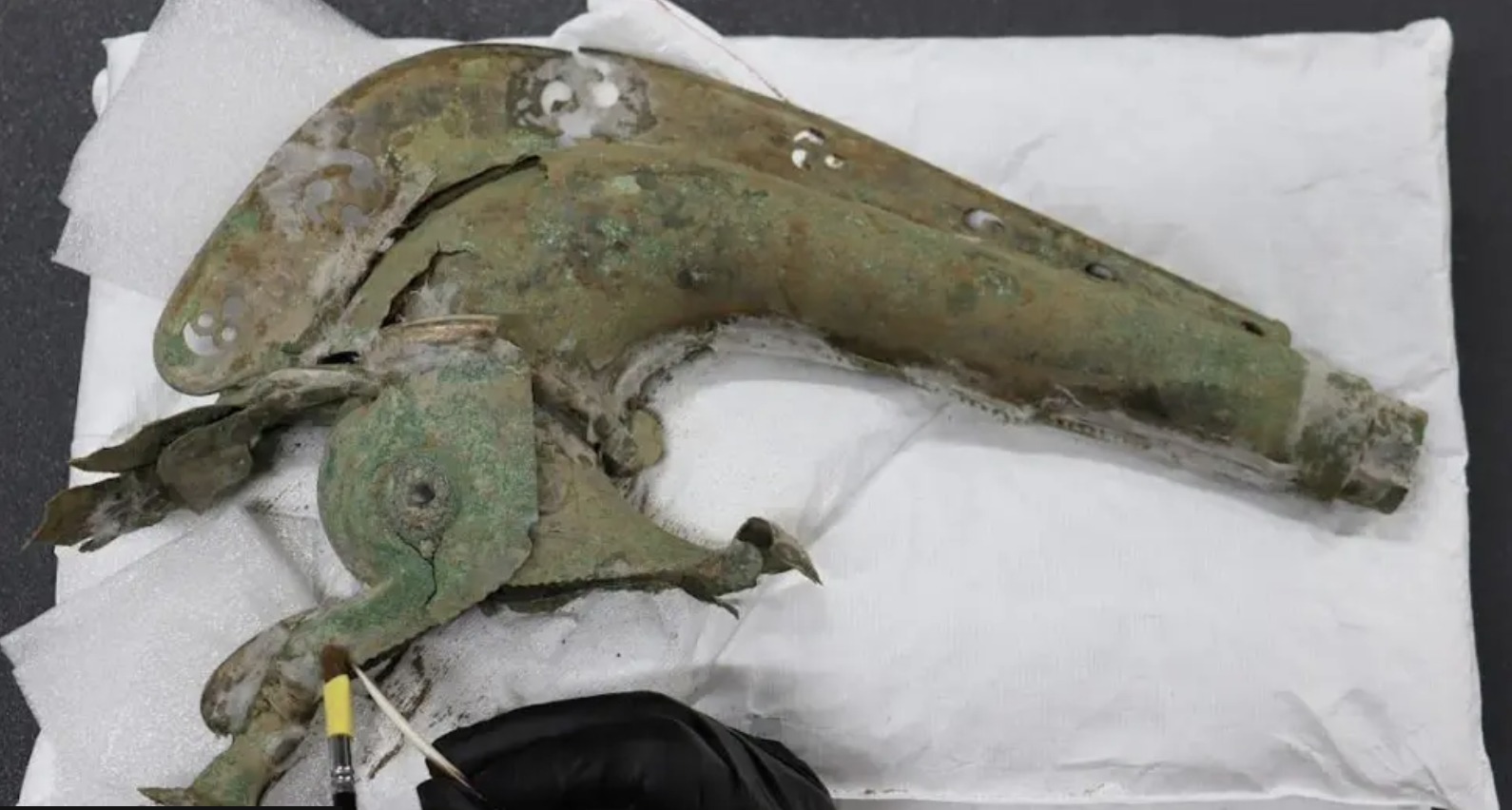
Photo Credit: Norfolk Museum’s Service
At the centre of the hoard was the most complete Iron Age battle trumpet, known as a carnyx, ever found in Europe. Even more remarkably, the excavation also revealed the first boar’s head flag standard ever discovered in Britain. Senior project officer Gary Trimble described the find as exceptional, explaining that carnyces are already extremely rare, and a boar standard rarer still.
Carnyces were war trumpets used by Celtic tribes across Europe, including the Iceni of East Anglia, led by Queen Boudica during her revolt against Roman rule in AD 60–61. With their long necks and animal-shaped heads, these instruments were designed to create an unsettling noise that could intimidate enemies while rallying and directing warriors in battle. The Romans were so fascinated by them that they frequently depicted carnyces as trophies of war.
What makes the Norfolk carnyx especially significant is its condition. Conservator Jonathan Carr explained that it was crafted from extremely thin sheets of metal, which had become incredibly fragile after 2,000 years underground. Despite this, the instrument survives with its pipe, mouthpiece and bell intact, something not seen in any other European example. Carr noted that even small details, such as the eye of the animal head, have survived and remain strikingly expressive.
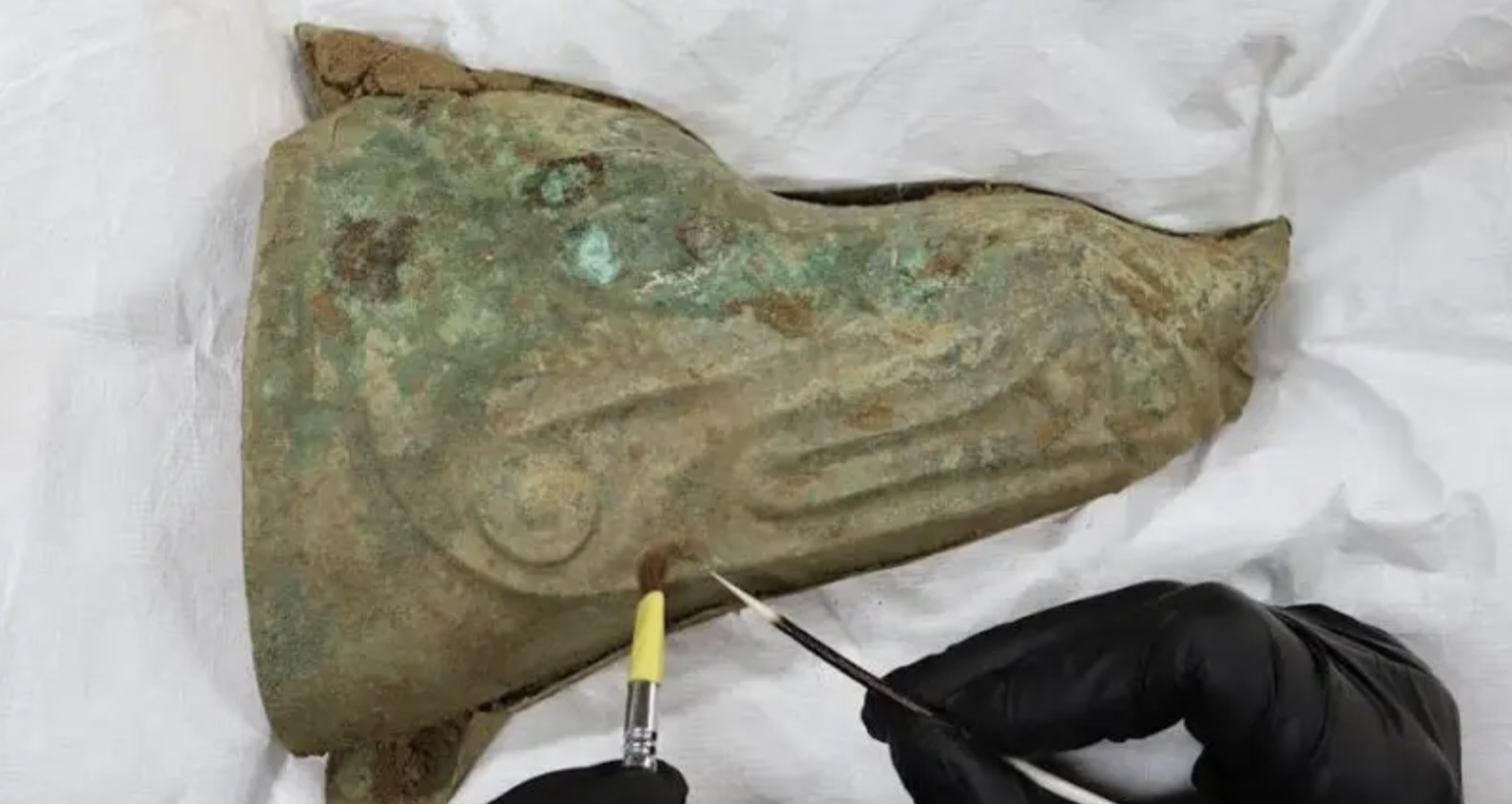
Photo Credit: Norfolk Museum’s Service
Alongside the carnyx was the boar’s head standard, made from sheet bronze. This would once have been carried aloft like a flag on the battlefield, acting as a rallying point for troops. The boar was a powerful symbol in Iron Age society, representing strength and ferocity. As Dr Fraser Hunter of National Museums Scotland explained, the animal’s reputation as a dangerous adversary in the hunt made it an apt emblem for warfare.
The hoard, dated to between 50 BC and AD 50, also included five shield bosses and an iron object whose purpose remains unknown. To protect the fragile items, the entire hoard was lifted from the ground as a single block of soil and scanned before careful conservation work began in the laboratory.
Experts believe the find has the potential to transform our understanding of Iron Age sound, music and warfare. Dr Hunter described it as an unparalleled opportunity to study objects that rarely survive, let alone in such completeness.
The discovery has been reported to the coroner, and an inquest will determine whether it officially qualifies as treasure. Its long-term future has yet to be decided, but Historic England is working closely with archaeologists and museum specialists to coordinate research and conservation.
Dr Tim Pestell of Norfolk Museums Service described the hoard as a powerful reminder of the county’s rich Iron Age heritage, still deeply embedded in the public imagination through the story of Boudica and the Iceni. Historic England’s co-chief executives also praised the find, saying they looked forward to uncovering and sharing the story of the community that once owned and used these remarkable objects.
The dramatic discovery will be featured on BBC Two’s Digging for Britain, bringing this rare glimpse into Norfolk’s ancient past to a wider audience.