Rare Roman Inscription at Hadrian’s Villa Reveals Lightning Ritual!
A remarkable discovery at Hadrian’s Villa in Tivoli has given archaeologists an unusual glimpse into how the Romans responded when the natural world was believed to intersect with the divine.
During recent excavations in an area traditionally identified as the “Amphitheatre”, researchers uncovered a marble inscription still lying within the architectural setting where it was originally placed. The short Latin text reads FVLGVR SVBMANIVM, referring to a lightning strike associated with Summanus, the Roman deity connected with thunder and lightning at night.
Although the inscription itself is brief, its archaeological context makes the discovery particularly important. Rather than being found as a detached piece of marble, it remains connected to the structure and archaeological layers around it, allowing researchers to investigate the wider circumstances in which it was created.
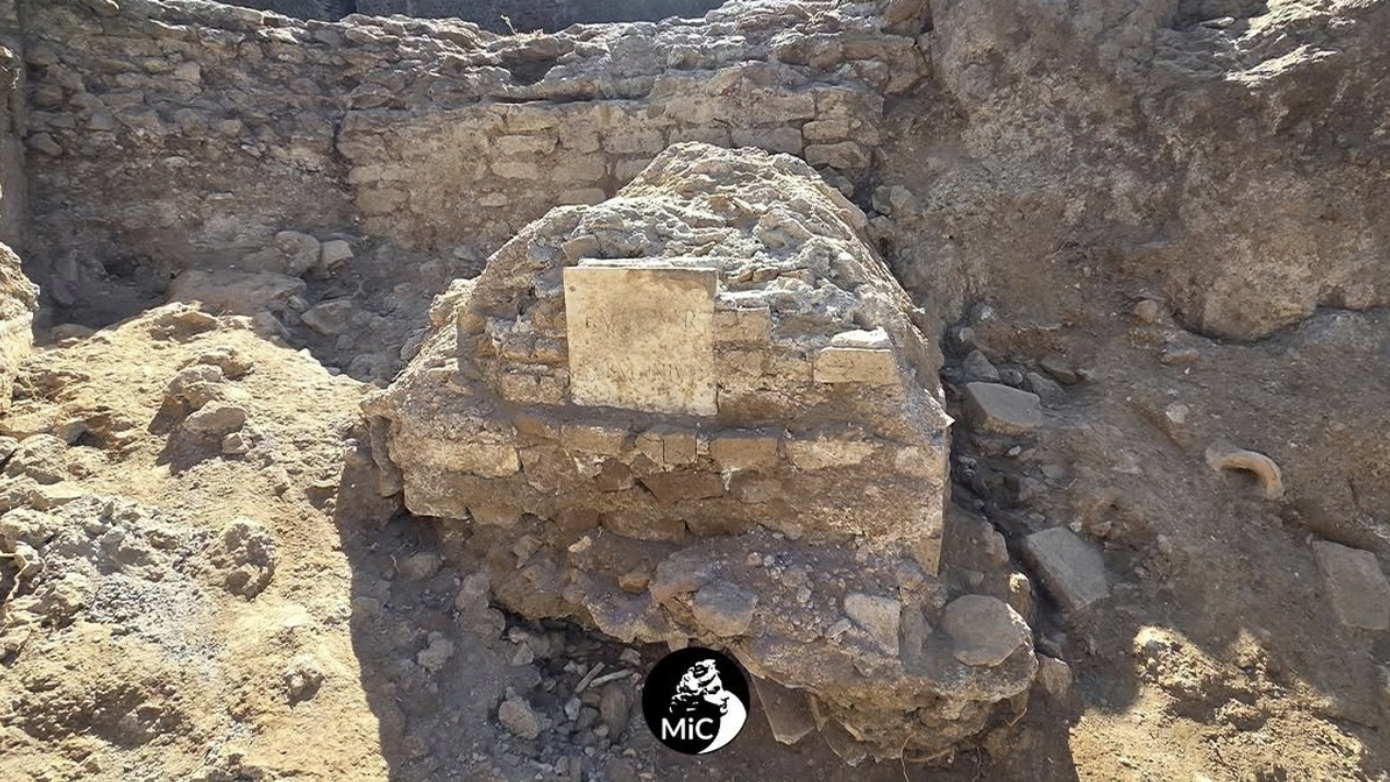
Photo Credit: Italian Ministry of Culture (MiC)
The excavation has been carried out by the Department of Humanities (DISTUM) at the University of Urbino Carlo Bo, with authorisation from Italy’s Ministry of Culture and in collaboration with the Villa Adriana and Villa d’Este Institute.
To modern eyes, a lightning strike is simply a natural phenomenon. Roman society could interpret it very differently. Lightning was frequently understood as a manifestation of divine power, and a location struck by a thunderbolt could subsequently acquire religious significance. Rather than treating the affected area as an ordinary part of the landscape, Roman ritual could transform it into a sacred space.
Archaeologists believe that the newly investigated structure could be associated with a bidental, a specially designated sacred area connected with a lightning strike. This would fit within the Roman practice known as ‘fulgur conditum’, through which a place struck by lightning was ritually treated and effectively separated from everyday space.
The discovery therefore offers something quite rare: physical evidence for what happened after the Romans believed lightning had marked a particular location.
Alberto Samonà, director of the Villa Adriana and Villa d’Este Institute, highlighted the importance of being able to identify the material evidence associated with this process of sacralisation. The find provides researchers with an opportunity to examine how religious ritual was physically incorporated into the landscape.
The inscription itself provides an important clue to how the lightning strike was understood.
FVLGVR SVBMANIVM can be understood as referring to a lightning bolt of Summanus. Summanus was a relatively obscure Roman deity associated specifically with nocturnal thunder and lightning.
This distinction is significant because Roman religious thought could differentiate between different types of thunderbolts and the circumstances in which they appeared. A lightning strike occurring during the night could therefore be understood through a different divine association from one occurring during the day.
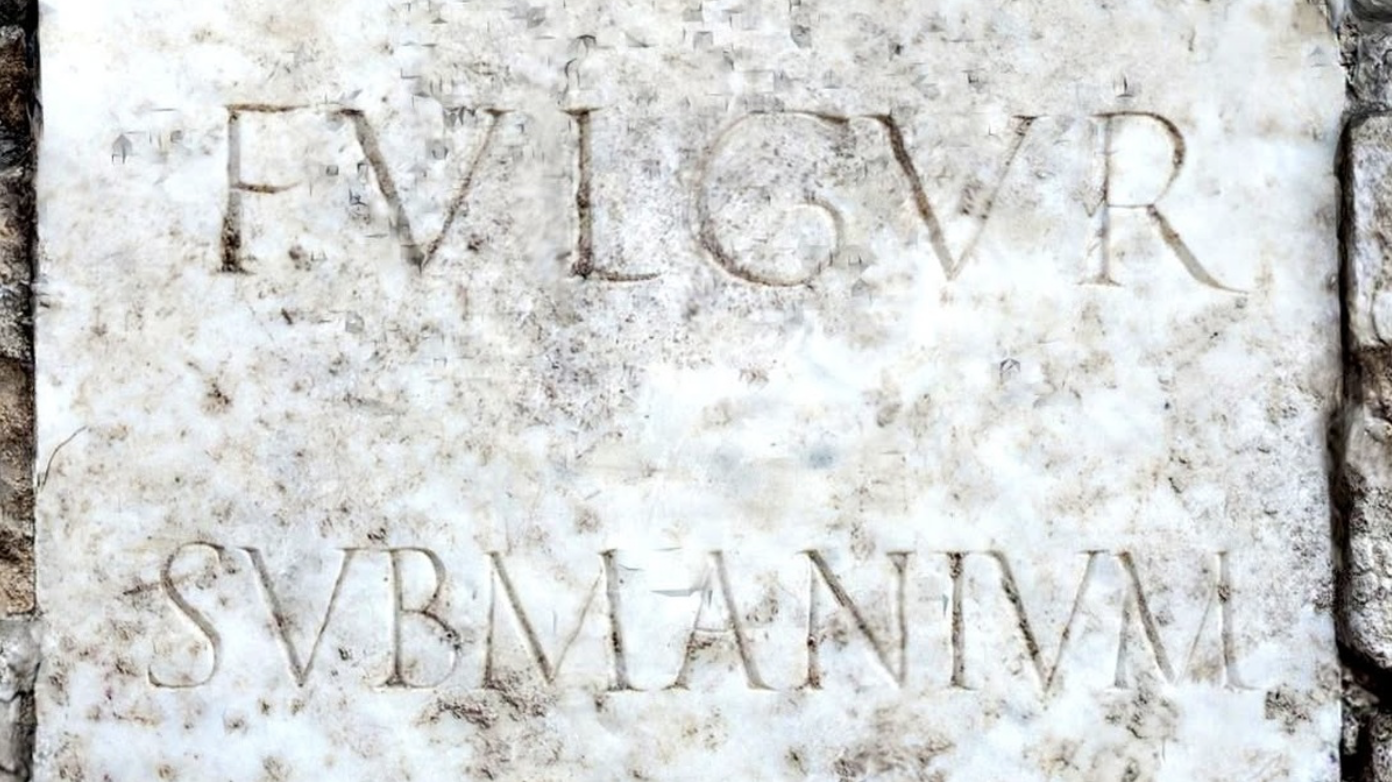
Photo Credit: Italian Ministry of Culture (MiC)
The marble inscription consequently records much more than the occurrence of a storm. It represents the Roman interpretation of that event and the religious significance subsequently attached to the location.
In this case, a moment of natural violence appears to have become part of the sacred landscape of one of the Roman Empire’s most extraordinary residences.
One of the most interesting aspects of this discovery is not simply the inscription itself, but where it was found. Archaeological objects can lose much of their meaning when removed from their original surroundings. Here, researchers have the opportunity to study the inscription alongside the structure in which it was incorporated and the surrounding archaeological evidence.
That context could help establish how the site was altered following the lightning strike and how the sacred feature interacted with the rest of the complex.
The discovery may therefore provide new information about the development of this previously understood area of Hadrian’s Villa, including whether the ritual associated with the lightning strike influenced how the space was subsequently organised and used.
Hadrian’s Villa is already one of the most remarkable archaeological sites of the Roman world. Constructed largely during the reign of Emperor Hadrian, who ruled from AD 117 to 138, the enormous complex at Tivoli incorporated residential buildings, gardens, baths, ceremonial spaces and architectural features inspired by different parts of the Roman Empire.
Yet this latest discovery highlights a much more personal and religious aspect of the site.
At some point during its history, lightning struck within this enormous imperial landscape. For the Romans who witnessed or investigated the event, it was apparently not something to simply repair and forget. The location was given religious significance and marked in a way that allowed the event to become part of the physical landscape.
Nearly two millennia later, the inscription provides archaeologists with a direct connection to that moment. FVLGVR SVBMANIVM is only a few words carved into marble, but those words preserve evidence of how the Romans understood the world around them, where a flash of lightning could be interpreted as an act of divine power and could permanently transform the meaning of a place.