Roman Basilica Designed by Vitruvius Discovered in Fano, Italy!
Archaeologists in central Italy have finally put a centuries-old architectural mystery to rest. Beneath Piazza Andrea Costa in the town of Fano, they have uncovered the remains of a Roman basilica designed by Marcus Vitruvius Pollio, the famed architect and engineer behind De Architectura. Remarkably, this is the only building Vitruvius ever explicitly described as his own work, making the discovery a landmark moment for Roman archaeology.
The structure came to light during rescue excavations carried out ahead of planned redevelopment in the city centre. Dating to the late first century BCE, the basilica was mentioned by Vitruvius himself in Book V of De Architectura, where he described a civic building he designed for the Julian colony at Fano. Until now, scholars had only his written words to go on, with no surviving structure securely linked to him, a gap that fuelled debate for generations.
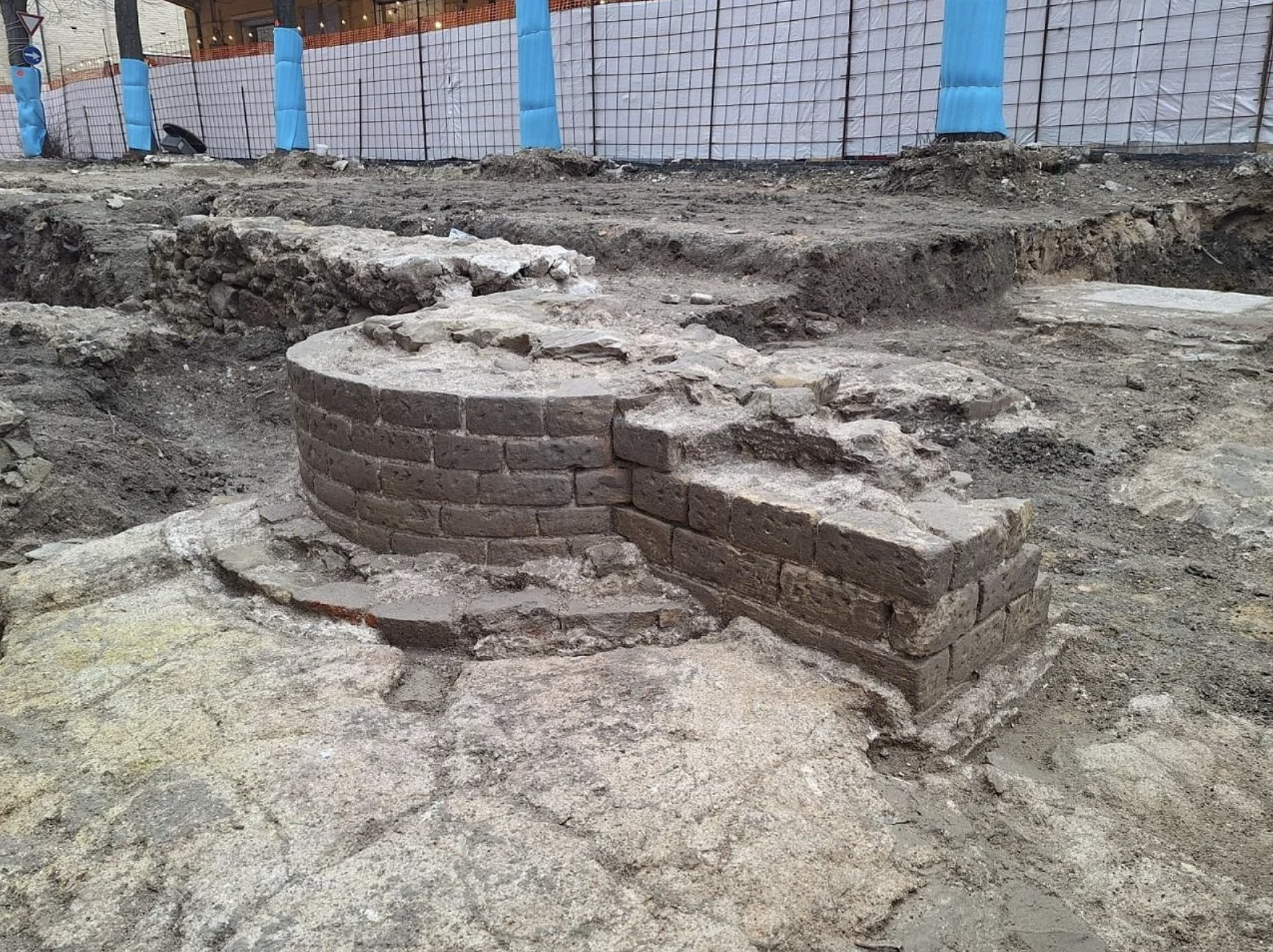
Photo Credit: Italian Ministry of Culture
What makes this discovery so compelling is how closely the archaeology matches Vitruvius’s account. The exposed foundations reveal a carefully proportioned rectangular building aligned with the ancient forum. Eight columns ran along the long side facing the civic centre, with four columns at each end. Notably, two central columns on one side were deliberately left out, a design choice Vitruvius explained as a way to maintain sightlines towards nearby public and religious buildings. The excavated measurements confirm this arrangement almost exactly.
Further details reinforce the identification. Column bases measure around five Roman feet, roughly sixty inches, in diameter, while surviving architectural fragments suggest columns originally stood close to fifty feet tall. The placement of pilasters and corner supports also corresponds with Vitruvius’s descriptions. By following his text closely, researchers were even able to pinpoint a corner of the building that had previously remained uncertain, allowing them to reconstruct its orientation and overall scale with confidence.
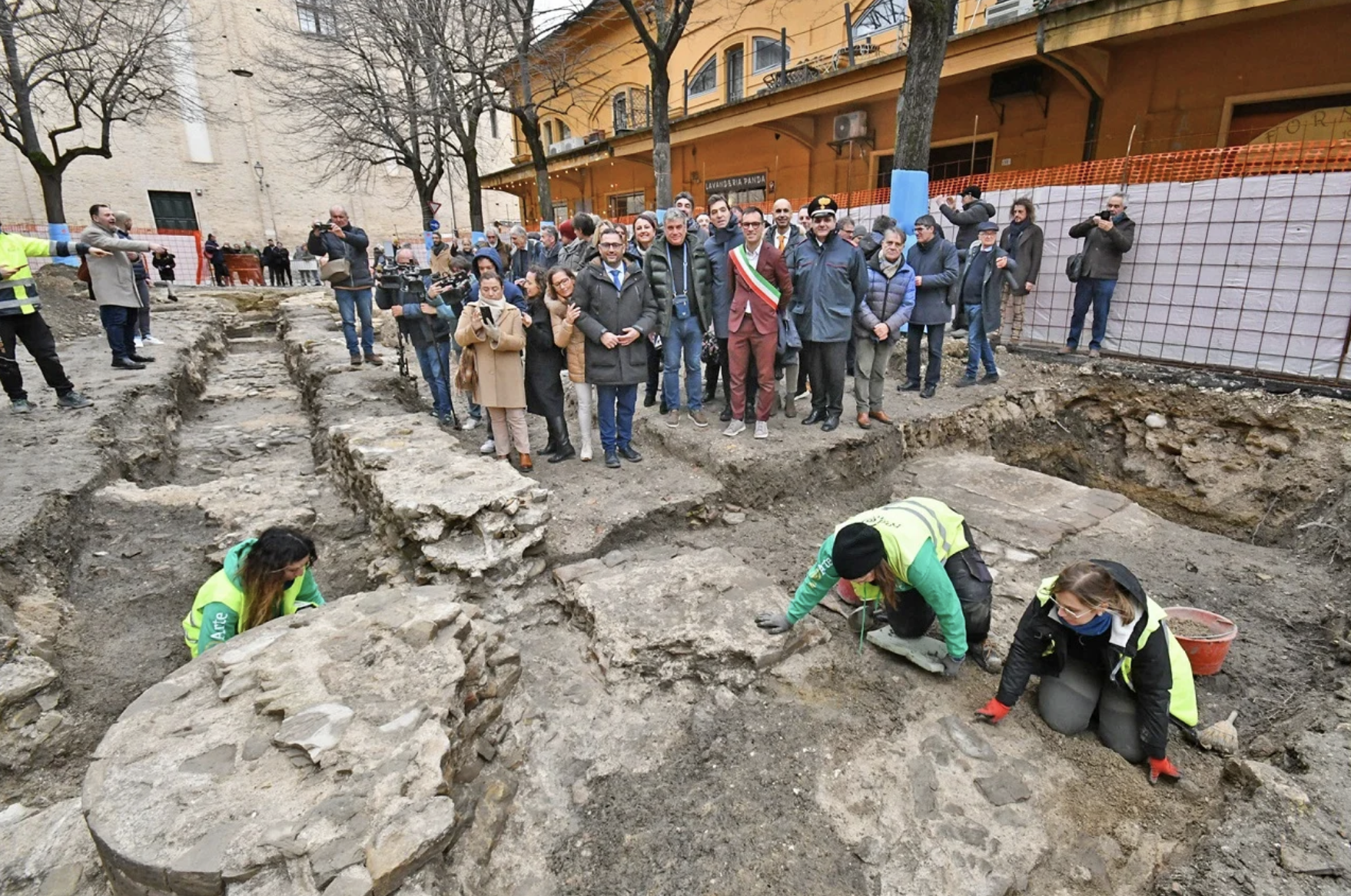
Photo Credit: Italian Ministry of Culture
This discovery did not come entirely out of the blue. Earlier investigations in Fano had already hinted at the presence of a major Roman public building. Excavations along Via Vitruvio in 2022 revealed marble floors and wall remains of unusually high quality. The latest work confirmed those suspicions, tying the archaeological evidence directly to Vitruvius’s writings through careful stratigraphic analysis.
Like much of Roman Fano, the basilica suffered destruction in late antiquity. Centuries of conflict, rebuilding, and urban change erased most visible traces of the ancient city. Even so, the foundations survived beneath later layers, preserving crucial information about the building’s design and construction.
Italian heritage officials have described the find as a major breakthrough for the study of Roman architecture. Conservation efforts are already underway to protect the exposed remains, while plans are being developed for further excavation and interdisciplinary research. There are also discussions about long-term preservation, possible public access, and even UNESCO recognition.
For historians and archaeologists alike, identifying a real building designed by Vitruvius offers a rare opportunity. It provides direct insight into how Roman architectural theory was translated into practice at a pivotal moment, as Rome shifted from Republic to Empire, and finally anchors one of history’s most influential architectural voices firmly in the physical world.