Roman Bath in Türkiye Transformed into Wine and Olive Oil Complex!
A Roman bath complex in southern Türkiye was given a remarkable new purpose after it ceased to function as a place for bathing. Archaeological investigations at Antiochia ad Cragum have revealed that the building was later converted into a large-scale agricultural processing facility, where grapes and olives were likely processed into wine and olive oil.
The discovery provides an unusual insight into how Roman buildings could be adapted as the needs of a community changed. Rather than allowing the bath to fall into disuse, its occupants modified the existing structure, making use of its water supply, covered spaces and substantial architecture to create a new production centre.
Antiochia ad Cragum was established during the Julio-Claudian period by Antiochus IV of Commagene. Located close to modern Gazipaşa in Antalya Province, the ancient city occupied a particularly productive landscape overlooking the Mediterranean.
The surrounding countryside provided fertile land, springs supplied fresh water, and the city's coastal position offered access to wider trading networks. These conditions made the area well suited to cultivating olives and grapes.
The building investigated by archaeologists is known as the Small Bath. It stood around 90 metres outside the city's main gate and was constructed in the late second or early third century AD. Originally, it contained heated and cold rooms, marble surfaces and geometric mosaic floors.
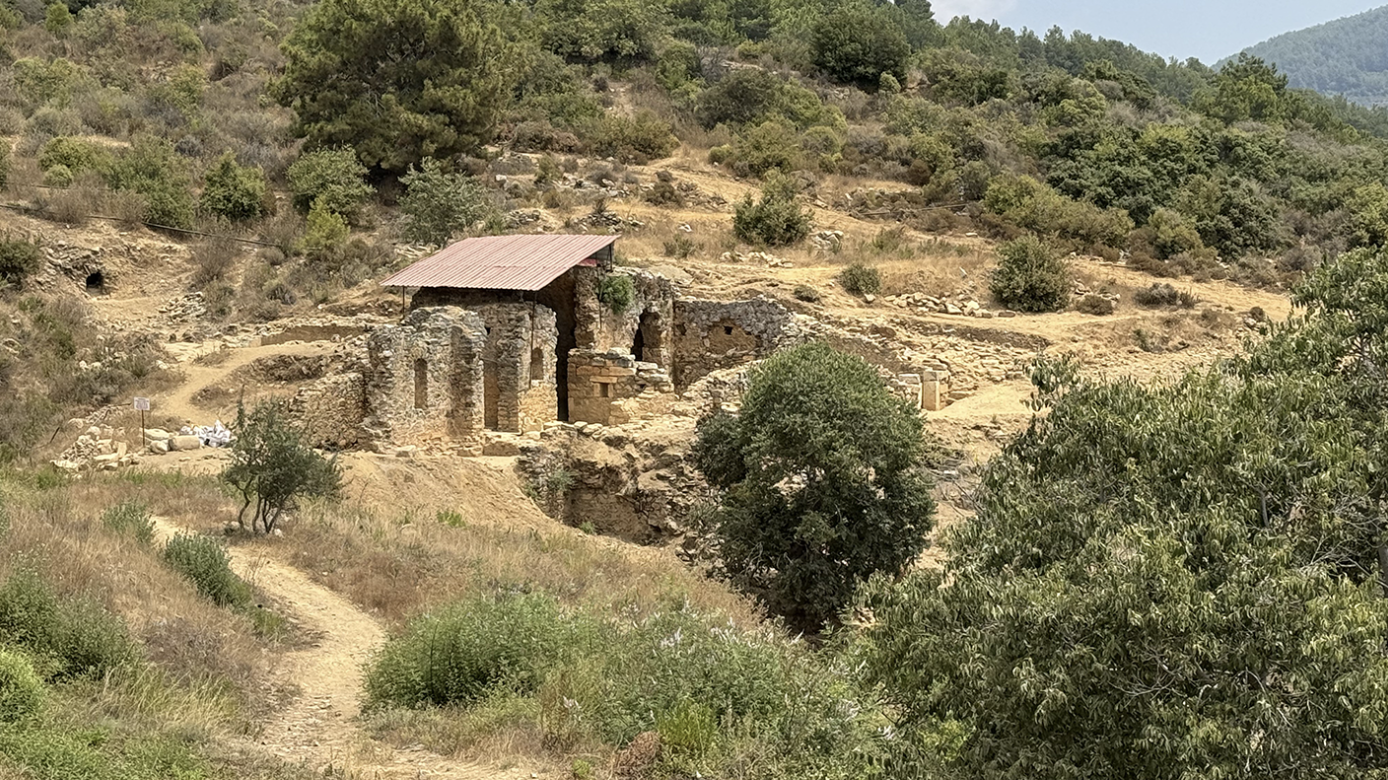
Photo Credit: Dodd, E., & Rodriguez, L. R. (2026)
At some point in Late Antiquity, however, its purpose changed dramatically. Researchers Emlyn Dodd and Leticia R. Rodriguez identified modifications across at least four areas of the building. Walls were added, channels were constructed and large processing installations were introduced into rooms that had originally been designed for bathing.
The decision to reuse the structure appears to have been a practical one. The building still had a roof providing sheltered working space, while its existing cistern and nearby spring could supply water for processing and cleaning. Instead of constructing a completely new agricultural facility, its occupants adapted what was already available.
One of the clearest examples of this transformation can be seen in Room 3. A pool that had once been used for cold-water bathing was converted into a large vat capable of holding approximately 2,900 litres. Its original marble steps survived, but the inside of the pool was subsequently coated with waterproof mortar, preparing it for a very different function.
Evidence from the neighbouring room provides clues about how the installation may have operated. The mosaic floor there was particularly worn in certain areas, especially close to a channel that had been cut through the wall between the two rooms.
This channel carried liquid towards the former bathing pool before dividing into two branches that led to separate collection vats.
The arrangement resembles installations used for wine production elsewhere in the eastern Mediterranean. One possibility is that grapes were crushed or trodden on the mosaic floor, with the resulting juice flowing through the channel and into the vats.
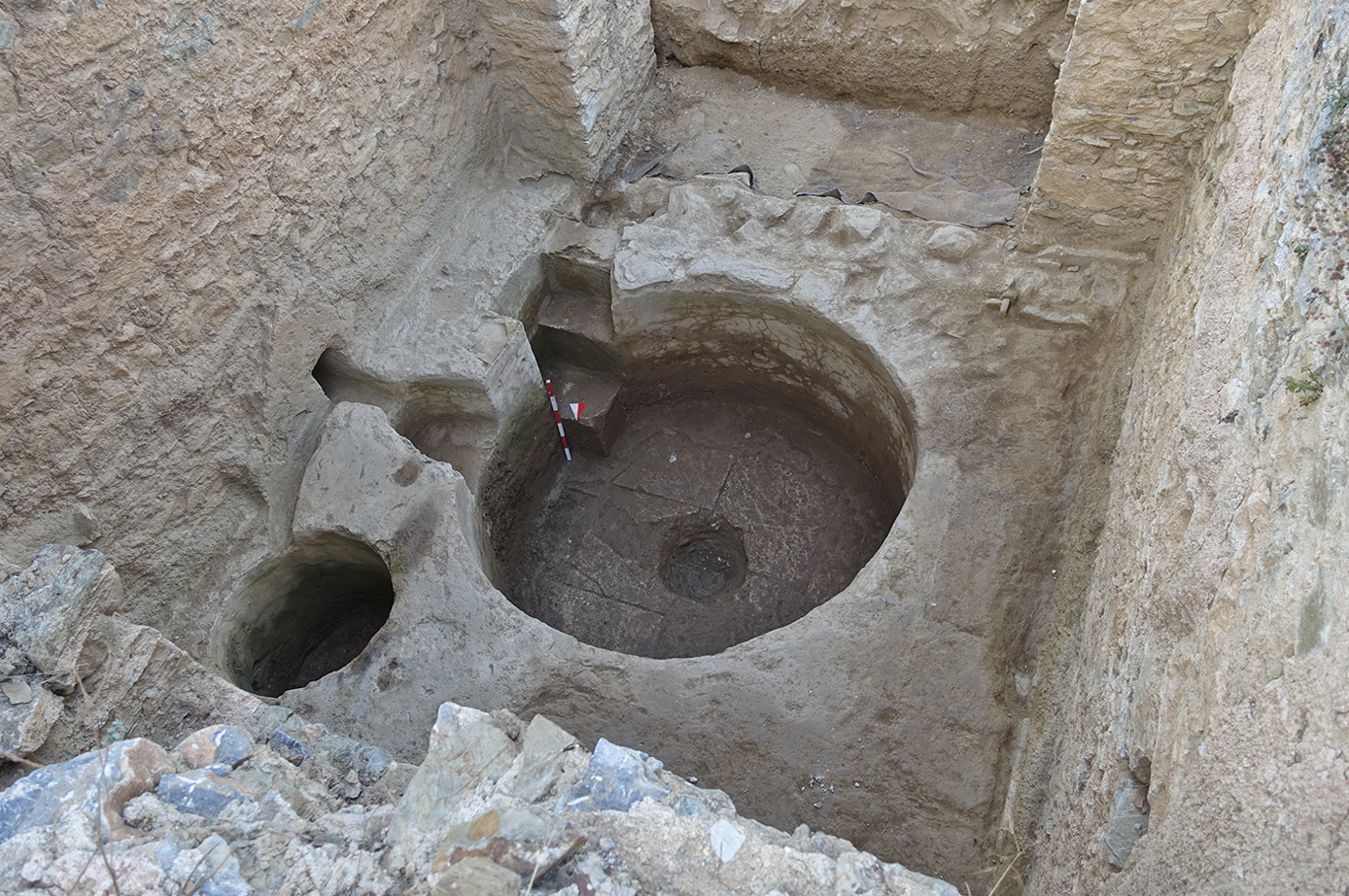
Photo Credit: Dodd, E., & Rodriguez, L. R. (2026)
The worn areas of the mosaic could also indicate that stone rollers were used to crush dried grapes. This has led researchers to suggest a possible connection with passum, a type of raisin wine associated with ancient Cilicia. However, the evidence is not sufficient to confirm that this particular product was being made at the site.
The two collection vats may also have allowed different qualities of grape juice to be separated. The smaller basin, for example, could have collected the first and potentially most valuable juice produced during processing.
The former bath was not used solely for processing grapes.
In the central hall, archaeologists uncovered equipment associated with olive processing, including components of a trapetum, a Roman rotary mill designed to crush olives. Among the discoveries were an intact grinding stone and approximately half of the stone basin in which the olives would have been crushed.
The eastern part of the hall had been separated from the rest of the building by a newly constructed wall. Nearby, archaeologists found a large stone press bed, a marble counterweight and an opening intended to hold the wooden beam of a lever-and-screw press.
Even more interestingly, some of the equipment had been made using material taken from the original building.
An architectural marble block had been repurposed as the press bed. A channel was carved into its surface, along with five additional outlets designed to carry liquid away from the pressing area.
Another architectural block was transformed into a heavy counterweight. It had been positioned within a large cut made through the original mosaic floor, allowing the weight to sit below ground level and increase the force generated by the press.
Together, these surviving components provide evidence for a substantial processing installation rather than a temporary or makeshift reuse of the bath.
The trapetum provides particularly strong evidence that olives were processed at the site, but the function of the large press is slightly more complicated.
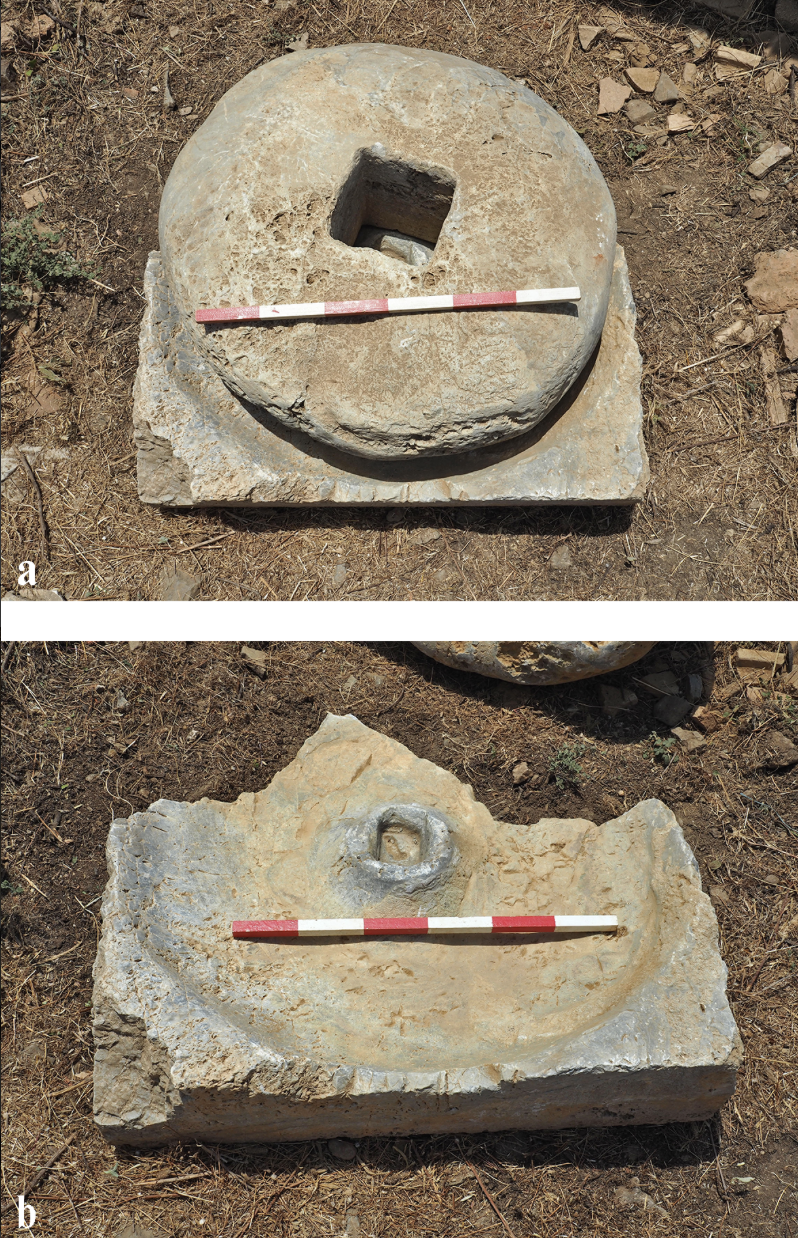
Photo Credit: Dodd, E., & Rodriguez, L. R. (2026)
Similar pressing equipment could also be used in the production of wine. This raises the possibility that the machinery was used for different agricultural products at different points in the year.
Olives and grapes have different harvesting seasons, so the same installation could potentially have been adapted according to the agricultural calendar. The evidence therefore suggests a facility that may have been capable of supporting more than one type of production rather than a building dedicated to a single commodity.
The conversion of the Small Bath fits into a broader pattern already visible elsewhere at Antiochia ad Cragum.
Previous excavations have identified a winery constructed within the podium of an imperial temple, while kilns were installed inside the Great Bath. Other discoveries throughout the city have also been connected with olive oil production.
Taken together, these finds suggest that buildings originally constructed for public, religious or monumental purposes were increasingly being adapted for agricultural and craft activities.
The Small Bath is particularly valuable because much of its processing equipment remained in position, allowing archaeologists to examine not only what was produced but also how the different spaces may have been organised.
The surrounding environment would have supported this kind of economy. The south-facing slopes, well-drained soils and natural springs were suitable for cultivating olives and grapes, while the city's position on the Mediterranean connected local producers with wider markets.
Cilician wine was traded beyond the immediate region, and archaeological evidence from locally produced amphorae points towards the movement of agricultural products through established Mediterranean networks.
There are nevertheless limits to what can currently be established. Organic residue analysis from the collection vats was inconclusive because of environmental contamination, meaning researchers cannot definitively identify every substance processed inside the building.
The agricultural phase was not the final chapter in the history of the Small Bath. The building may have stopped functioning as a bath during a period of disruption in the region. Researchers suggest that the invasion of coastal Cilician cities by Shapur I during the AD 260s could have played a role, particularly given the building's position outside the city walls. However, exactly why the bath ceased operating remains uncertain.
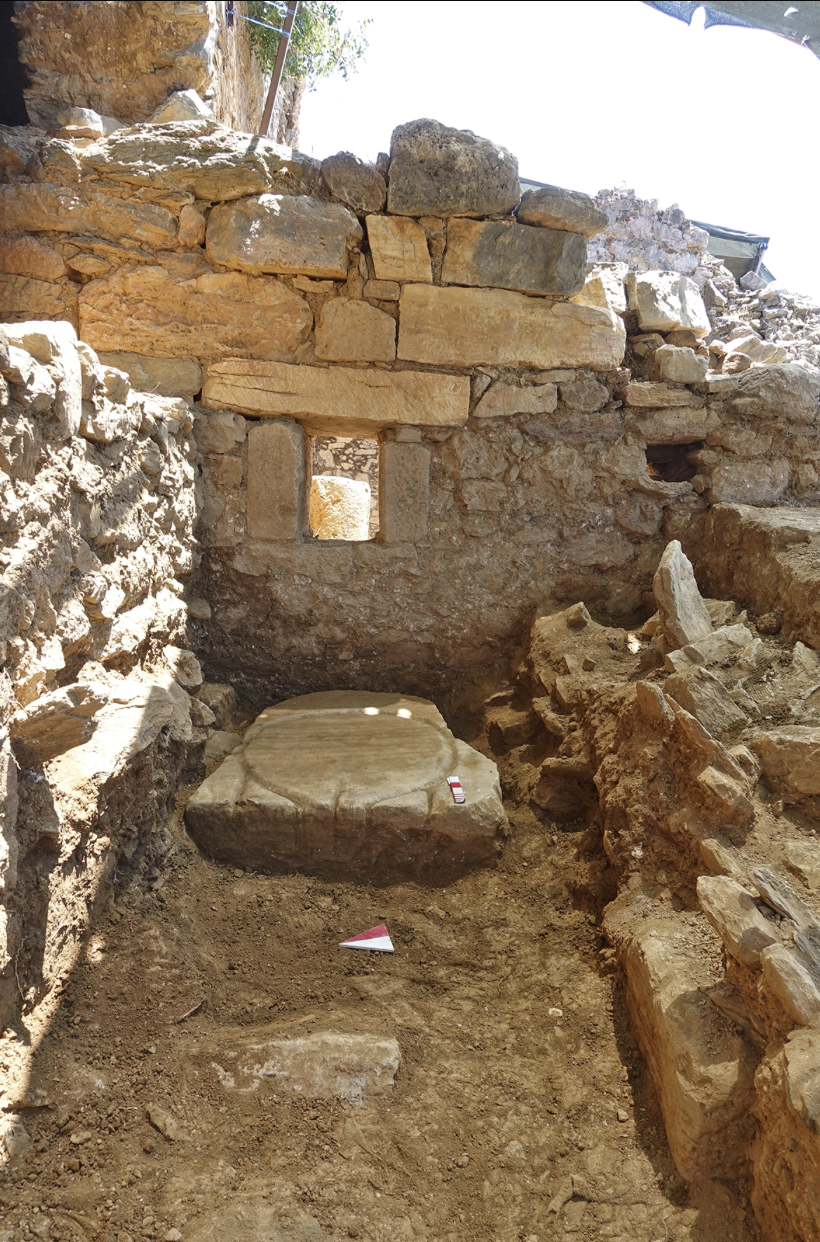
Photo Credit: Dodd, E., & Rodriguez, L. R. (2026)
What is clearer is that the structure continued to be reused. Several rooms eventually contained human burials, with radiocarbon dating placing the individuals in the tenth and eleventh centuries AD. Centuries later, the building was also associated with two separate coin hoards containing more than 3,000 coins, mostly silver but also including bronze and gold examples. These deposits date from the 1620s or later.
The history of the Small Bath therefore stretches far beyond its original Roman function.
The transformation of the Small Bath demonstrates how ancient communities could adapt existing architecture to meet changing economic demands.
Its conversion required considerable investment. Walls were rebuilt, channels were cut, mosaic floors were modified, and heavy machinery was installed. Rather than simply occupying an abandoned structure, its later users deliberately transformed the bath into a functioning agricultural production complex.
What was once a place for public bathing became a workplace associated with some of the Mediterranean's most important agricultural products.
At Antiochia ad Cragum, the end of the bath's original function did not mean the end of the building's usefulness. Instead, its architecture was repeatedly adapted to suit the changing needs of the people who occupied it, from bathing complex, to agricultural workshop, to burial space and eventually a place where valuable coin hoards were deposited.