Vast Roman Commander’s Residence Uncovered at Novae in Bulgaria!
Archaeologists working at the Roman fortress of Novae in northern Bulgaria have uncovered a huge residential complex that may have belonged to the commander of Legio I Italica.
The building, located on the Danube frontier of the Roman Empire, has so far been excavated across more than 3,000 square metres. Researchers believe the complete complex could have covered approximately 4,500 square metres, potentially making it one of the largest structures within the fortress.
The scale and decoration of the building indicate that this was no ordinary military accommodation. Excavations have revealed private bathing facilities, decorated walls, elaborate flooring and a collection of high-status objects, all pointing towards a wealthy occupant.
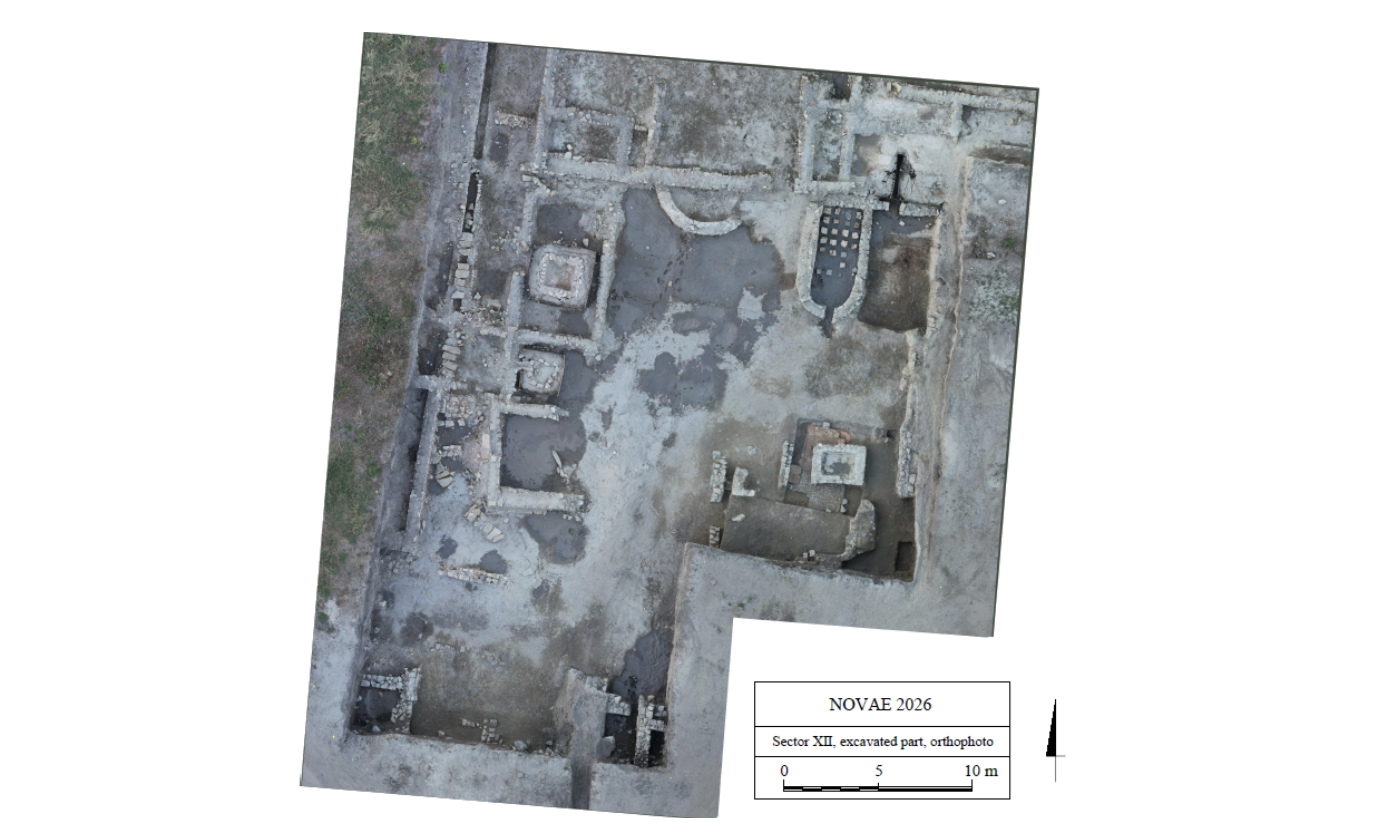
Photo Credit: Bartosz Wojciechowski / University of Warsaw.
Archaeologists believe the building could be the praetorium, the official residence of the legionary commander. If this interpretation is confirmed, the discovery would provide an unusually detailed insight into the domestic surroundings of a senior Roman military officer.
Novae was much more than a fortified camp filled with soldiers. Like other major Roman legionary bases, it contained a complex network of buildings and facilities, including administrative offices, workshops, hospitals, warehouses, temples and bathhouses.
At the top of this military community was the legionary legate, a senator appointed to command the legion. His position combined military authority with administrative and political responsibilities, meaning his residence also had an important public function.
The newly uncovered building appears to have reflected that status. According to Professor Piotr Dyczek of the University of Warsaw, the structure would have ranked as the third-largest building within the fortress, surpassed only by the legionary headquarters and military hospital.
Recent excavations have expanded archaeologists' understanding of the complex. Several additional pools belonging to its private bathing facilities have been identified, while fragments of painted plaster and sections of carefully constructed flooring provide evidence for its decorative interior.
One of the floors was made using bricks of different colours, adding another indication of the level of investment that went into the building. Together, these discoveries suggest that the commander lived in surroundings that were deliberately designed to reflect his wealth and position, despite being located within the same fortress as thousands of ordinary soldiers.
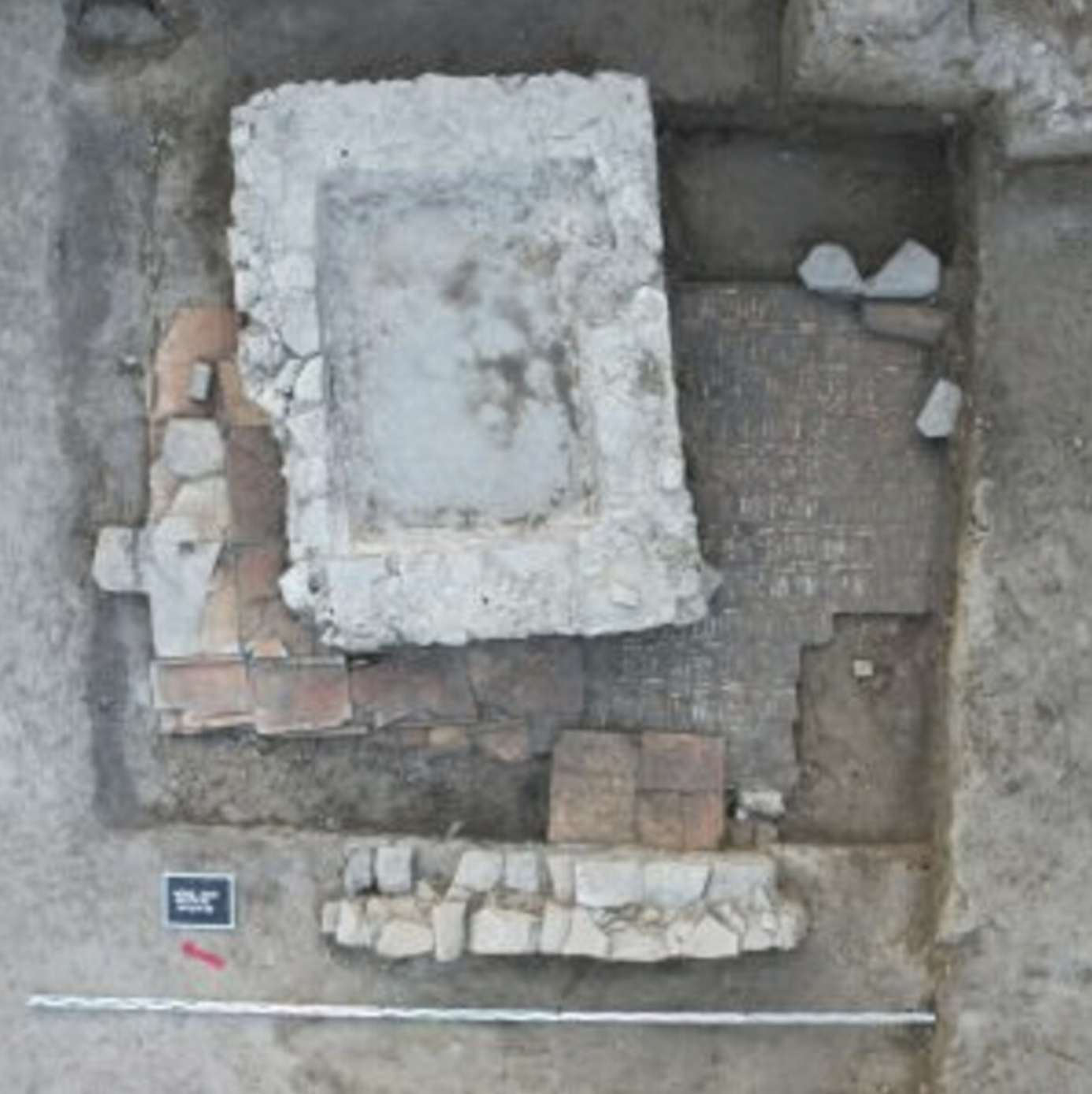
Photo Credit: Krzysztof Narloch / University of Warsaw.
The private baths are particularly significant. Bathing was an important part of Roman military life, and soldiers stationed at Novae could make use of communal facilities. A substantial bathing complex incorporated directly into a private residence, however, reflects a considerably more privileged lifestyle.
Other finds reinforce this interpretation. Archaeologists have recovered bronze furniture fittings, fine pottery and other objects associated with an affluent domestic environment. Painted walls and decorative floors add to the picture of a residence where comfort and visual display were important.
Homes belonging to senior legionary commanders can be difficult to investigate archaeologically. Military sites were frequently rebuilt over time, while others have been damaged or covered by later settlements. As a result, detailed evidence for how these officers lived is comparatively limited.
Novae could therefore offer an important opportunity to study the relationship between the public responsibilities and private lives of Roman military commanders.
Some of the most intriguing discoveries from the residence are much smaller than its monumental architecture. Among the finds is a bronze figurine depicting Priapus, the Greco-Roman deity associated with fertility, gardens and abundance. According to the University of Warsaw, only five comparable examples are currently known from the Lower Danube region, making the discovery at Novae particularly unusual.
Archaeologists also uncovered a head representing Mithras, as well as a fragment of a marble head from an imperial portrait.
These objects provide evidence for the different aspects of life within the residence. Religious practices, displays of wealth and connections to imperial authority all appear to have existed alongside the everyday domestic life of the commander.
Two inscribed altars were also found, one of which remains almost completely intact with its inscription preserved.
Other discoveries include a pinecone-shaped architectural finial, an uncommon type of decorative feature in this part of the Lower Danube, and part of a gold ring setting.
Taken together, the objects offer a glimpse into the social environment of Novae at the height of its Roman occupation, where military administration, religion, wealth and imperial power were closely intertwined.
Novae's archaeological story continued long after the Roman military presence began to decline.
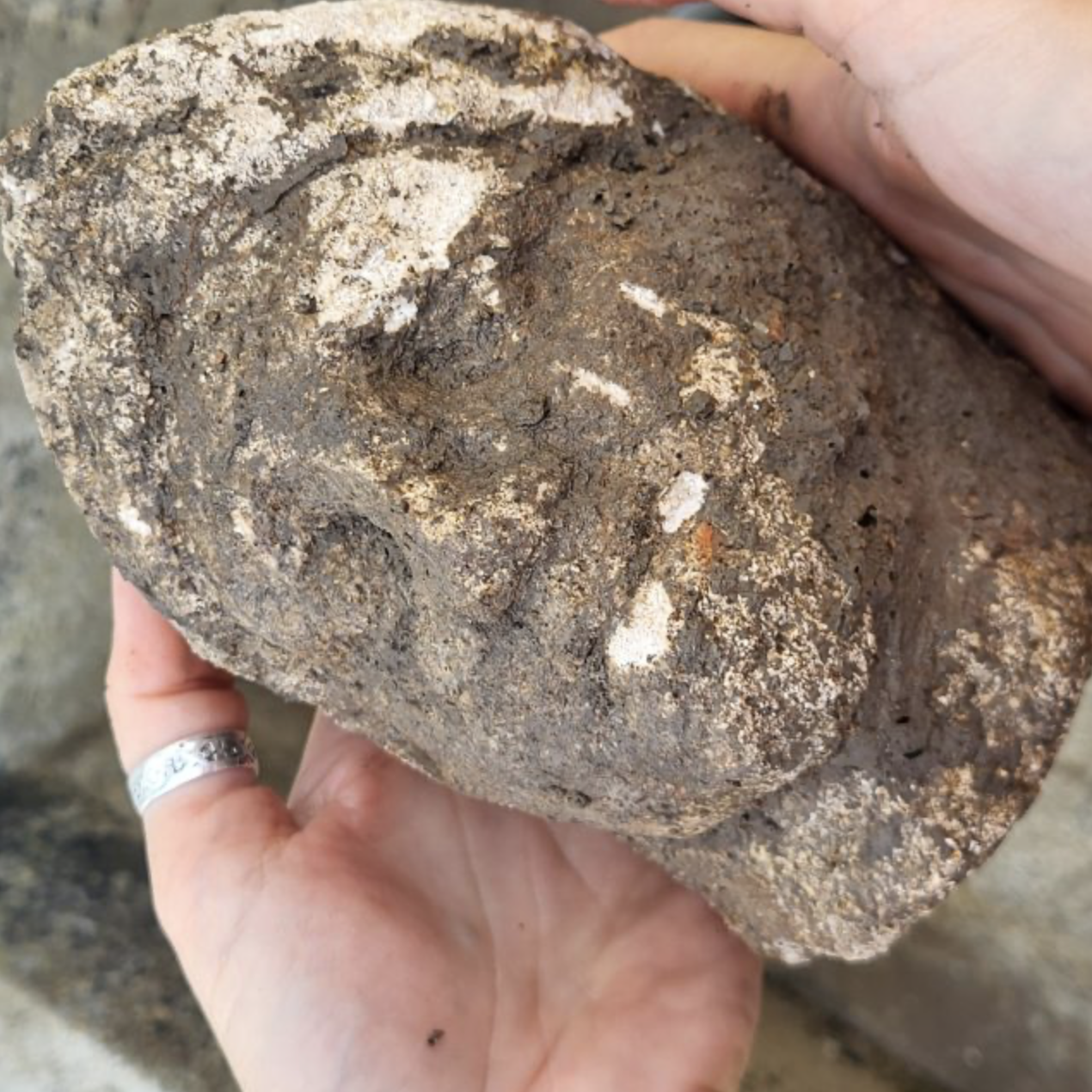
Photo Credit: Krzysztof Narloch / University of Warsaw.
Excavations have now identified late antique structures associated with the Avars, marking the first time evidence of this type has been uncovered at the site.
The Avars became a major political and military force in Central and Eastern Europe during the sixth century CE, and their presence south of the Danube remains an important subject of archaeological debate.
At Novae, researchers discovered one relatively substantial building alongside several much smaller semi-subterranean structures. Some of these smaller buildings were only around five square metres in size and contained hearths.
Their modest scale creates a striking contrast with the monumental Roman architecture that surrounded them.
An Avar earring discovered at the site is particularly noteworthy. Professor Dyczek has described the object as extremely rare in the region and potentially the first example of its type to have been discovered in northern Bulgaria.
These later remains could help archaeologists investigate how communities used former Roman military centres after imperial control of the region weakened, as well as providing evidence for population movements across the Danube.
Novae is situated close to the modern Bulgarian town of Svishtov, beside the Danube. The river formed part of the Roman Empire's heavily defended northern frontier, making the fortress an important military centre.
Established during the first century CE, Novae eventually became the permanent base of Legio I Italica. The fortified settlement covered almost 18 hectares and included major administrative, medical, religious and bathing facilities.
Archaeological investigations at the site have been ongoing since 1960, with Polish and Bulgarian researchers gradually reconstructing the history of the fortress and the wider community that developed around it.
Recent discoveries have extended beyond the fortress itself. Exceptionally low water levels in the Danube allowed archaeologists to investigate areas of the riverbank that are usually submerged. They documented architectural fragments, pottery and roof tiles, potentially providing clues about the location of Novae's ancient river port.
A functioning harbour would have been particularly important to a fortress positioned on the Danube, providing a route for supplies, communication and movement along the frontier.
Yet the enormous residence now being uncovered offers a more personal perspective on life at Novae. Rather than revealing only another part of the fortress's military infrastructure, it has the potential to show how one of the most senior figures in the Roman army lived, in considerable comfort and luxury, just metres away from the soldiers under his command.