Roman Cave Sanctuary in Spain Reveals 120+ Latin Inscriptions to Mysterious Goddess!
Archaeologists investigating Cova Dones in eastern Spain have uncovered an extraordinary collection of more than 120 Latin inscriptions, revealing that the cave once served as one of the Roman Empire's most significant underground religious sanctuaries. The discoveries, made during excavations in May and June 2026 near Millares in Valencia, have dramatically changed historians' understanding of the site and point to the organised worship of a previously unknown goddess.
Until recently, only around 15 Roman inscriptions had been identified within the cave. The latest fieldwork has increased that figure eightfold, suggesting the sanctuary attracted regular worshippers over a prolonged period rather than occasional visitors.
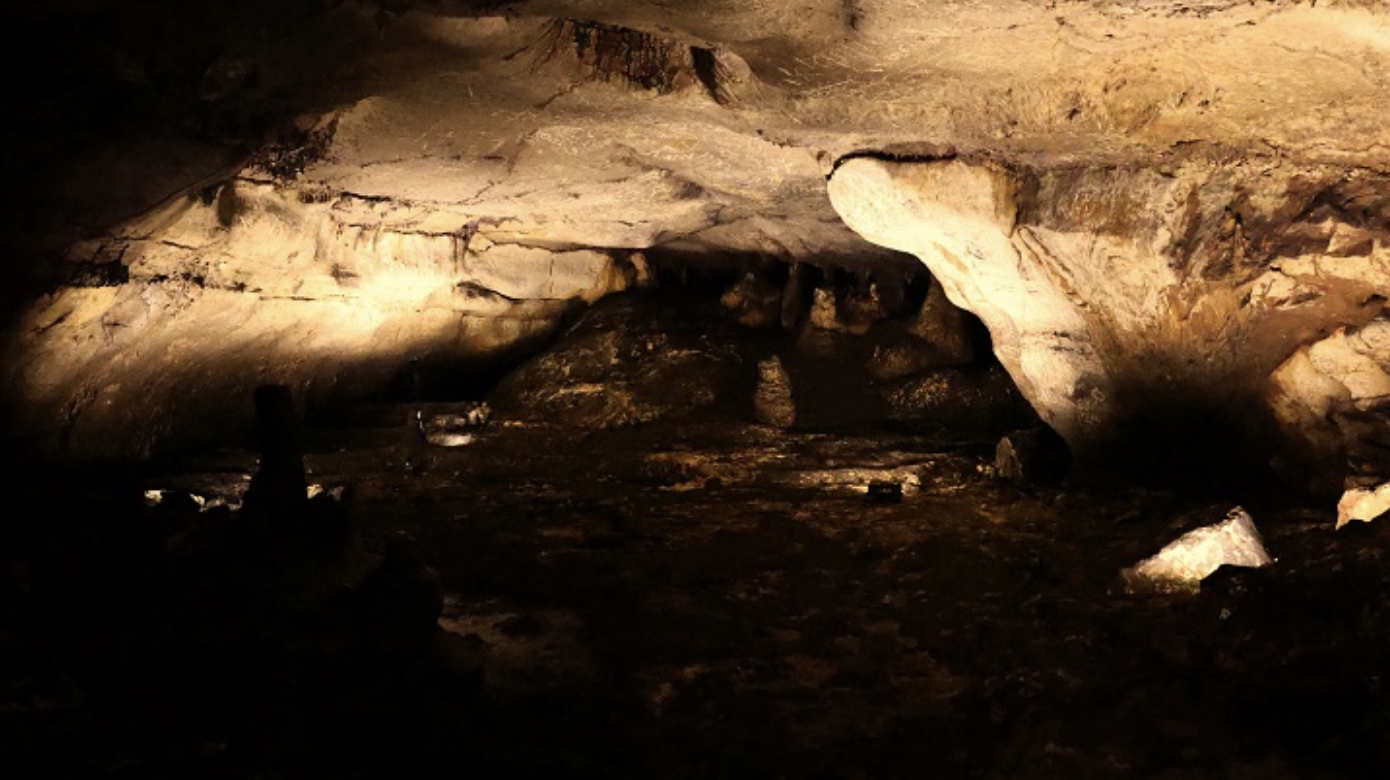
Photo Credit: University of Alicante
The inscriptions are located in a chamber more than 200 metres from the cave entrance, an area researchers have named the Roman Sanctuary. First recognised in 2024, the chamber contains walls and ceilings covered with Latin texts alongside evidence of ritual activity.
One of the sanctuary's most striking features is the presence of natural limestone pools, known as gours, which collect water flowing through the cave. Archaeologists believe these pools formed an important part of religious ceremonies, as a variety of objects were deliberately placed in and around them.
Among the discoveries from this year's excavation were bronze rings, a bracelet, chalice-shaped vessels, spindle whorls, fragments of pottery and animal bones. These finds complement a Roman coin of Emperor Claudius uncovered during earlier investigations, which is thought to have been left as a votive offering.
Because both the inscriptions and associated artefacts remain largely undisturbed in their original locations, researchers have an unusually complete snapshot of how rituals may have been performed within the sanctuary.
Several of the inscriptions appear to be dedicated to the same female deity, offering rare evidence for a cult that has never previously been identified.
The goddess is referred to as Domina, meaning "the Lady", a respectful title rather than a personal name. Three inscriptions also include the word MALACI, which researchers suspect may represent either a local divine title or an epithet connected with the goddess herself.
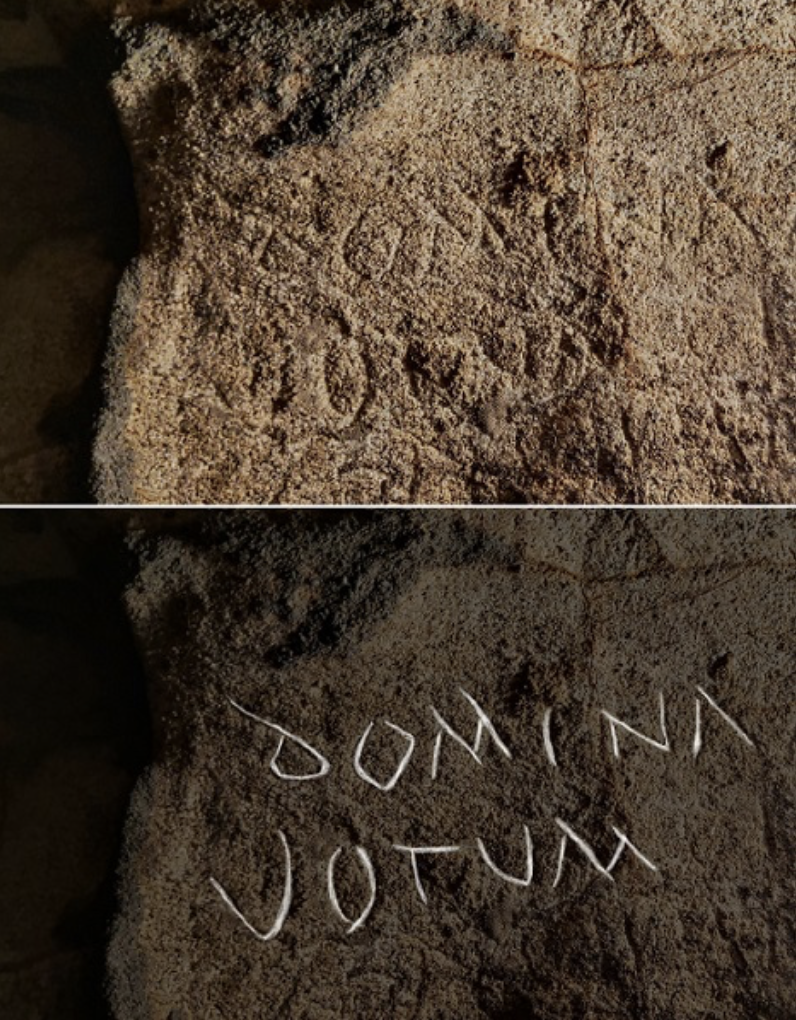
Photo Credit: University of Alicante
Exactly what MALACI means remains uncertain. One possibility is that it relates to water, an interpretation that would fit the cave's natural pools and the apparent importance of water during ceremonies. However, specialists emphasise that further study is needed before any firm conclusions can be reached.
The repeated appearance of the same deity across multiple inscriptions strongly suggests that this was a dedicated place of worship rather than a general sacred space visited for unrelated rituals. The fact that worshippers deliberately travelled hundreds of metres underground further supports the idea that this chamber held special religious significance.
One of the most remarkable aspects of the discoveries is the evidence that women actively participated in religious ceremonies held within the cave.
Several inscriptions contain female names, demonstrating that women were present during worship. Archaeologists have also recovered numerous spindle whorls, small weights used in spinning thread, which were commonly associated with textile production throughout the Roman world.
Researchers believe complete spinning tools may have been offered to the goddess, although any wooden components have long since decayed. Together, the spindle whorls, female names and dedications to a female deity suggest that women may have held a particularly prominent place within this underground cult.
Even the cave's modern name, Cova de les Dones ("Cave of the Women"), has attracted attention. While it is impossible to know its true origins, researchers have suggested it could preserve a distant memory of women regularly visiting the site or ancient beliefs about female supernatural beings associated with the cave. At present, this remains an intriguing possibility rather than a confirmed interpretation.
The Roman sanctuary represents just one phase in the cave's exceptionally long history.
Research under the DONARQ project began in 2023, when archaeologists confirmed that Cova Dones contained the largest known collection of Palaeolithic rock art in eastern Iberia. More than 100 paintings and engravings, some over 24,000 years old, established the cave as one of Europe's most significant prehistoric art discoveries.
The site's importance continued to grow in 2024 with the identification of the Roman sanctuary, showing that people returned to the cave for ritual purposes thousands of years after its Ice Age artists had left their mark.
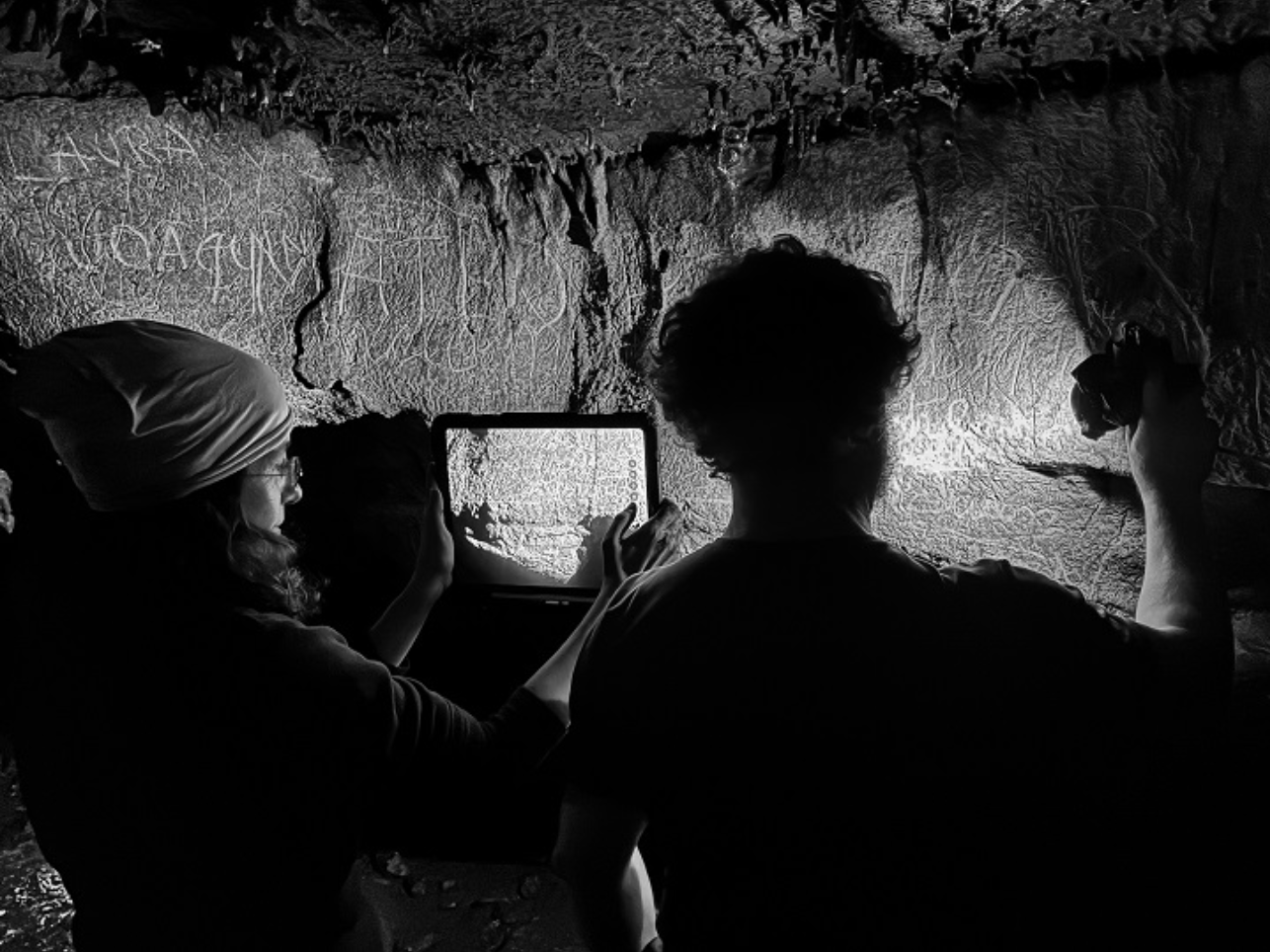
Photo Credit: University of Alicante
In 2025, researchers also documented more than 100 modified stalagmites, known as speleofacts, intentionally altered by prehistoric communities. This discovery made Cova Dones one of the world's most important sites for human-modified cave formations, second only to Saint-Marcel Cave in France.
Taken together, the evidence suggests that successive cultures were repeatedly drawn to the cave by its permanent water supply, impressive underground landscape and symbolic significance.
Although more than 120 inscriptions have already been recorded, archaeologists believe many more may still await discovery. Large sections of the cave remain unexplored, while numerous inscriptions are still undergoing cleaning, documentation and translation.
Future research aims to identify the individuals named within the texts, determine the meaning of MALACI, and understand how the inscriptions relate to the offerings scattered throughout the sanctuary.
Alongside ongoing archaeological work, the project team is developing conservation measures, improving visitor safety and creating a digital twin of the cave. Plans also include a complete catalogue of its prehistoric art and virtual tours, allowing people to experience the site without placing fragile remains at risk.
The discoveries at Cova Dones provide an exceptionally rare opportunity to study Roman worship in its original setting. The combination of inscriptions, ritual offerings, natural water features and evidence for female participation offers a level of detail that is seldom preserved at ancient sacred sites.
What began as one of Spain's most important Ice Age art discoveries has now become equally significant for understanding religious practices during the Roman period. As researchers continue to decipher the inscriptions and investigate the identity of the mysterious goddess known only as Domina, Cova Dones is likely to reshape our understanding of spiritual life in Roman Hispania.