Roman Inscription from Trajan’s Reign Discovered at Aquae Calidae!
Archaeological excavations at the ancient thermal complex of Aquae Calidae, near Burgas in Bulgaria, have uncovered a Roman inscription dating to the reign of Emperor Trajan. The discovery offers another glimpse into the history of a significant bathing and cultural centre that developed around the region’s mineral springs during the Roman period.
The inscription is believed to date from the late 1st or early 2nd century AD, placing it within the reign of Trajan, who ruled the Roman Empire between AD 98 and 117. Although archaeologists have yet to publish the full text, the find adds to a growing body of written evidence from the site, helping researchers investigate how Aquae Calidae evolved under Roman rule.
Excavations are being directed by Associate Professor Dr Dimcho Momchilov, with the Burgas Regional Historical Museum carrying out the archaeological work with financial support from Burgas Municipality. Dr Nikolay Sharankov, a specialist in ancient inscriptions at Sofia University ‘St Kliment Ohridski’, is responsible for studying and interpreting the newly discovered text.
The inscription has not yet been released in its entirety, meaning its precise meaning and purpose remain unknown. Once examined, however, it could provide information about a person connected to the complex, a religious dedication, an official or an episode of construction. Such discoveries are particularly valuable because inscriptions can preserve details that are difficult to recover from buildings and artefacts alone.
The history of Aquae Calidae stretches back before the arrival of Roman rule. Its natural hot springs had already attracted communities to the area, but the Romans developed the location into a substantial thermal centre, taking advantage of its mineral-rich waters and position within the province of Thrace.
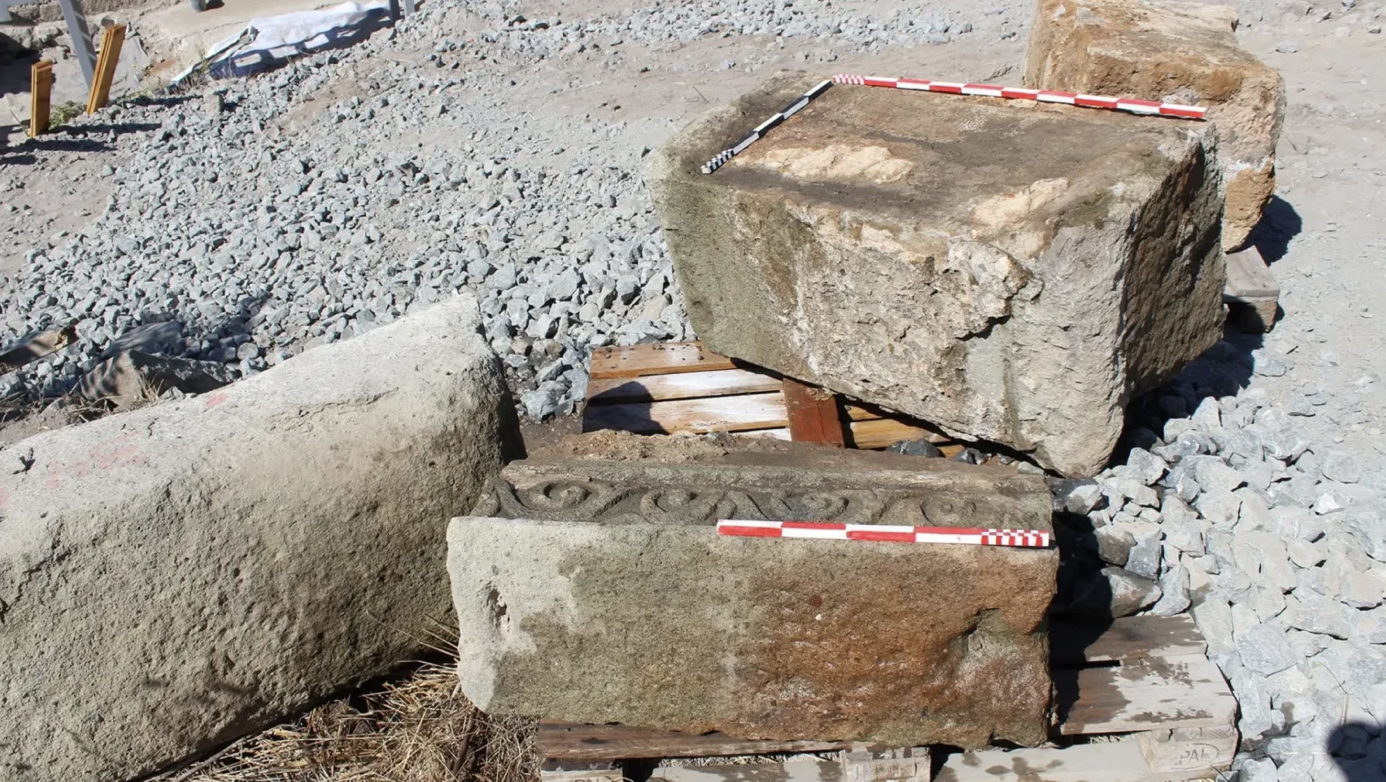
Photo Credit: Regional Historical Museum in Burgas / Burgas Municipality
During the first two centuries AD, the settlement underwent considerable development. Its bathing facilities formed part of a wider landscape of roads, religious activity and regional connections, making Aquae Calidae an important location for more than simply thermal bathing. The complex also provided a setting for social interaction, movement and worship.
Trajan’s reign falls within a period of Roman expansion and infrastructure development across the empire. The construction of public buildings, roads and other facilities helped strengthen connections between settlements and administrative centres, including those in Thrace.
Aquae Calidae occupied a position within this network, with routes connecting the western Black Sea coast to inland areas. The newly discovered inscription may therefore shed light on how the settlement was managed, expanded or used during this period of Roman development.
At present, it is not possible to establish whether the text relates to the construction of the baths, religious activity, local administration or a particular individual. Further epigraphic analysis should help clarify its original purpose.
The latest find contributes to a wider collection of inscriptions uncovered at Aquae Calidae in recent years. These discoveries are helping archaeologists establish a more detailed picture of the site's Roman past, including the development of its bathing facilities and religious traditions.
An inscription discovered in 2015 dates to the reign of Emperor Nero and provided evidence relating to the construction of baths during the 1st century AD. The discovery helped establish that the Roman development of Aquae Calidae was already documented during Nero's rule, offering an earlier point of reference for the site's monumental history.
Another important discovery followed in 2022, when archaeologists uncovered a well-preserved Latin inscription on a votive altar dedicated to the nymphs by a Roman officer. Sharankov also worked on the interpretation of this inscription, which provided evidence for the religious significance of the springs and the worship associated with their supernatural guardians.
Together, these inscriptions demonstrate the value of combining written evidence with archaeological excavation. While the remains of buildings can reveal how the complex was constructed and modified, inscriptions may provide names, religious dedications and information about the individuals or authorities involved in its development.
The accumulation of this evidence is gradually making it possible to explore Aquae Calidae not simply as a Roman bathing complex, but as a place shaped by different communities, religious practices and administrative structures.
The story of Aquae Calidae continued long after the Roman period. The hot springs remained important throughout Late Antiquity and the Middle Ages, while the settlement experienced periods of rebuilding, destruction and fortification.
Excavations have revealed remains belonging to the ancient thermal complex alongside later Byzantine and medieval structures. These layers reflect the long-term significance of the springs and the repeated changes that took place around them over the centuries.
The latest inscription provides another piece of evidence from this extensive history, specifically linking the site to the period of Trajan's rule. Its eventual publication could help researchers establish more precisely what was happening at Aquae Calidae during the late 1st and early 2nd centuries AD.
Whether the inscription records construction work, honours a deity or identifies an individual connected to the settlement, its interpretation may offer a more detailed understanding of how this important thermal centre functioned within the Roman world.