Roman Purse Found in Belgium Reveals How People Survived After the Fall of Rome!
Archaeologists studying a grave in Belgium may have uncovered more than a collection of old Roman objects. Hidden inside a small purse buried with a man nearly 1,600 years ago was evidence of a society adapting to enormous change, a world where official Roman money was no longer dependable, yet everyday life still had to continue.
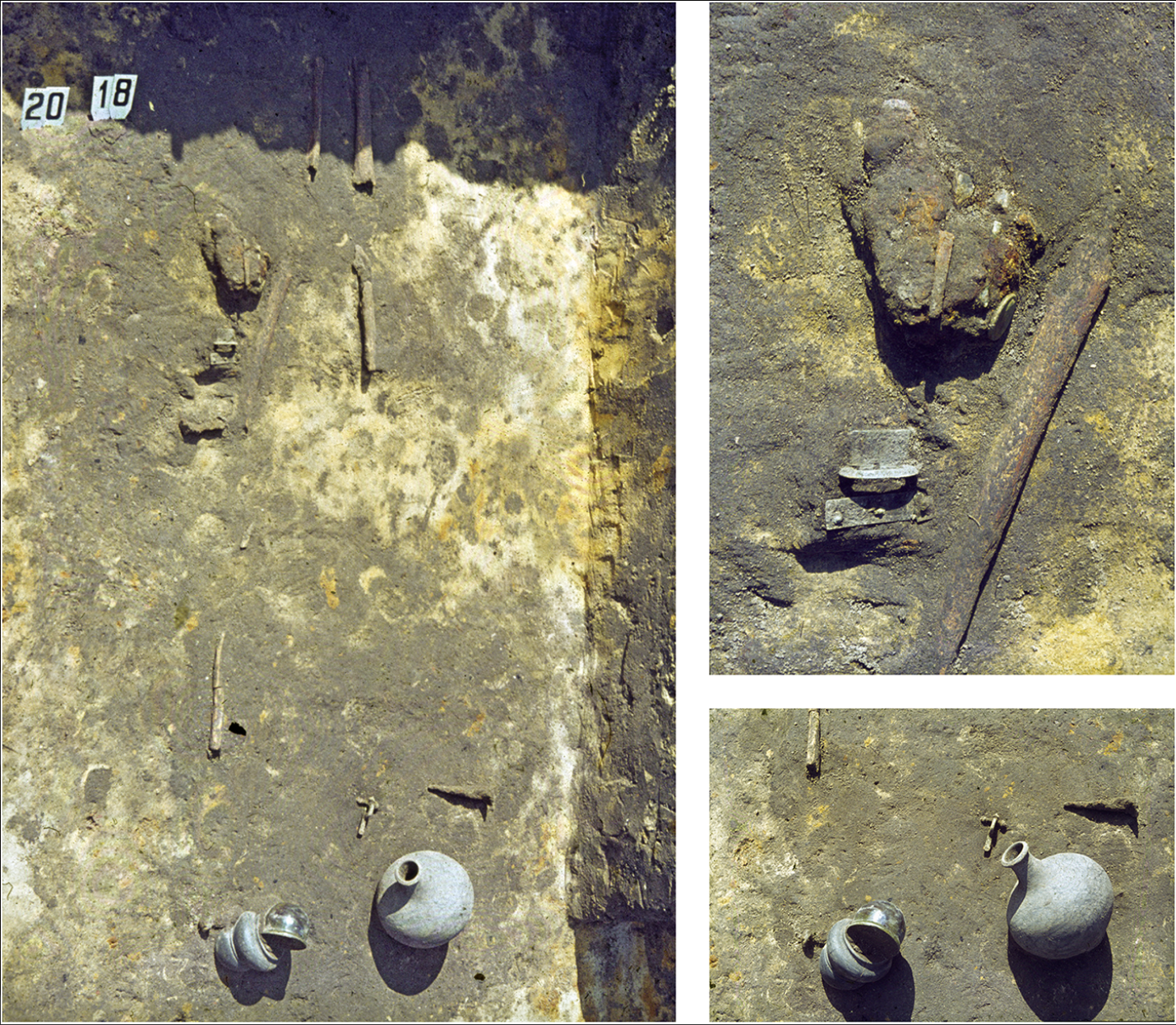
Photo Credit: KBR, Royal Library of Belgium, Coins and Medals. Credit: Flückiger A, et al., 2026
The burial, known as Grave A-104, was discovered at Oudenburg in modern-day Belgium, near the remains of a late Roman coastal fort. At first, the contents seemed unremarkable: a handful of worn bronze coins, fragments of broken metal items, bits of flint and an iron fire striker. Nothing about the discovery suggested wealth or grandeur. Yet researchers now believe these modest objects may offer a rare glimpse into how communities coped as Roman authority weakened across north-western Europe during the early fifth century.
Oudenburg once occupied an important position near the North Sea coast in what is now West Flanders. During the Roman era, the settlement stood close to tidal waterways and coastal routes, making it strategically valuable for both trade and defence.
The fort itself was first built in the late second century, before being later reconstructed in stone. Under Emperor Constantine, the site became part of the wider defensive network often linked to the Saxon Shore, a chain of military strongholds intended to protect vulnerable coastal regions from raids and invasion.
By the late fourth century, however, the Roman Empire’s grip on the region had begun to weaken. Troops were gradually withdrawn, political instability increased, and local communities were forced to adapt to a world where imperial support could no longer be relied upon. Despite this decline, settlements like Oudenburg did not suddenly disappear. People continued living there, maintaining elements of Roman culture while slowly adjusting to a very different political and economic reality.
The man buried in Grave A-104 appears to have held some connection to the military world of late Rome. Archaeologists found him buried with a decorated belt set, a crossbow brooch, a knife and several vessels made of glass and pottery. One detail proved particularly important: the purse attached to his belt.
Rather than being placed in the grave as a symbolic offering, the purse seems to have been worn or carried in daily life. This suggests the objects inside may have been practical possessions rather than ceremonial items selected specifically for burial.
The grave has been dated to sometime after AD 388, based on one of the coins discovered inside the purse. Other artefacts indicate the burial likely took place sometime between the late fourth century and around AD 430, a turbulent period when Roman administration in northern Gaul was rapidly fading.
Among the most fascinating discoveries were the coins themselves. One belonged to the reign of Valentinian II and dated to the late fourth century. However, several others were far older: bronze coins from the reigns of Trajan and Hadrian, minted more than 250 years earlier. That raises an obvious question: why would someone still be carrying ancient Roman coins centuries after they were produced?
Traditionally, archaeologists often dismissed older coins in later burials as accidental leftovers from disturbed ground. However, the arrangement of the Oudenburg finds suggests these coins were deliberately kept together inside the purse.
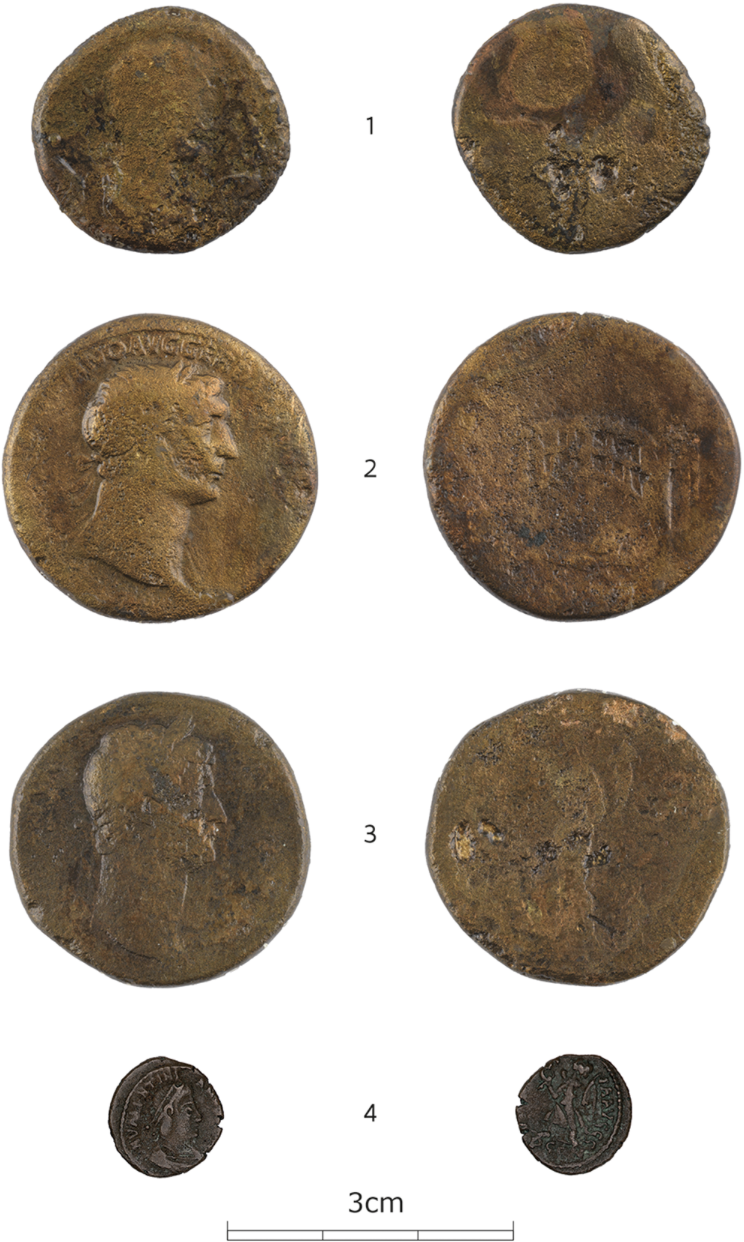
Photo Credit: KBR, Royal Library of Belgium, Coins and Medals. Credit: Flückiger A, et al., 2026
There are several possible explanations. The coins may have carried symbolic meaning, particularly because Roman bronze coins prominently displayed imperial portraits. In a frontier region where Roman traditions still mattered, carrying such coins may have reflected loyalty, identity or even status.
But researchers believe another explanation could be even more significant: the coins may have been valued simply for the bronze they contained.
The purse did not contain coins alone. Archaeologists also found fragments of damaged bronze objects, including broken fittings and pieces of copper-alloy items no longer usable in their original form. This material is often referred to as “Hackbronze”, intentionally broken metal collected for reuse, melting down or exchange.
By around AD 400, supplies of low-value bronze coinage had largely stopped reaching parts of north-western Europe. Gold and silver coins still existed within the Roman economy, but they were impractical for ordinary day-to-day purchases. People still needed ways to trade goods, settle debts and exchange value in everyday life. Without a reliable supply of small coins, communities may have begun relying on bronze fragments and old coins valued according to their weight rather than their official denomination.
Researchers examining the Oudenburg purse noticed something particularly intriguing. The combined weight of the coins and metal fragments appeared to align closely with recognised Roman weight measurements.
Although the study’s authors stop short of claiming definitive proof, they suggest the contents may have been intentionally assembled according to a specific weight of bronze value. If correct, the purse may represent a small-scale economy in transition, one moving away from formal Roman currency towards a more flexible system based on recyclable metal and practical exchange.
What makes the Oudenburg discovery so compelling is that it captures a moment of gradual change rather than dramatic collapse. The man buried in Grave A-104 still lived in a world shaped by Roman influence. Military dress remained important, Roman objects still carried meaning and coins bearing emperors’ faces continued circulating long after they were minted. Yet the contents of his purse hint that the traditional monetary system was already evolving into something else.
Instead of a sudden end to Roman civilisation, the burial reveals adaptation and improvisation. Old coins were reused, broken metal retained value and people found practical ways to keep trade functioning despite the breakdown of official supply networks.
In many ways, the purse reflects the reality of life during the empire’s final centuries: ordinary people adjusting to uncertainty using whatever resources remained available to them.